The Value of Online Therapy for Compulsive Gambling Behavior
How Digital Therapy Can Support Recovery and Healthier Behavioral Patterns

Introduction
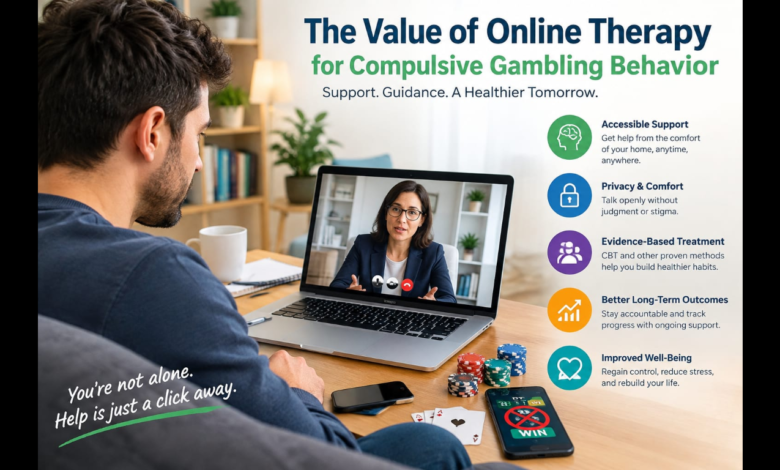
Compulsive gambling behavior can affect a person’s emotional well-being, relationships, finances, education, work, and everyday life. For someone struggling with gambling-related harm, seeking professional support can be an important step toward regaining control. The Value of Online Therapy for Compulsive Gambling Behavior is particularly relevant as mental-health services increasingly use secure video consultations, telephone appointments, and other digital approaches.
Online therapy can make professional support easier to access, especially for people who find traditional appointments difficult. Specialist gambling services already use online video consultations and evidence-based psychological treatments, including cognitive behavioral therapy (CBT).
What Is Compulsive Gambling Behavior?
Compulsive gambling behavior refers to a pattern in which gambling becomes difficult to control and continues despite harmful consequences. A person may experience increasing preoccupation with gambling, difficulty stopping, emotional distress, relationship problems, financial difficulties, or problems at school or work.
It is important to understand that gambling-related harm is not simply a matter of poor decision-making. Professional treatment can address the thoughts, emotions, habits, and circumstances that contribute to problematic behavior.
The NHS notes that gambling-related harms can affect people at different levels of severity and that treatment and support are available when gambling becomes problematic.
How Online Therapy Can Help
Online therapy, also known as telepsychology or teletherapy, uses technology such as secure video, telephone, or other digital communication methods to provide psychological services remotely. The American Psychological Association recognizes telepsychology as a way of delivering psychological services through technology.
For people experiencing compulsive gambling behavior, online therapy may provide several practical advantages.
Easier Access to Professional Support
One of the biggest benefits is accessibility. A person does not necessarily need to travel to a specialist clinic for every appointment. Remote consultations can allow therapy to take place from an appropriate private location.
Specialist NHS gambling services demonstrate that psychological support can be delivered through virtual video sessions as well as face-to-face appointments.
Greater Convenience
Travel, scheduling difficulties, and unfamiliar clinical environments can become barriers to treatment. Online appointments can sometimes make it easier to maintain regular contact with a therapist.
Consistent participation matters because psychological treatment often involves practicing skills between sessions and reviewing progress over time.
Privacy and Comfort
Some people may feel embarrassed or uncomfortable discussing gambling-related problems in person. Being able to speak with a qualified professional remotely may make the first conversation feel less intimidating.
However, online therapy should still take place in a private and appropriate environment. Confidentiality and data protection should be discussed with the provider before treatment begins.
Cognitive Behavioral Therapy and Gambling Problems
Cognitive behavioral therapy is one of the important psychological approaches used in treatment for gambling-related problems. CBT helps people recognize connections between thoughts, emotions, and behaviors and develop healthier ways of responding to difficult situations.
Research and specialist services support the use of CBT for gambling-related harms. The NHS Northern Gambling Service, for example, provides evidence-based CBT through both online video sessions and face-to-face treatment.
During therapy, a qualified professional may help a person:
- Recognize thoughts and situations associated with problematic behavior.
- Develop healthier responses to difficult emotions.
- Identify patterns that make compulsive behavior more difficult to control.
- Build alternative routines and activities.
- Establish realistic recovery goals.
- Develop strategies for preventing setbacks.
- Address relationship or financial problems associated with gambling-related harm.
The exact treatment plan should be individualized rather than copied from someone else’s recovery program.
The Role of Motivational Support
Changing compulsive behavior can be difficult, particularly when a person feels uncertain about stopping or reducing the behavior. Psychological treatment may therefore include approaches designed to strengthen motivation for positive change.
Recent American Psychological Association coverage notes that cognitive behavioral approaches have a strong evidence base for gambling disorder, particularly when combined with motivational interviewing.
Online treatment can provide a structured environment in which a person discusses goals, identifies obstacles, and works with a professional to develop practical steps toward recovery.
Online Therapy Can Support Accountability
Recovery often requires more than simply understanding that gambling is harmful. A person may need to change routines, reduce exposure to triggers, manage difficult emotions, and establish stronger financial boundaries.
Specialist treatment programs may therefore include practical measures alongside psychological therapy. For example, the National Gambling Clinic describes early treatment as focusing on motivation for change and practical barriers that can reduce access to gambling.
The exact measures should be determined with qualified professionals and, where appropriate, trusted adults or family members.
Support for Families
Compulsive gambling behavior can affect more than the individual. Family members may experience stress, uncertainty, relationship difficulties, and financial concerns.
Some specialist services provide support for affected family members as well as the person experiencing gambling-related problems. The NHS Northern Gambling Service, for example, offers support that can include loved ones when appropriate.
Online therapy can make family participation easier when everyone cannot attend the same physical location.
Choosing a Safe Online Therapy Service
Not every website or app that describes itself as “therapy” provides the same level of professional care. This is particularly important when dealing with a serious behavioral-health problem.
Before beginning online treatment, consider whether:
The Professional Is Properly Qualified
Check the therapist’s professional credentials and whether they are licensed or registered according to the rules that apply in their location. The APA advises people considering online therapy to investigate the qualifications and professional status of the provider.
The Service Understands Gambling-Related Problems
A therapist with experience in general mental health may be helpful, but specialized knowledge of gambling-related harms can be particularly valuable.
Privacy Is Clearly Explained
Ask how appointments are conducted, how personal information is protected, and what the provider’s confidentiality policies are.
There Is a Plan for More Serious Situations
Online therapy is not automatically suitable for every person or every situation. APA guidance emphasizes considering the benefits, risks, and appropriateness of telepsychology for individual circumstances.
If someone is experiencing severe emotional distress or another urgent mental-health problem, they should seek immediate help from an appropriate local health or emergency service rather than relying solely on an online appointment.
Online Therapy Is Not a Quick Fix
One important point about The Value of Online Therapy for Compulsive Gambling Behavior is that online treatment should not be presented as an instant solution.
Changing compulsive behavior can take time. Therapy may involve regular appointments, exercises between sessions, monitoring progress, addressing setbacks, and developing long-term coping skills.
The NHS explains that CBT commonly involves identifying difficult situations, examining thoughts and feelings, developing alternative responses, and practicing new skills between sessions.
Progress can also look different for different people. A qualified professional can help establish realistic goals based on the individual’s circumstances.
Why Early Support Matters
People sometimes delay seeking help because they believe their problem is not serious enough. However, support does not need to wait until every area of life has been affected.
Evidence from NHS England highlights substantial unmet need for gambling treatment and notes that people experiencing gambling-related harms may benefit from interventions at different levels of severity.
Early professional support may provide an opportunity to understand the behavior, identify contributing factors, and begin making healthier changes before problems become more complicated.
Final Thoughts
The Value of Online Therapy for Compulsive Gambling Behavior lies largely in its ability to connect people with professional psychological support in a flexible and accessible format. Online treatment can provide evidence-based approaches such as CBT, motivational support, structured appointments, and involvement of appropriate family members.
At the same time, online therapy should be provided by qualified professionals and should be matched to the person’s needs. It is not a replacement for every form of healthcare, and people experiencing serious or urgent mental-health difficulties may need additional or immediate support.
Most importantly, asking for help is a constructive step. With appropriate professional guidance, people affected by compulsive gambling behavior can work toward healthier routines, stronger coping skills, and improved overall well-being.