Martin Stew: Remarkable ITV News Career, Science Reporting and Achievements
A clear look at the British journalist’s education, television career, weather presenting, political reporting, Antarctic journey and award-winning environmental work

Introduction
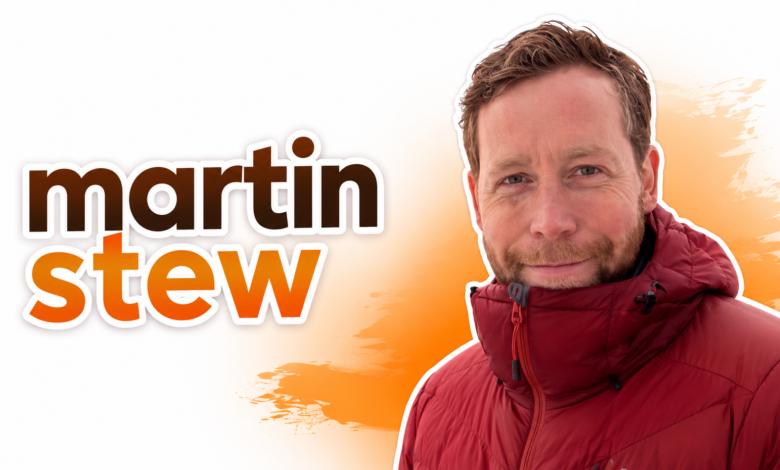
Martin Stew is a British television journalist and the Science Correspondent for ITV News. He reports on science, health, climate change, the environment and new technology.
He first became familiar to many television viewers as a reporter and weather presenter for ITV News London. He later covered political and national stories before moving into specialist science journalism.
Stew has reported from laboratories, hospitals, research centres and some of the world’s most difficult environments. One of his biggest assignments took him deep into the Antarctic Circle aboard the British research ship RRS Sir David Attenborough.
His career stands out because he makes complicated scientific subjects easier for ordinary viewers to understand. Readers who enjoy carefully researched public profiles can also explore TopicMint’s biography collection.
Who Is Martin Stew?
Martin Stew is a television correspondent working for ITV News in the United Kingdom.
He is known for explaining how scientific discoveries, medical research, climate change and technology can affect everyday life. His reports often combine expert interviews with practical demonstrations that help viewers see how a scientific idea works.
Before becoming a specialist science correspondent, he gained experience in several different areas of television journalism. He worked as a general reporter, weather presenter, correspondent and political journalist.
This broad experience helped him develop the ability to report both breaking news and longer investigative stories.
Martin Stew Quick Bio
| Field | Verified detail |
|---|---|
| Full name | Martin Stew |
| Professional name | Martin Stew |
| Profession | Television journalist and correspondent |
| Current role | Science Correspondent for ITV News |
| Employer | ITV News |
| Main subjects | Science, health, climate, environment and technology |
| Education | BA in Government and Politics |
| University | University of Nottingham |
| Previous work | Reporter, weather presenter and political correspondent |
| Major assignment | Antarctic reporting aboard RRS Sir David Attenborough |
| Major recognition | 2024 Covering Climate Now Journalism Award |
| Famous for | Explaining complex science and environmental stories on television |
Education
Martin Stew studied Government and Politics at the University of Nottingham.
He completed a Bachelor of Arts degree in 2005. His degree focused on political institutions, government, public affairs and the way decisions are made within society.
Although his university subject was not science, it provided useful skills for journalism. Political study requires research, careful reading, evidence checking and the ability to explain difficult issues clearly.
His educational background also became helpful when he later worked as a political correspondent.
Beginning of His Television Career
Stew began a documented reporting role with ITV in September 2006.
During his early career, he covered local and regional news. This type of reporting can involve many different subjects, including transport, public services, crime, politics, weather and community issues.
Regional journalism gave him experience in finding stories, interviewing members of the public and presenting information clearly under strict deadlines.
Television reporters must also work closely with camera operators, editors and producers. They may have only a few minutes to explain a story that took days or weeks to research.
Stew gradually developed these skills before becoming more widely recognised on ITV News London.
Career as an ITV News London Weather Presenter
Martin Stew became a weather presenter for ITV News London during the 2010s.
His role involved presenting forecasts and explaining changing weather conditions across London and the surrounding region. However, his work was not limited to giving temperatures and rain predictions.
He also explained the science behind storms, lightning, extreme temperatures and unusual weather events.
Weather presenting requires a strong understanding of maps, atmospheric conditions and rapidly changing information. Presenters must turn technical forecasts into simple advice that viewers can understand and use.
This experience helped Stew prepare for his later role in science reporting. Both weather and science journalism require a person to understand technical information and translate it into everyday language.
Another British journalist who has built a career around explaining human experiences clearly is Claire Cohen, an author and former Telegraph Women’s Editor.
General News and Feature Reporting
While working with ITV News London, Stew also produced general news and feature reports.
His subjects included homelessness, public transport, wildlife, infrastructure and changes affecting London communities.
Some assignments required him to enter unusual places or take part in practical demonstrations. This approach later became an important part of his science journalism.
Instead of only standing in front of a camera and describing an issue, Stew often shows viewers what is happening. He may enter a research facility, use new technology or complete a physical test while experts explain the results.
This creates a stronger connection between scientific evidence and ordinary life.
Political Reporting Career
Stew later moved further into political and national reporting.
During the 2019 United Kingdom general election, he contributed reports and analysis from different parts of the country. His work involved explaining political campaigns, voter concerns and how national decisions affected local communities.
He was publicly described as an ITV News political correspondent before his appointment to the health and science team.
Political reporting requires careful language because journalists must explain different opinions without turning their own assumptions into facts. It also requires an understanding of government, elections and public policy.
His university education in Government and Politics gave him a useful foundation for this work.
Readers interested in another British public career connected with politics and international affairs can explore Kim Darroch’s diplomatic journey.
Appointment as Health and Science Correspondent
In 2023, ITV News appointed Martin Stew as its Health and Science Correspondent.
His current title is Science Correspondent. The official ITV News profile for Martin Stew says that he covers a wide range of stories across ITV platforms.
His reporting subjects include:
- Medical research
- Climate change
- Artificial intelligence
- Environmental damage
- Brain science
- Dementia research
- New transport technology
- Extreme weather
- Public health
- Scientific inventions
- Space and energy
- Wildlife and natural ecosystems
Science reporting can be difficult because early research does not always provide a final answer. A responsible journalist must explain what scientists have discovered while also making the limits of the evidence clear.
Stew’s reports normally place experts at the centre of the story while using demonstrations and real-life examples to help viewers understand the subject.
Reporting Style
Martin Stew’s public reporting style can be described as practical, explanatory and experience-led.
This description is based on his published journalism rather than assumptions about his private personality.
He frequently takes part in the tests or situations he is reporting about. For example, he has undergone brain-scanning technology, completed physical tests in controlled heat and travelled with researchers into extreme environments.
This method helps answer the questions viewers may naturally ask:
- What does the technology feel like?
- How does the test work?
- What information does it collect?
- Could it help ordinary people?
- What are its limits?
- Why does the research matter?
His ability to explain complicated subjects in clear language is similar to the public communication work examined in TopicMint’s profile of Vernon Bogdanor, a British academic and political commentator.
Antarctic Expedition
One of Martin Stew’s most important assignments took place in June 2025.
He travelled deep into the Antarctic Circle aboard the RRS Sir David Attenborough, one of Britain’s most advanced polar research ships.
Stew was the only journalist aboard the ship during the expedition. He worked with camera operator Mike Field to document the scientists, crew members and changing Antarctic environment.
The journey took place during the southern winter. No British research ship had travelled so far south at that time of year since Sir Ernest Shackleton’s Endurance expedition more than a century earlier.
The assignment allowed Stew to report directly on:
- Melting glaciers
- Changing sea-ice conditions
- Ocean temperatures
- Emperor penguins
- Marine ecosystems
- Climate research
- Rising sea levels
- Life aboard a polar research ship
- Scientific work in extreme cold
Why the Antarctic Reports Were Important
Antarctica may appear distant from cities and homes in the United Kingdom, but changes there can affect the entire planet.
The Southern Ocean stores large amounts of heat and carbon. Antarctic sea ice also reflects sunlight away from Earth. When the amount of ice decreases, darker ocean water absorbs more heat.
The Antarctic ice sheet contains a very large share of the world’s fresh water. Continued ice loss can therefore contribute to rising sea levels.
Stew’s reporting connected these global scientific questions with the people collecting evidence in Antarctica.
He interviewed researchers studying glaciers, oceans, marine life and the changing polar environment. His reports also showed the challenges faced by the ship’s crew, including cold conditions, dangerous ice and the need to remain prepared for emergencies.
Emperor Penguin Reporting
During the expedition, Stew reported on concerns about the future of emperor penguins.
These birds depend on stable sea ice for breeding. Their eggs hatch on the ice, and young penguins need enough time to grow before entering the ocean.
When sea ice breaks apart too early, chicks may not be ready to swim. This can cause large breeding failures.
Stew’s report explained how scientists use satellite images to find and monitor remote penguin colonies. Their dark droppings create stains that can sometimes be seen from space, allowing researchers to estimate colony locations and changes.
The story showed how satellite technology can help scientists study animals living in places that are extremely difficult for people to visit.
Award-Winning Amazon Investigation
Martin Stew was also involved in an international investigation examining the environmental impact of bovine collagen products.
The investigation connected collagen supply chains with cattle businesses associated with Amazon deforestation and pressure on Indigenous lands.
The reporting project involved ITV News, the Bureau of Investigative Journalism, The Guardian, O Joio e O Trigo and the Pulitzer Center’s Rainforest Investigations Network.
Journalists used several forms of evidence, including:
- Satellite information
- Cattle-movement records
- Shipping documents
- Supply-chain research
- Company information
- Interviews and field reporting
The project received a 2024 Covering Climate Now Journalism Award in the Food and Agriculture category.
Stew shared the recognition with Elisângela Mendonça, Andrew Wasley, Fábio Zuker and Grace Murray.
The investigation was important because collagen supplements are often promoted as simple health or beauty products. Many buyers may not know where the cattle used to make the collagen were raised.
The reporting showed how an everyday consumer product can be connected with much larger questions about forests, corporate responsibility and Indigenous rights.
Readers interested in public work connected with international rights and accountability may also find Ben Emmerson’s human-rights career useful.
Reporting on Brain Technology
Stew has tested new brain-scanning technology developed by researchers at the University of Nottingham.
The wearable system was designed to measure brain activity while allowing the person being scanned to move more naturally than they could inside a traditional scanner.
This type of technology may help researchers study conditions such as epilepsy, dementia, multiple sclerosis, Parkinson’s disease and concussion.
By taking part in the test himself, Stew was able to show viewers how the equipment worked and explain why scientists believed it could become useful.
The report also demonstrated an important part of responsible science journalism: new technology may be promising, but researchers still need evidence, testing and time before it can become widely used.
Personal Dementia Report With His Father
In December 2025, Stew produced a personal report about dementia research with his father, Roy Stew.
Roy had publicly shared his experience of early-onset Alzheimer’s disease.
Father and son met researchers examining possible links between deep sleep, memory and dementia. The report explored whether improving sleep could help people hold on to memories for longer or slow certain effects of the condition.
The assignment combined Stew’s professional role as a science journalist with his family’s direct experience of Alzheimer’s disease.
It also helped explain dementia through a real person’s daily life rather than presenting it only through medical statistics.
The report was careful not to suggest that sleep was a proven cure. Instead, it showed how researchers were investigating the relationship between sleep and brain health.
Artificial Intelligence and Technology Reporting
Artificial intelligence has become another important part of Stew’s work.
His reports have examined AI tools designed to help people with dementia remain independent. These technologies have included smart clothing, digital reminders and glasses that can provide information about a person’s surroundings.
He has also reported on autonomous vehicles and the possibility of driverless taxis operating on London’s narrow and complicated streets.
Technology stories require balance. New products can offer useful benefits, but they may also create concerns about safety, privacy, employment and reliability.
Stew’s reporting generally explains both the promise of a new technology and the questions that still need to be answered.
Public Image and Professional Strengths
Martin Stew’s public image is mainly connected with clear explanations, active reporting and scientific curiosity.
His strongest professional qualities include:
- Explaining difficult information simply
- Asking practical questions
- Working in challenging environments
- Using personal demonstrations
- Interviewing scientific experts
- Connecting research with everyday life
- Covering both breaking news and investigations
- Presenting evidence without unnecessary drama
His career also shows that journalists do not always remain in one subject area.
Stew moved from general reporting to weather, politics, health and science. Each stage gave him skills that supported the next part of his career.
Major Career Achievements
Martin Stew’s most important verified career achievements include:
- Building a television reporting career with ITV
- Becoming an ITV News London weather presenter
- Covering national and political stories
- Being appointed Health and Science Correspondent in 2023
- Becoming ITV News Science Correspondent
- Contributing to an international Amazon deforestation investigation
- Sharing a 2024 Covering Climate Now Journalism Award
- Reporting from deep inside the Antarctic Circle
- Producing accessible reports about climate science and medical research
- Using personal demonstrations to explain new technology
- Bringing public attention to dementia research through a report with his father
Career Timeline
2005: Completed a BA in Government and Politics at the University of Nottingham.
2006: Began a documented ITV reporting role.
2010s: Worked as a reporter and weather presenter for ITV News London.
2019: Contributed to reporting connected with the United Kingdom general election.
Early 2020s: Worked as a political and national correspondent.
2023: Became ITV News Health and Science Correspondent.
2024: Shared a Covering Climate Now Journalism Award for an investigation into collagen supply chains and Amazon deforestation.
2025: Travelled aboard the RRS Sir David Attenborough and reported from deep within the Antarctic Circle.
December 2025: Produced a personal dementia-research report with his father, Roy.
2026: Continued working as ITV News Science Correspondent, reporting on health, climate, artificial intelligence and technology.
Interesting Facts About Martin Stew
- He studied Government and Politics rather than science.
- He worked as a television weather presenter before becoming a science correspondent.
- He has experience in regional, national and political journalism.
- He was the only journalist aboard the RRS Sir David Attenborough during its 2025 Antarctic expedition.
- He has tested scientific and medical technology while reporting.
- His environmental investigation received international recognition.
- He frequently uses demonstrations to make science easier to understand.
- He has reported on subjects ranging from penguins and glaciers to brain scans and artificial intelligence.
- His father appeared with him in a personal report about Alzheimer’s research.
- His career with ITV stretches back to the 2000s.
Frequently Asked Questions
Who is Martin Stew?
Martin Stew is a British television journalist and the Science Correspondent for ITV News.
What is Martin Stew famous for?
He is famous for reporting on science, climate change, health, the environment and technology. He was previously known as an ITV News London weather presenter.
Where did Martin Stew study?
He studied Government and Politics at the University of Nottingham.
Did Martin Stew work as a weather presenter?
Yes. He worked as a weather presenter and reporter for ITV News London before moving into political and science reporting.
What is Martin Stew’s current job?
He is the Science Correspondent for ITV News.
Did Martin Stew travel to Antarctica?
Yes. In 2025, he travelled deep into the Antarctic Circle aboard the RRS Sir David Attenborough.
Why was his Antarctic assignment important?
He was the only journalist aboard the British research ship during an unusual winter expedition. His reports examined glaciers, sea ice, marine science, emperor penguins and climate change.
Has Martin Stew won an award?
He was part of the reporting team that received a 2024 Covering Climate Now Journalism Award for an investigation connecting collagen supply chains with Amazon deforestation and rights abuses.
What subjects does Martin Stew report on?
His main subjects include science, health, medical research, climate change, wildlife, artificial intelligence, new technology and the environment.
Did Martin Stew report with his father?
Yes. His father, Roy, appeared with him in an ITV report examining dementia, memory and sleep research.
Final Words
Martin Stew has developed from a regional television reporter and weather presenter into one of ITV News’ specialist science correspondents.
His career demonstrates the value of clear, practical journalism. Rather than making science appear distant or confusing, he shows how research can affect health, technology, nature and everyday decisions.
His Antarctic expedition brought viewers closer to scientists studying one of the most important environments on Earth. His award-winning Amazon investigation also showed that consumer products can have hidden environmental and human consequences.
Through careful interviews, personal demonstrations and reporting from difficult locations, Stew has created a recognisable style of science journalism that focuses on evidence, understanding and real-world impact.
Publishing and SEO Details
SEO Title:
URL Slug: martin-stew-biography
Meta Description:
Keyword Name:
Secondary Keywords: Martin Stew biography, Martin Stew ITV News, Martin Stew journalist, ITV science correspondent, Martin Stew Antarctica
Excerpt: Martin Stew is ITV News’ Science Correspondent and a former weather presenter and political reporter. Explore his education, career, Antarctic journey and award-winning environmental journalism.
Suggested Author Byline: Topic Mint Editorial Team
Publication Date: 20 July 2026
Category: Biographies
Tags: Martin Stew, ITV News, British Journalists, Science Journalism, Climate Reporting
Featured Image Alt Text: Martin Stew ITV News science correspondent biography
Featured Image Caption: Martin Stew is known for reporting on science, health, climate change, environmental research and technology for ITV News.
Recommended Schema: Person and Article