Where You Set Up a Portable Sawmill Decides How Much Lumber You Get Out of a Weekend
Smart site planning can turn a busy milling weekend into a more productive lumber operation.

Introduction
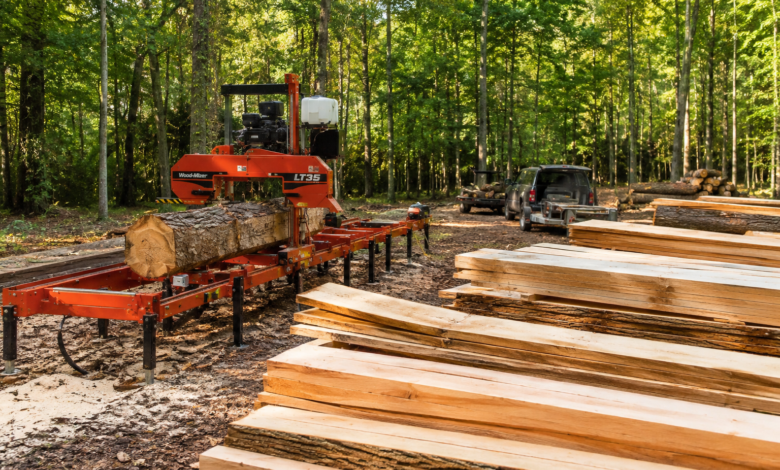
A portable sawmill is designed to move, but that does not mean every location is equally productive. The difference between a smooth weekend of milling and a frustrating one often comes down to site selection, material flow, ground conditions, and access.
A well-planned site reduces unnecessary movement between logs, the mill, and finished lumber. Forestry guidance recommends choosing a location with good road access, adequate flat space, and room for log handling, sawn timber, and related operations.
For anyone planning a weekend milling project, the key question should not simply be, “Where can I park the mill?” Instead, ask, “Where can the entire workflow happen with the least wasted movement?”
Start With Firm, Level Ground
The foundation of an efficient portable sawmill setup is stable ground. A relatively level, firm, well-drained surface makes setup easier and helps create a more organized working area.
Soft mud, steep slopes, rocks, stumps, and uneven ground can make positioning and handling more difficult. A prepared surface also provides better access for vehicles and equipment.
The site should have enough room around the mill rather than fitting the machine into the smallest available space. A forestry extension resource recommends allowing room for measuring and cutting logs, rolling them into position, and removing finished lumber from the mill.
Think About the Entire Material Flow
The most efficient arrangement follows a simple sequence:
Logs → Sawmill → Finished Lumber
Logs should be staged close enough to the loading side that unnecessary movement is avoided. Finished boards should have a clear route away from the mill.
This simple layout can make a major difference over a full weekend. Every log may require several handling movements, and every finished board needs somewhere to go. If those paths overlap, the working area can quickly become congested.
Slabs, edgings, and sawdust also need designated space. Without it, waste material can gradually block access to the mill and create additional cleanup work.
Make Log Handling Easier
Log handling can consume a significant portion of milling time. Good site selection can reduce that burden by making it easier to bring logs into position.
A useful setup gives the loader, tractor, or other appropriate handling equipment enough room to approach the log pile without constantly repositioning. Logs should also be organized so the next piece can be brought forward without disturbing the rest of the pile.
Government forestry guidance notes that the cost and difficulty of moving logs should be considered when choosing a portable mill location. Shorter and easier log movement can improve the practicality of the entire operation.
Leave Plenty of Space for Finished Lumber
A common mistake is concentrating entirely on where the logs will sit while forgetting where the boards will go.
Freshly sawn lumber needs an organized stacking area. If boards are placed randomly beside the mill, the pile can quickly become an obstacle. Having bearers and suitable stacking space ready before milling begins keeps the workflow moving.
The lumber area should also be positioned so finished boards do not have to cross the path used to bring new logs to the mill.
Consider Vehicle Access
A portable sawmill site should work for more than the sawmill itself. Trucks, trailers, tractors, and other equipment may need to enter and leave the area.
Good access can reduce the amount of manual handling required and make loading and unloading considerably easier. Forestry guidance specifically identifies all-weather road access and sufficient space as important considerations for milling sites.
Before setting up, consider how a vehicle will arrive with logs and how it will leave with finished lumber. If the same narrow path must be used for everything, congestion can become a major source of lost time.
Weather and Drainage Matter
A site that looks ideal on a dry morning may become difficult after rain.
Good drainage helps maintain a usable working surface. Avoid areas where water naturally collects or where heavy equipment is likely to become stuck.
Weather should also influence planning. Forestry extension guidance recommends considering conditions such as extreme heat, cold, rain, and snow when organizing milling activities.
Shade can also make a long outdoor working session more manageable, particularly during hot weather, provided it does not interfere with safe operation or visibility.
Put Safety Into the Layout
Efficiency should never come at the expense of safety. A productive site is one where people and equipment can move predictably.
Keep unnecessary obstacles away from the operating area. Maintain clear access around the mill and avoid creating situations where people have to walk through active material-handling paths.
Personal protective equipment appropriate for sawmill work should be used, including suitable eye and hearing protection and appropriate footwear and clothing. Extension guidance also recommends having basic emergency supplies available during portable sawmill activities.
Always follow the operating and safety instructions supplied with the particular sawmill.
Choose the Site Based on Your Logs
There is no universal perfect location. The best setup depends on the size, quantity, species, and condition of the logs being processed.
A small number of manageable logs may make an on-site setup near the timber practical. A larger batch can make a centralized milling area more attractive because logs can be brought together and processed in an organized sequence.
Canopy’s portable-sawmilling guidance emphasizes that productivity depends on several factors, including log supply, operator experience, sawmill type, and the species, quality, and dimensions of available logs.
Plan for Lumber Yield, Not Just Cutting Speed
Getting more boards from a weekend is not simply about running the sawmill faster. Yield depends on how the logs are selected, positioned, measured, and sawn.
Different logs require different decisions. Straight, high-quality material may be suitable for valuable boards, while defects, taper, knots, and other characteristics can influence the cutting strategy.
Oregon State University Extension notes that portable sawyers make decisions about how to cut logs to obtain the most valuable wood, while drying is another important part of turning freshly milled material into useful lumber.
This means site planning and cutting planning should work together.
A Better Weekend Starts Before the Engine
The most productive milling weekends are usually prepared before the first log reaches the saw.
Clear the work area, establish log and lumber zones, check access routes, prepare the stacking area, and make sure the equipment can be positioned safely. Doing this in advance means the weekend can focus on milling rather than repeatedly solving layout problems.
A prepared site can also make it easier to work consistently from one log to the next.
Final Thoughts
Where you set up a portable sawmill can have a surprisingly large effect on how much useful lumber you produce during a weekend. A level and stable surface, convenient log access, organized material flow, adequate stacking space, and good vehicle access can all reduce wasted movement.
The portable nature of the equipment gives sawyers flexibility, but the smartest setup is not necessarily the one closest to the trees. It is the location where logs can enter efficiently, lumber can leave efficiently, and every stage of the operation has enough space to work safely.
In short, a productive portable sawmill weekend begins with site planning—not the first cut.