Understanding Pool Filtration Systems: Smart Choices Prevent Costly Mistakes
A practical guide to choosing, sizing, and planning the right pool filtration system before construction begins.

Introduction
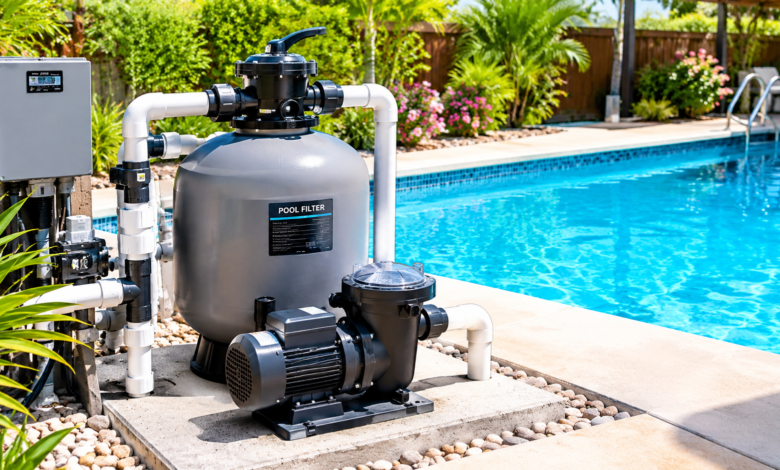
Building a swimming pool involves much more than choosing its shape, depth, tiles, and surrounding landscape. One of the most important decisions is the filtration system. A properly designed filtration setup helps remove suspended dirt and debris while supporting clear, well-maintained pool water.
Understanding Pool Filtration Systems Before You Build can help homeowners make better decisions about filter type, pump compatibility, plumbing, maintenance, equipment space, and long-term operating requirements. Making these decisions early is especially important because changing equipment or plumbing after construction can be inconvenient and expensive.
A pool filter also should not be confused with a sanitizer. Filtration removes suspended particles, while disinfectants such as chlorine help control microorganisms. Both parts work together as part of a complete pool-water management system. The CDC recommends maintaining appropriate disinfectant and pH levels alongside proper filtration and circulation.
Quick Bio
| Topic | Key Information |
|---|---|
| Main purpose | Removes suspended particles from pool water |
| Common filter types | Sand, cartridge, and diatomaceous earth |
| Main equipment | Pump, filter, valves, plumbing, and return system |
| Important consideration | Correct pump and filter sizing |
| Maintenance | Depends on the filtration technology |
| Planning stage | Ideally selected before plumbing and equipment installation |
| Water quality | Filtration works alongside proper sanitation |
What Does a Pool Filtration System Do?
A pool filtration system forms part of the circulation process. Water is drawn from the pool through the circulation system, moved by the pump, passed through the filter, and returned to the pool.
The filter captures suspended material such as dust, dirt, and other particles. The exact filtration performance depends on the filter technology and media being used.
The filter does not replace chemical sanitation. Clear-looking water is not automatically properly disinfected water, which is why filtration, circulation, and water chemistry should be considered together.
Why Filtration Should Be Planned Before Construction
Choosing a filter after the pool has already been built can restrict your options. The equipment pad, plumbing layout, electrical requirements, valves, drainage arrangements, and available service space should all be considered during the design stage.
Your pool designer or qualified installer should consider the pool’s size, expected usage, pump flow, equipment location, available space, and maintenance preferences.
Planning ahead can also make future servicing easier. Equipment should have enough surrounding space for routine inspection, cleaning, cartridge removal, valve operation, and replacement of components.
The Three Main Pool Filter Types
Sand Filters
Sand filtration systems pass water through a specially designed filtration bed. Dirt becomes trapped as water moves through the media.
One of the biggest advantages of sand filtration is its relatively straightforward maintenance. When the filter becomes loaded with debris, the system can generally be backwashed to remove accumulated material.
Sand filters are often attractive to homeowners who prefer a durable and familiar filtration method. However, backwashing sends water to waste, so the installation needs to account for appropriate waste-water handling.
Cartridge Filters
Cartridge filters use pleated filter elements to capture suspended particles. Instead of backwashing, the cartridges are removed and cleaned when required.
This can make cartridge filtration attractive where conserving water is important because routine cleaning does not require the same backwash process used by many sand systems.
Cartridge systems also need adequate access around the filter housing. If the equipment area is cramped, removing and cleaning a large cartridge can become unnecessarily difficult.
Diatomaceous Earth Filters
Diatomaceous earth, commonly called DE, filtration uses a fine filtration medium to capture very small particles. DE systems are often selected when very high water clarity is a priority.
The trade-off is that DE filtration generally requires a more involved maintenance routine. Owners need to follow the manufacturer’s instructions carefully when cleaning and recharging the system.
The three technologies therefore involve different combinations of filtration performance, maintenance, water use, and equipment requirements.
Choosing the Correct Filter Size
Filter selection should never be based simply on the physical size of the swimming pool. The circulation system’s required flow rate and the filter’s rated capacity also need to be considered.
A common design mistake is pairing a filter with a pump without checking whether their rated flow characteristics are compatible. An improperly matched system can create unnecessary pressure, inefficient circulation, or excessive wear.
The filter should be capable of handling the pump’s intended flow under the actual operating conditions of the installation. Manufacturer specifications should take priority over generic rules of thumb.
Do Not Oversize the Pump Without a Reason
A larger pump is not automatically a better pump. The circulation system needs balanced components.
The pump, filter, plumbing, valves, and other equipment should be selected as a complete system. A pump that moves water faster than the filter is designed to handle can create operating problems.
Variable-speed pumps can provide useful flexibility because the system can operate at different speeds depending on the task. However, the pump still needs to be correctly matched with the filtration equipment and hydraulic design.
Think About Plumbing During Pool Design
Plumbing is an important part of filtration performance. Pipe diameter, fittings, valves, bends, equipment placement, and overall hydraulic resistance can affect water flow.
The equipment pad should be designed so that the pump and filter are positioned logically and remain accessible. Unnecessarily complicated plumbing can make maintenance harder and may affect system efficiency.
A qualified pool professional should determine the appropriate plumbing configuration for the specific pool design rather than relying solely on generic layouts.
Consider Maintenance Before Choosing a Filter
Every filtration system requires maintenance. The important question is not whether maintenance exists, but whether the required routine fits your preferences.
Sand systems require periodic backwashing and media maintenance. Cartridge systems require cartridge removal and cleaning. DE systems require careful handling of the filtration medium and cleaning procedures.
Maintenance intervals vary according to pool usage, environmental conditions, water quality, filter size, and manufacturer instructions. Regular inspection is important because a neglected filter can reduce circulation performance.
The CDC also recommends maintaining filtration and recirculation systems according to manufacturer recommendations.
Think About Your Pool’s Environment
The surrounding environment can influence filtration requirements. A pool surrounded by mature trees may receive considerable amounts of leaves, pollen, and other organic debris. A pool exposed to wind and dust may experience a different filtration load.
Heavy pool use can also increase the amount of material entering the water. These factors should be discussed before the filtration equipment is selected.
Your installer can use this information when determining the appropriate filter capacity and equipment configuration.
Filtration and Water Chemistry Work Together
A good filtration system is only one part of maintaining healthy pool water.
The CDC identifies chlorine and pH as important defenses against germs in residential pools and recommends regular testing and adjustment. For residential pools, the CDC recommends a pH range of 7.0–7.8 and provides chlorine guidance based on the type of treatment being used.
Filtration removes suspended contaminants, while chemical treatment addresses microorganisms and water chemistry. Neither should be treated as a replacement for the other.
Questions to Ask Before Construction
Before approving your pool equipment plan, ask:
- Which filter type is being recommended and why?
- What is the filter’s rated flow capacity?
- How does the filter match the selected pump?
- How will the system be cleaned?
- Does the design require a backwash or waste line?
- Is there enough space for filter servicing?
- What plumbing arrangement will be used?
- What maintenance does the manufacturer recommend?
- What happens if the equipment needs replacement later?
- Are filtration and sanitation being designed as complementary systems?
Getting clear answers before construction can prevent expensive changes later.
Common Mistakes to Avoid
Choosing Only by Purchase Price
The cheapest filter may not be the most economical over its entire service life. Consider maintenance, water use, replacement components, and energy requirements.
Ignoring Equipment Access
A filter that technically fits into a small equipment area may still be difficult to service. Leave sufficient working space.
Selecting the Pump First
Pump and filter selection should be coordinated. Choosing one component without considering the rest of the circulation system can create compatibility problems.
Assuming Filtration Replaces Sanitation
A filter removes particles, but it does not eliminate the need for appropriate water disinfection and chemistry management.
Waiting Until Construction Is Finished
Filtration decisions affect plumbing and equipment installation. Making the decision early gives the builder more flexibility.
Final Thoughts
Understanding Pool Filtration Systems Before You Build gives homeowners a stronger foundation for making decisions about their new pool. Sand, cartridge, and DE filters can all be effective when properly selected, sized, installed, and maintained.
The best system is not necessarily the most expensive or the one with the finest advertised filtration. It is the system that fits the pool’s circulation requirements, environment, maintenance expectations, available equipment space, and long-term operating plans.
Before construction begins, discuss the complete equipment package with a qualified pool professional. A well-planned filtration system can make routine maintenance easier, support better water clarity, and help your pool equipment operate as an integrated system for years to come.
Topicmint