The Universal Workhorse of Modern Production Lines
The Filling Machine Powering Faster, Cleaner, More Accurate Manufacturing

Introductoin
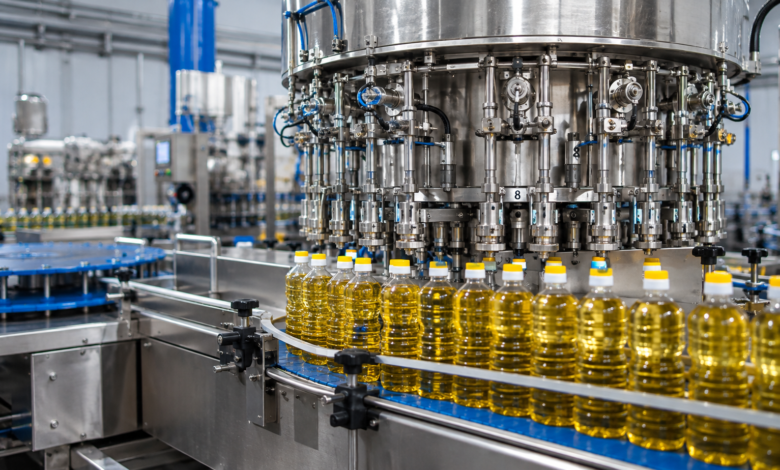
Modern production depends on machines that can work quickly, consistently, and accurately. Among the many technologies used across manufacturing, the filling machine has earned a reputation as a universal workhorse. It performs one of the most important packaging tasks: dispensing a controlled quantity of product into containers before sealing, labeling, and distribution.
From beverages and sauces to cosmetics, pharmaceuticals, chemicals, and household products, filling systems can be adapted to a wide range of materials and container formats. Their importance has grown alongside automation, as manufacturers increasingly seek greater consistency, traceability, efficiency, and reduced material waste.
What Makes the Filling Machine a Production Workhorse?
A filling machine is designed to measure and dispense a product into containers at a controlled rate. Depending on the application, it may handle liquids, semi-liquids, pastes, powders, or granular materials.
The machine’s value comes from its ability to repeat the same operation many times with minimal variation. In a high-volume production environment, consistency is essential because even small differences in fill quantity can create product-quality problems or unnecessary material losses.
Modern production lines can integrate filling equipment with conveyors, capping machines, labeling systems, inspection equipment, and computerized controls. This creates a coordinated packaging process rather than treating filling as an isolated operation.
How Filling Machines Work
Although filling technologies vary, the basic process is straightforward. Empty containers are transported into the filling area, positioned correctly, filled with a predetermined quantity, and then moved toward the next stage.
Sensors and control systems can monitor container position and machine operation. Automated controls help synchronize filling with conveyor movement and other packaging equipment.
Different products require different filling principles. A thin liquid may flow easily through a gravity-based system, while thicker products may require pumps or specialized filling mechanisms. Powdered products also need equipment designed around flow characteristics, dust control, and accurate dosing.
The choice of technology therefore depends on factors such as product viscosity, container size, desired production rate, accuracy requirements, and hygiene standards.
Major Types of Filling Machines
Liquid Filling Machines
Liquid fillers are widely used for products such as beverages, oils, detergents, and personal-care products. Their designs can vary considerably depending on whether the liquid is free-flowing, viscous, foamy, or sensitive to handling.
Piston Filling Machines
Piston systems are commonly suited to thicker products because they use controlled mechanical movement to measure and dispense material. They can be useful for products such as creams, pastes, sauces, and similar formulations.
Pump-Based Filling Systems
Pump fillers provide controlled product movement and can be adapted for different viscosities and production requirements. Pump selection is particularly important when manufacturers need consistent flow and careful product handling.
Powder and Granule Fillers
Powders and granular products require different approaches because their flow characteristics differ from liquids. These machines are used in industries ranging from food processing to pharmaceuticals and industrial products.
Why Accuracy Matters
Accuracy is one of the most important characteristics of a modern filling system. Manufacturers want every container to receive the intended amount while avoiding unnecessary overfilling.
Overfilling can increase material costs, while underfilling may create quality-control or regulatory problems. Automated filling equipment can therefore contribute to better control over product consistency and material usage.
Automation also helps reduce variations associated with repetitive manual operations. Modern industrial automation generally focuses on improving precision, consistency, traceability, and production efficiency.
Speed and Production Efficiency
Production speed is another major advantage. Automated equipment can perform repetitive filling operations continuously according to the requirements of the production line.
Instead of depending entirely on manual measurement and transfer, manufacturers can coordinate filling with conveyors and downstream packaging machinery. This helps maintain a smoother production flow.
However, speed should not be considered separately from accuracy. A machine that operates rapidly but creates frequent errors or stoppages may reduce overall productivity. The most useful systems balance throughput, reliability, product quality, and maintenance requirements.
Hygiene and Product Safety
Hygiene is particularly important in food, beverage, pharmaceutical, and personal-care manufacturing. Equipment in these industries must be designed around appropriate cleaning and sanitation requirements.
Machine construction, product-contact components, cleaning procedures, and operating conditions can all influence hygienic performance. Manufacturers therefore select filling equipment according to the nature of the product and the applicable industry requirements.
For sensitive applications, automated processes can also provide better control over handling and repeatability than loosely controlled manual operations.
Filling Machines and Factory Automation
The modern filling machine increasingly operates as part of a larger automated system. Production lines can connect machines with programmable logic controllers, sensors, human-machine interfaces, and other control technologies.
Automation allows equipment to communicate operational information and coordinate individual stages of production. Automated systems can also record process information, supporting traceability and troubleshooting.
This integration is an important part of the broader move toward smart manufacturing. Industry 4.0 technologies are increasingly connecting machines, production data, and factory management systems to provide better visibility into operations.
Reducing Waste and Operating Costs
Material efficiency has become increasingly important for manufacturers. A filling system that consistently delivers the required quantity can help reduce unnecessary product usage.
Automation can also reduce production interruptions caused by inconsistent manual processes. Better monitoring and maintenance practices may further improve equipment availability.
The financial benefits depend on the specific production environment, including product value, operating hours, labor requirements, maintenance costs, and machine capacity. For that reason, manufacturers should evaluate total operating performance rather than focusing only on the initial purchase price.
Maintenance and Reliability
Even a highly automated filling system requires regular maintenance. Pumps, valves, seals, sensors, nozzles, and other components can experience wear over time.
Preventive maintenance helps manufacturers identify problems before they become major production interruptions. Modern automation is also moving toward condition monitoring and predictive maintenance, where operating data can help identify potential equipment problems before failure.
This approach is becoming increasingly relevant as factories adopt smarter and more connected equipment.
The Future of Filling Technology
The future of filling machines is closely connected to automation, digitalization, flexibility, and sustainability. Manufacturers increasingly want equipment that can handle multiple products and packaging formats without lengthy changeovers.
Artificial intelligence and machine-learning technologies are also being explored for predictive maintenance and real-time process optimization. Smart sensors can provide operational information that helps manufacturers understand machine performance and identify inefficiencies.
Flexible machine designs are particularly valuable as consumer preferences and product ranges change. A production line that can adapt efficiently can help manufacturers respond to new packaging formats and changing market demand.
Filling Machines in Modern Manufacturing
The importance of filling equipment extends across many industries. Food and beverage manufacturers depend on accurate product dispensing, while pharmaceutical producers require highly controlled processes. Cosmetics, household chemicals, lubricants, and other industries also use specialized filling technologies.
In Pakistan and other developing manufacturing markets, automation is becoming increasingly important as companies seek better efficiency, consistent quality, and stronger competitiveness. Local industry sources describe growing adoption of PLCs, SCADA systems, automated packaging, and smart manufacturing technologies. (IPEI)
Conclusion
The Universal Workhorse of Modern Production Lines is an appropriate description for the filling machine because it performs a fundamental task across an enormous variety of manufacturing operations. Its combination of accuracy, repeatability, speed, flexibility, and automation makes it an important part of modern packaging infrastructure.
As factories become more connected and data-driven, filling machines are evolving beyond simple dispensing equipment. They are becoming intelligent components within integrated production systems, helping manufacturers improve consistency, reduce waste, monitor performance, and respond more effectively to changing production requirements.
FAQs
1. What is a filling machine?
A filling machine automatically or semi-automatically measures and dispenses a product into containers.
2. Which industries use filling machines?
They are widely used in food, beverages, pharmaceuticals, cosmetics, chemicals, household products, and other manufacturing sectors.
3. Why is filling accuracy important?
Accurate filling helps maintain product consistency and can reduce unnecessary material waste.
4. Can filling machines handle different products?
Yes. Different filling technologies are designed for liquids, viscous products, powders, and granular materials.
5. Are filling machines part of automated production lines?
Yes. Modern systems can integrate with conveyors, capping equipment, labeling machines, sensors, inspection systems, and computerized controls.
6. What is the future of filling machines?
Greater automation, predictive maintenance, real-time monitoring, flexible production, and smart-factory integration are major areas of development.