How Intelligent Procurement Can Simplify Complex Buying Workflows
Discover how intelligent procurement helps businesses reduce purchasing delays, automate approvals, manage suppliers, and make smarter buying decisions.

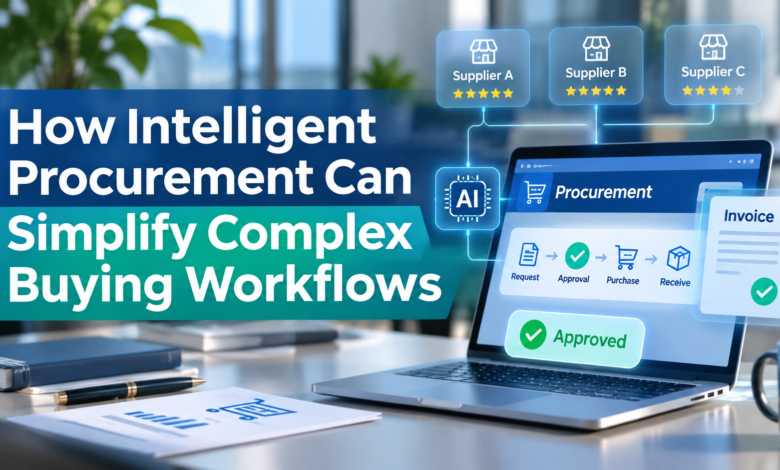
Introduction
Buying products and services for a business sounds simple. Find a supplier, agree on a price, and place an order. But things become complicated when multiple departments, approval levels, budgets, and suppliers are involved.
One purchase might require several emails, contract checks, manager approvals, and invoice reviews. A small mistake can delay the entire process.
That’s where intelligent procurement makes a difference.
By combining artificial intelligence (AI), automation, and connected purchasing data, businesses can handle everyday buying tasks with less manual work. Procurement teams gain more control, while employees get a clearer and faster way to request what they need.
Quick Facts About Intelligent Procurement
| Feature | Details |
|---|---|
| Main concept | Intelligent procurement |
| Primary purpose | Simplify business purchasing |
| Key technologies | AI, machine learning, automation |
| Main processes | Sourcing, purchasing, approvals, invoicing |
| Main users | Procurement teams, finance departments, purchasing managers |
| Key benefits | Faster workflows, fewer errors, improved spending visibility |
| Common applications | Supplier selection, purchase orders, contract management |
| Business suitability | Small, medium, and large organizations |
What Is Intelligent Procurement?
Intelligent procurement is a technology-supported approach to managing how businesses purchase goods and services.
Traditional purchasing often relies on manual records, email communication, and separate systems. Intelligent procurement connects these activities through digital tools that can analyze information, automate routine tasks, and support purchasing decisions.
For example, an employee may need new office equipment.
Instead of contacting several departments individually, the employee submits a request through a purchasing platform. The system checks the budget, identifies approved suppliers, and sends the request to the correct manager.
Once approved, it can generate a purchase order and track its progress.
The employee spends less time chasing updates. The procurement team gets a record of what happened.
Why Traditional Buying Workflows Become Complicated
Business purchasing rarely involves just one person.
A typical transaction may require input from employees, department managers, procurement specialists, finance teams, and external suppliers.
As purchasing volumes increase, coordinating everyone becomes harder.
Too Many Manual Approvals
Employees often send requests through email or shared documents.
A manager might miss an approval notification. Another department may request additional information. The purchasing process stops until someone responds.
These delays are especially frustrating when materials are urgently needed.
Limited Visibility Into Spending
When different departments use separate purchasing methods, companies may struggle to understand their total spending.
They might purchase similar products from several suppliers at different prices without realizing it.
This makes budgeting and cost control more difficult.
Supplier Information Is Scattered
Supplier contracts, contact details, payment terms, and performance records are sometimes stored in different locations.
Finding the correct information takes time.
Outdated records can also lead to incorrect orders or missed contract renewal dates.
Repetitive Administrative Tasks
Creating purchase orders, checking invoices, entering supplier details, and tracking deliveries require considerable attention.
These tasks are necessary, but many follow predictable rules.
Handling every step manually takes employees away from supplier negotiations and purchasing strategy.
How Intelligent Procurement Simplifies Buying Workflows
Intelligent procurement addresses these problems by connecting purchasing activities and automating suitable tasks.
Here are the main ways it can improve the process.
1. Automates Purchase Requests and Approvals
A purchasing request should not require endless email conversations.
Intelligent procurement platforms can direct requests to the correct approvers based on predefined rules.
For example, a company might allow department managers to approve purchases below a specified amount while requiring finance approval for larger orders.
The system checks the request and follows the appropriate workflow.
Employees can view the approval status without asking for updates.
This reduces unnecessary communication and helps prevent requests from being forgotten.
2. Makes Supplier Selection Easier
Finding a suitable supplier involves more than comparing prices.
Businesses must also consider product quality, delivery performance, contract terms, and potential risks.
AI-assisted procurement tools can analyze available supplier records and identify options that match purchasing requirements.
A business ordering packaging materials, for example, could compare approved suppliers using past delivery records and agreed pricing.
The procurement manager still makes the final decision, but the information is easier to review.
3. Improves Budget Control
A common purchasing problem occurs when employees commit to spending before checking their department’s available budget.
Intelligent procurement can introduce budget checks earlier.
When someone submits a request, the platform may compare the proposed purchase with budget limits and company policies.
If the request exceeds an approved threshold, it can be flagged for additional review.
This allows finance teams to identify potential problems before an order is placed.
4. Reduces Purchase Order Errors
Manual data entry creates opportunities for mistakes.
An incorrect product quantity, supplier address, or purchase price may cause delays or disputes.
Procurement automation can generate purchase orders using approved request information and supplier records.
This reduces repeated data entry and helps keep purchasing documents consistent.
However, businesses should still review unusual transactions and maintain accurate supplier information.
5. Connects Procurement With Invoice Processing
Purchasing does not end when goods arrive.
Suppliers must send invoices, finance teams must verify them, and payments need authorization.
An intelligent procurement system can connect these activities.
For example, invoice-matching software can compare three documents:
- The purchase order
- The goods receipt
- The supplier invoice
This process is called three-way matching.
If the information agrees within configured tolerances, the invoice may move forward for payment processing.
If the quantity or price differs, the system flags the exception for review.
Finance employees can focus on problems rather than checking every routine transaction manually.
6. Provides Better Purchasing Data
Businesses make better buying decisions when they can see where their money goes.
Intelligent procurement platforms can collect information about purchase orders, suppliers, invoices, and spending categories.
Managers may use dashboards to identify expensive purchasing categories, frequently used suppliers, and delayed orders.
For instance, a company might discover that several departments buy the same office supplies separately.
Combining those purchases into a larger agreement could create an opportunity to negotiate better terms.
The value comes from understanding spending patterns, not simply collecting more data.
7. Helps Identify Supplier Risks
Supplier problems can affect production, deliveries, and customer service.
Procurement tools can help teams review supplier performance indicators, including delivery delays, quality issues, and available financial risk information.
Some AI-based systems can identify unusual patterns that deserve attention.
Suppose a manufacturer depends on one supplier for an important component.
If the supplier repeatedly misses delivery dates, procurement staff can investigate and consider alternative suppliers before the disruption becomes more serious.
AI-generated alerts are useful, but they should be verified before major business decisions are made.
Traditional Procurement vs. Intelligent Procurement
| Traditional Procurement | Intelligent Procurement |
|---|---|
| Manual purchase requests | Digital request submission |
| Email-based approvals | Automated approval routing |
| Separate supplier records | Connected supplier information |
| Repeated document entry | Automated document creation |
| Manual invoice checks | Automated matching and exception review |
| Limited spending visibility | Centralized reporting and analytics |
| Reactive supplier monitoring | Data-supported risk monitoring |
| Difficult order tracking | Greater workflow visibility |
The main difference is how information moves through the purchasing process.
Traditional procurement often requires employees to transfer information between systems. Intelligent procurement aims to reduce those handoffs.
A Practical Example of Intelligent Procurement
Imagine a medium-sized manufacturing company that purchases machine parts from multiple suppliers.
Before introducing procurement automation, employees submit requests through email.
The purchasing manager checks supplier prices manually. Finance confirms the budget. The manager then creates a purchase order and sends it to the supplier.
When the parts arrive, someone must compare the delivery documents with the invoice.
Each department handles a different part of the process.
Now imagine the company adopts an intelligent purchasing platform.
Step 1: Purchase Request
A maintenance employee submits a request for replacement machine parts through an online system.
Step 2: Supplier Recommendations
The platform identifies suppliers already approved to provide those parts.
Step 3: Budget Verification
The system checks the request against the department’s purchasing rules and available budget information.
Step 4: Approval Routing
The request goes directly to the responsible manager.
Step 5: Purchase Order Creation
After approval, the system generates a purchase order using the confirmed details.
Step 6: Delivery Confirmation
The receiving department records when the parts arrive.
Step 7: Invoice Matching
The software compares the invoice with the order and delivery record.
If everything matches, the invoice proceeds through the configured payment process.
The company now has a connected purchasing record instead of several disconnected email conversations.
Key Benefits of Intelligent Procurement for Businesses
Faster Purchasing Decisions
Automated routing and clearer information can shorten the time needed to process routine requests.
Employees know where their requests stand, and managers can identify pending approvals.
Better Cost Management
Centralized supplier information and spending reports make it easier to compare purchasing options.
Companies can identify duplicate purchases, review contract pricing, and find potential savings.
Reduced Administrative Work
Routine activities such as document generation, invoice matching, and approval notifications can be partially or fully automated when business rules allow.
Procurement employees then have more time for complex decisions.
Improved Compliance
Businesses often have purchasing policies that control spending limits, supplier eligibility, and approval responsibilities.
Intelligent procurement systems can apply these policies during the buying process.
This helps employees follow established procedures without having to remember every requirement.
Stronger Supplier Relationships
Clear purchasing documents and better order tracking can reduce misunderstandings between buyers and suppliers.
Procurement managers can also use performance records to hold more informed supplier discussions.
Challenges Businesses Should Consider
Intelligent procurement offers practical benefits, but implementing it requires planning.
Poor Data Quality
Automation depends on reliable information.
Incorrect supplier records, outdated contracts, and inconsistent product descriptions can produce misleading recommendations or purchasing errors.
Cleaning existing data is an important early step.
Integration With Existing Systems
Many organizations already use accounting software, enterprise resource planning systems, and supplier databases.
A new procurement platform needs to exchange information with those systems.
Without suitable integration, employees may still have to enter the same data in multiple places.
Employee Training
Some employees may be unfamiliar with digital purchasing workflows.
Clear instructions and practical training can help them understand how to submit requests, approve purchases, and resolve exceptions.
Security and Privacy
Procurement systems may store commercially sensitive information, including supplier contracts, pricing, financial records, and employee details.
Businesses need appropriate access controls, data protection practices, and supplier security assessments.
AI Accuracy and Accountability
AI recommendations are not always correct.
A system might misunderstand a contract clause or suggest a supplier using incomplete historical information.
Human oversight remains important, particularly for high-value contracts, supplier selection, and sensitive purchasing decisions.
How to Introduce Intelligent Procurement Successfully
Businesses do not need to automate every purchasing activity immediately.
A gradual approach is often easier to manage.
Identify Existing Bottlenecks
Review how employees currently request purchases, obtain approvals, issue orders, and process invoices.
Find the activities that generate the most delays or repeated work.
Start With a Simple Workflow
Choose a process that follows predictable rules.
Purchase request approvals or routine invoice matching may be suitable starting points.
These activities are easier to measure than complex supplier negotiations.
Improve Procurement Data
Review supplier records, purchasing categories, approval rules, and contract information before connecting them to a new platform.
Reliable data supports more accurate automation.
Connect Important Departments
Procurement, finance, IT, and department managers should agree on how purchasing information will move between systems.
Clear responsibilities help prevent confusion.
Monitor Performance
Track results after implementation.
Useful procurement performance indicators include:
| KPI | What It Measures |
|---|---|
| Purchase order cycle time | Time from request to approved order |
| Approval turnaround time | How quickly requests receive decisions |
| Invoice exception rate | Percentage of invoices requiring investigation |
| Purchase order accuracy | Frequency of order errors |
| Contract compliance | Purchases made under approved agreements |
| Supplier on-time delivery | Orders delivered by agreed dates |
| Procurement processing cost | Administrative cost of purchasing transactions |
Comparing these measures before and after implementation helps businesses understand whether the changes are working.
The Role of AI in the Future of Procurement
AI is becoming more closely connected with everyday purchasing systems.
Modern procurement tools can support contract analysis, supplier research, spending classification, and workflow recommendations.
Some systems are also introducing AI agents that can carry out approved tasks within defined limits.
For example, an AI assistant may help draft a supplier request, summarize quotations, or identify missing information in a purchase order.
That does not mean every purchasing decision should be automated.
Complex negotiations, supplier disputes, ethical considerations, and major financial commitments still require professional judgment.
The most useful approach combines technology with experienced procurement teams.
Final Thought
Complex buying workflows are not always caused by complicated purchases. Often, the real problem is disconnected information, repeated approvals, and unnecessary manual tasks.
Intelligent procurement helps businesses address these issues by bringing purchasing activities into a more organized process.
From supplier selection to invoice matching, automation can reduce administrative work while giving procurement and finance teams better visibility.
The goal is not to remove people from purchasing decisions.
It is to give them reliable information, clear workflows, and more time to focus on the decisions that matter.
Frequently Asked Questions (FAQs)
1. What is intelligent procurement?
Intelligent procurement uses AI, automation, and purchasing data to improve how businesses source suppliers, approve purchases, manage orders, and process invoices.
2. How does intelligent procurement simplify complex buying workflows?
It connects purchasing activities, automates routine approvals, reduces repeated data entry, and provides clearer information about spending and suppliers.
3. What is the difference between traditional and intelligent procurement?
Traditional procurement often depends on manual processes and separate records. Intelligent procurement uses connected systems, automated workflows, and data analysis to support purchasing activities.
4. Can small businesses use intelligent procurement?
Yes. Small businesses can benefit from digital purchase requests, approval workflows, supplier records, and invoice automation without adopting a large enterprise platform.
5. Does intelligent procurement reduce purchasing costs?
It can help identify unnecessary spending, pricing differences, duplicate purchases, and opportunities for better supplier agreements. Actual savings depend on how the system is implemented and used.
6. How does AI improve supplier management?
AI can help analyze supplier information, identify performance patterns, compare available options, and flag potential risks. Procurement professionals should verify important recommendations.
7. What are the biggest challenges in procurement automation?
Common challenges include poor data quality, integration difficulties, employee training, cybersecurity requirements, and maintaining appropriate oversight of automated decisions.
8. Will AI replace procurement professionals?
AI can automate many repetitive activities, but human expertise remains important for negotiations, supplier relationships, risk decisions, and purchasing strategy.