How Riders Can Document Injuries and Damages After a Motorcycle Crash
A Practical Guide to Preserving Injury, Damage, and Crash Evidence

Introduction
A motorcycle crash can create more than immediate physical pain. Riders may also face medical expenses, motorcycle repairs, missed work, damaged protective equipment, and complicated insurance procedures. Good documentation can help create a clear record of what happened and the losses that followed.
The most useful evidence usually comes from several sources rather than one document. Police reports, photographs, medical records, witness information, vehicle-damage records, and insurance documents can each provide different pieces of the story. NHTSA crash-investigation procedures similarly rely on scene evidence, vehicle inspections, photographs, interviews, police reports, and medical records to document crashes and their consequences.
Start Documenting the Crash Scene Safely
Safety should come before collecting evidence. If you are injured or the roadway remains dangerous, move to a safe location when possible and allow emergency personnel to handle the situation.
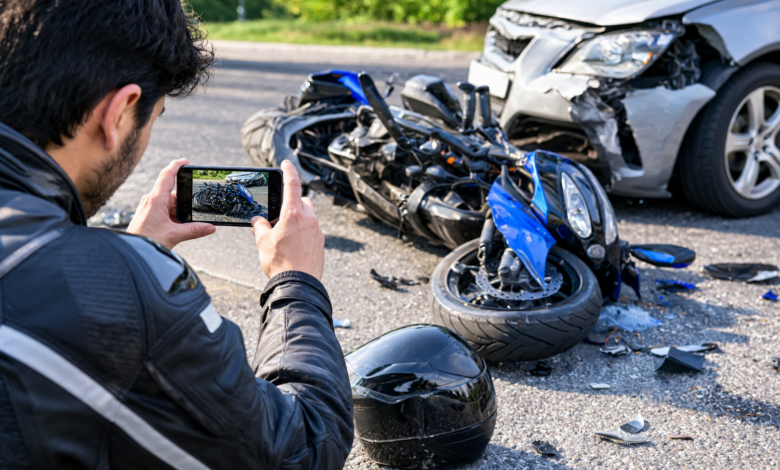
Once it is safe, photographs can preserve important details that may later change. Consider documenting the motorcycle, other vehicles, roadway conditions, visible debris, traffic signs, lane markings, surrounding area, and apparent damage.
Photograph the scene from several distances instead of taking only close-up pictures. A wide photograph can show the relationship between vehicles and the road, while closer photographs can show individual damage.
The Insurance Information Institute recommends photographing vehicle damage and recording important accident details when circumstances permit.
Photograph Motorcycle Damage Thoroughly
A motorcycle can have damage that is not immediately obvious. Take photographs of visible damage before repairs or parts are replaced, provided the motorcycle can be safely accessed.
Useful photographs may include:
- Scratches and dents
- Broken lights or mirrors
- Damaged controls
- Bent components
- Damage to the exhaust or bodywork
- Tire or wheel damage
- Damage around the handlebars
- The motorcycle’s overall condition
Take photographs from multiple angles and keep the original files. Avoid editing the original images because preserving the original evidence can make the documentation easier to understand.
NHTSA crash investigations use photographs and vehicle inspections to document vehicle damage and understand crash dynamics.
Record Injuries and Medical Treatment
Medical documentation is one of the most important parts of an injury record. Seek appropriate medical attention after a crash, particularly when you have pain, dizziness, weakness, difficulty moving, or other concerning symptoms.
Keep copies of medical records, discharge paperwork, prescriptions, invoices, diagnostic reports, and follow-up instructions when they are provided to you.
A simple personal symptom journal can also help you keep track of dates, appointments, symptoms, treatment, and limitations. It should be factual and consistent rather than exaggerated.
Medical records are also important in formal crash investigations. NHTSA describes medical records as a primary source for determining the nature and severity of crash-related injuries.
Obtain the Police or Crash Report
If law enforcement responds, record the relevant report information and learn how to obtain a copy of the completed report.
A police crash report can document information about the location, vehicles, people involved, and injuries reported or observed during the investigation. NHTSA notes that police crash reports provide key information about crashes and whether injured people were transported for medical care.
Review the report when you receive it. If you believe factual information is incorrect, ask the appropriate agency about its procedure for correcting or supplementing the record.
Collect Witness Information
Independent witnesses can provide information about what happened before and during a collision.
If people witnessed the crash and it is safe to do so, record their names and contact information. Avoid pressuring witnesses about what they should say. Simply preserve their contact details so the appropriate parties can communicate with them later.
The Insurance Information Institute recommends collecting contact information for witnesses and recording relevant crash circumstances such as location, time, and weather.
Preserve Evidence From the Road
Road conditions can change quickly. Construction work may be completed, debris may be removed, weather conditions may change, and traffic patterns can return to normal.
If safe, photograph relevant roadway conditions such as potholes, damaged surfaces, lane markings, signs, traffic signals, visibility issues, or objects that may have affected the crash.
Record the approximate location and direction of travel. A map or location record can help organize your notes later.
Do not put yourself in danger to photograph traffic or roadway hazards.
Document Damaged Riding Gear
Do not focus only on the motorcycle. Helmets, jackets, gloves, boots, riding pants, bags, and other personal property may also be damaged.
Photograph damaged gear and preserve it rather than immediately throwing it away. Keep purchase receipts or other ownership records when available.
Create a simple inventory listing each damaged item, its approximate purchase date, and its condition after the crash. This can make it easier to explain property losses during an insurance or legal process.
Keep Track of Financial Losses
Crash-related costs can extend beyond medical bills and motorcycle repairs.
Keep organized records for expenses such as:
- Medical treatment
- Prescriptions
- Motorcycle towing
- Repairs
- Replacement parts
- Damaged riding equipment
- Transportation expenses
- Other directly related costs
If a motorcycle repair shop provides an estimate, keep the written estimate and later invoices. Do not rely solely on memory when documenting expenses.
NHTSA notes that crash data by itself does not fully capture the medical and financial consequences of motor vehicle crashes, which is why connecting crash information with medical and financial outcomes can provide a more complete picture.
Notify the Insurance Company Promptly
Insurance requirements differ by policy and jurisdiction, so riders should review their policy and follow the applicable reporting requirements.
The Insurance Information Institute advises notifying an insurer as soon as possible after an accident and determining what documentation is required to support a claim.
Keep copies of claim forms, correspondence, photographs, estimates, receipts, and other documents submitted to an insurer.
When describing the crash, stick to facts you personally know. Avoid guessing about speed, distance, fault, or other details you cannot reliably establish.
Create One Organized Evidence File
Instead of keeping photographs and paperwork scattered across a phone, email account, and paper folders, create a simple organized record.
Possible folders include:
- Crash scene photographs
- Motorcycle damage
- Medical records
- Police report
- Witness information
- Insurance correspondence
- Repair estimates
- Receipts and expenses
- Damaged protective equipment
- Personal timeline
Keep backup copies of important digital files. Use clear filenames with dates so individual documents can be located quickly.
Avoid Altering or Destroying Evidence
Original photographs, damaged equipment, repair estimates, medical documents, and other relevant records may become important later.
Do not edit original photographs in a way that changes the underlying information. Keep original files separately from copies used for sharing.
If a motorcycle needs urgent repairs for safety reasons, document its condition first when reasonably possible and retain repair documentation.
Final Thoughts
Knowing how riders can document injuries and damages after a motorcycle crash can make the aftermath more organized and easier to understand. The goal is to create an accurate record of the crash, injuries, property damage, treatment, and financial consequences.
Start with safety, obtain appropriate medical care, document the scene when it is safe, photograph motorcycle and gear damage, preserve official reports, collect witness information, and maintain organized financial and medical records.
Because accident reporting, insurance requirements, and legal procedures vary by location, riders dealing with a serious injury or disputed claim should consider obtaining advice from a qualified professional familiar with the laws applicable to their situation.




