Grape Tomatoes: Nutrition, Health Benefits, Uses, and Growing Tips
Everything you need to know about grape tomatoes, from their sweet flavour and nutritional value to simple recipes, storage methods, and home gardening.

Introduction
Grape tomatoes are small, juicy, and full of flavour. You have probably seen them in salads, lunchboxes, grocery stores, or restaurant dishes. Their tiny size makes them easy to eat, while their naturally sweet taste adds something special to everyday meals.
But there is more to these little tomatoes than their appearance.
They contain useful nutrients, work well in many recipes, and can even be grown at home. Whether you want a healthy snack or a colourful ingredient for dinner, grape tomatoes are worth keeping in your kitchen.
Quick Facts About Grape Tomatoes
| Feature | Details |
|---|---|
| Common name | Grape tomatoes |
| Scientific name | Solanum lycopersicum |
| Plant family | Solanaceae (nightshade family) |
| Food type | Botanical fruit, commonly used as a vegetable |
| Shape | Small, oval, or grape-shaped |
| Common colour | Red, with other colours available |
| Taste | Sweet, slightly tangy |
| Texture | Firm flesh with a relatively thick skin |
| Main nutrients | Vitamin C, potassium, and carotenoids |
| Popular uses | Salads, snacks, pasta, roasting, and sandwiches |
| Growing conditions | Warm weather, sunlight, and well-drained soil |
What Are Grape Tomatoes?
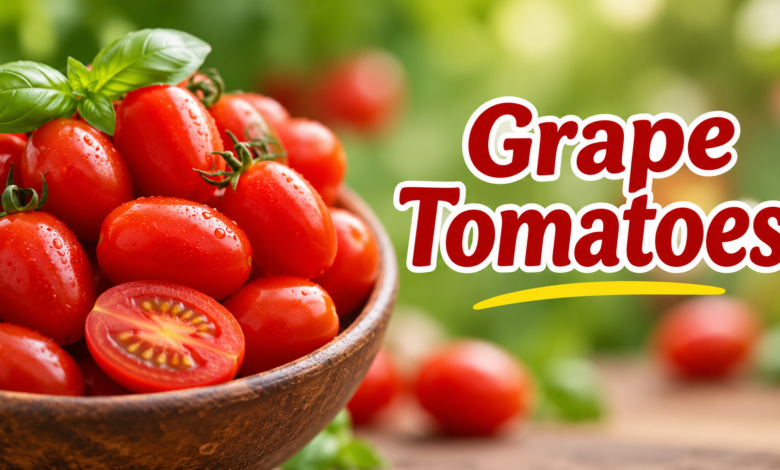
Grape tomatoes are a small type of tomato known for their oval shape and sweet flavour. As the name suggests, they resemble large grapes, although they belong to the tomato family.
Unlike large slicing tomatoes, grape tomatoes are designed by nature to be eaten in just one or two bites.
Their flesh is usually firm, and their skin is thicker than that of many cherry tomatoes. This helps them keep their shape during transportation, storage, and cooking.
They are especially popular in fresh salads because they provide a pleasant balance of sweetness and acidity.
Most familiar varieties are bright red when ripe, but yellow and other coloured varieties are also grown.
Grape Tomatoes vs Cherry Tomatoes: What’s the Difference?
People often confuse grape tomatoes with cherry tomatoes. Both are small, delicious, and suitable for similar recipes.
Still, they have a few noticeable differences.
| Feature | Grape Tomatoes | Cherry Tomatoes |
|---|---|---|
| Shape | Oval or oblong | Usually round |
| Size | Generally small | Often slightly larger |
| Skin | Usually thicker | Often thinner |
| Texture | Firmer and meatier | Often softer and juicier |
| Sweetness | Sweet, depending on variety | Sweet, depending on variety |
| Water content | Usually less juicy | Usually juicier |
| Storage | Often hold up well | Can be more delicate |
| Best uses | Roasting, salads, snacks | Salads, sauces, snacks |
The most obvious difference is their shape.
Cherry tomatoes look like tiny round tomatoes, while grape tomatoes are longer and resemble small grapes.
Their cooking behaviour is different, too. Grape tomatoes generally hold their structure better when heated, while juicy cherry tomatoes can soften and release their liquid more quickly.
Both are excellent choices. Your preference depends on the texture and flavour you enjoy.
Grape Tomatoes Nutrition Facts
Grape tomatoes are a nutritious addition to a balanced diet. They contain plenty of water, relatively few calories, and several beneficial plant compounds.
According to USDA FoodData Central data for raw grape tomatoes, a 100-gram serving contains approximately:
| Nutrient | Amount per 100 g |
|---|---|
| Calories | 27 kcal |
| Carbohydrates | 5.51 g |
| Protein | 0.83 g |
| Total fat | 0.63 g |
| Water | High water content |
| Dietary fibre | Present |
Nutritional values can vary according to the variety, growing conditions, and ripeness.
Grape tomatoes also provide carotenoids, including lycopene, a naturally occurring pigment responsible for the red colour of many tomatoes.
They are a useful way to add flavour and nutritional variety to meals without relying on high-calorie ingredients.
Health Benefits of Grape Tomatoes
1. Provide Antioxidants
One of the most interesting features of red grape tomatoes is their lycopene content.
Lycopene is a carotenoid with antioxidant properties. Antioxidants help protect cells against damage associated with oxidative stress.
Tomatoes also contain other naturally occurring compounds that contribute to their nutritional value.
2. Support a Heart-Healthy Diet
Grape tomatoes can fit comfortably into a heart-healthy eating pattern.
Tomatoes provide potassium, an important mineral involved in normal muscle and nerve function and blood pressure regulation.
Eating a variety of vegetables and fruits, including tomatoes, is a sensible dietary habit for long-term cardiovascular health.
However, no single food can prevent heart disease on its own.
3. Help Maintain Normal Immune Function
Vitamin C plays several roles in the body, including supporting normal immune function.
Tomatoes contribute vitamin C to the diet, although the amount varies between varieties and serving sizes.
Pairing grape tomatoes with other fresh vegetables and fruits can help build a more varied daily nutrient intake.
4. Offer a Light Snack Option
Want something fresh between meals?
A handful of grape tomatoes provides a crisp texture and naturally sweet taste without needing added sugar.
Their water content and relatively low calorie density make them a convenient alternative to many heavily processed snacks.
5. Contribute to Digestive Health
Grape tomatoes contain dietary fibre, which supports normal digestive function.
Their fibre content is modest, so they are best eaten alongside other fibre-rich foods such as beans, whole grains, vegetables, and fruits.
6. Fit Into Weight-Management Meals
Grape tomatoes can add colour and volume to meals without contributing large amounts of energy.
For example, adding them to a sandwich or salad makes the dish more substantial while keeping the ingredients fresh.
They do not directly burn fat or cause weight loss, but they can be part of a balanced eating plan.
How to Eat Grape Tomatoes
One of the best things about grape tomatoes is their convenience.
There is no complicated preparation involved. Wash them, remove any stems, and they are ready to enjoy.
Here are some easy ways to eat them.
Fresh in Salads
Cut grape tomatoes in half and combine them with cucumber, lettuce, olive oil, and a little lemon juice.
Their sweet flavour pairs particularly well with salty cheeses, fresh herbs, and crunchy vegetables.
Roasted in the Oven
Roasting brings out the natural sweetness of grape tomatoes.
Place them on a baking tray, add olive oil, garlic, and black pepper, and roast at around 200°C (400°F) until they soften and begin to blister, usually about 15–20 minutes.
Serve them with pasta, chicken, rice, or toasted bread.
Added to Pasta
Grape tomatoes make a simple pasta dish more colourful.
Cook them briefly with olive oil and garlic until the skins begin to split. Add cooked pasta, fresh basil, and a little grated cheese.
The result is a quick meal with a fresh tomato flavour.
Used in Sandwiches and Wraps
Halved grape tomatoes work well in sandwiches, wraps, and homemade burgers.
Their firm texture helps them hold their shape, making them convenient for packed lunches.
Eaten as a Snack
Sometimes the simplest option is the best.
Fresh grape tomatoes can be eaten on their own or paired with cheese, hummus, or other vegetables.
For young children, cut small tomatoes lengthwise into quarters to reduce choking risk.
How to Choose Fresh Grape Tomatoes
Picking good tomatoes makes a noticeable difference in flavour.
Look for fruit with a consistent colour, smooth skin, and a firm texture. A little natural softness is fine, but excessive softness can indicate deterioration.
Avoid packages containing leaking liquid, visible mould, split fruit, or badly bruised tomatoes.
Check the bottom of the container as well. Damaged tomatoes sometimes hide beneath the fresh-looking ones.
If you have the option, choose ripe tomatoes that look fresh rather than overly hard or shrivelled.
How to Store Grape Tomatoes Properly
Correct storage helps preserve their taste and texture.
Keep unripe whole tomatoes at room temperature, away from direct sunlight, until they ripen.
Once ripe, refrigerate them if you will not eat them promptly. Use them within the next few days for the best quality.
Do not wash tomatoes before storing unless you plan to dry them thoroughly. Excess surface moisture can encourage spoilage.
Wash them under cool running water before eating or preparing them.
If you have already sliced the tomatoes, place them in a covered container in the refrigerator. Use cut tomatoes within three days, and discard any that have been left at room temperature for more than two hours.
For better flavour, you can let refrigerated whole tomatoes warm slightly before serving.
Can You Freeze Grape Tomatoes?
Yes. Grape tomatoes can be frozen.
Freezing is useful when you have more tomatoes than you can eat before they spoil.
Follow these simple steps:
- Wash the tomatoes thoroughly.
- Remove stems and discard damaged fruit.
- Dry them with a clean towel.
- Arrange them in a single layer on a tray.
- Freeze until firm.
- Transfer them to a freezer-safe bag or container.
Frozen tomatoes become softer after thawing because freezing changes their texture.
For that reason, they are usually better suited to cooked dishes, soups, and sauces than fresh salads.
How to Grow Grape Tomatoes at Home
Growing grape tomatoes can be a rewarding project, even if you only have a small garden.
Some varieties grow well in large containers, while others need more space and support.
Choose a Sunny Location
Tomatoes grow best with plenty of sunlight.
Aim for at least six to eight hours of direct sunlight daily where local weather conditions allow.
Prepare Well-Drained Soil
Use fertile soil that drains properly.
For containers, choose a good-quality potting mix and make sure the pot has drainage holes.
Waterlogged roots can lead to unhealthy plants and poor growth.
Plant Seeds or Seedlings
Start seeds in a suitable seed-starting mix, or buy healthy young plants from a nursery.
Move seedlings outdoors only when temperatures are warm enough and frost is no longer a concern.
Water Consistently
Tomato plants need regular watering.
Keep the soil evenly moist rather than allowing it to swing repeatedly between very dry and extremely wet.
Water around the base of the plant whenever practical.
Provide Support
Many grape tomato plants grow as vines and benefit from cages, stakes, or trellises.
Supporting the stems helps prevent fruit from resting on the soil and makes harvesting easier.
Harvest When Ripe
Pick tomatoes when they reach the mature colour expected for their variety and have developed their characteristic flavour.
Most common red varieties become fully red when ripe.
Harvest carefully to avoid damaging nearby stems and developing fruit.
Common Problems When Growing Grape Tomatoes
Even healthy tomato plants occasionally develop problems.
Yellowing leaves: May indicate overwatering, poor drainage, nutrient problems, or disease.
Cracked tomatoes: Can occur when soil moisture changes suddenly, particularly after a dry period.
Flowers dropping: High temperatures, cold conditions, or other plant stress can interfere with fruit production.
Leaves with spots: Could indicate fungal or bacterial disease, depending on the symptoms.
Poor fruit production: Insufficient sunlight, extreme temperatures, or nutrition problems may be contributing factors.
The right solution depends on the actual cause. Check soil moisture, growing conditions, and visible symptoms before applying treatments.
Are Grape Tomatoes Better Raw or Cooked?
Both methods have advantages.
Raw grape tomatoes retain their fresh texture and are convenient for salads and snacks.
Cooking changes their flavour, softens their flesh, and can make lycopene easier for the body to absorb, especially when tomatoes are prepared with a little oil.
Heat can also reduce some heat-sensitive nutrients, including vitamin C.
Rather than choosing only one method, enjoy grape tomatoes both raw and cooked.
Easy Grape Tomato Salad Recipe
This quick recipe is suitable for lunch, dinner, or a light side dish.
Ingredients
- 1 cup grape tomatoes, halved
- 1 small cucumber, chopped
- 1 tablespoon olive oil
- 1 teaspoon lemon juice
- A few fresh basil or parsley leaves
- Salt and black pepper to taste
Instructions
- Wash the tomatoes, cucumber, and herbs.
- Slice the tomatoes lengthwise.
- Place everything in a mixing bowl.
- Add olive oil and lemon juice.
- Season lightly with salt and pepper.
- Toss gently and serve fresh.
You can also add feta cheese, cooked chickpeas, or avocado for a more filling dish.
Final Thought
Grape tomatoes may be small, but they have plenty to offer.
Their sweet taste, firm texture, and easy preparation make them a useful ingredient for everyday cooking. They work just as well in a fresh lunchbox as they do in roasted vegetables or homemade pasta.
They also provide valuable nutrients and can be grown at home with the right conditions.
If you enjoy fresh, simple food, grape tomatoes are a practical addition to your shopping list.
Frequently Asked Questions
1. What are grape tomatoes?
Grape tomatoes are small, oval-shaped tomatoes that resemble grapes. They typically have firm flesh, a relatively thick skin, and a sweet flavour.
2. Are grape tomatoes healthy?
Yes. They are relatively low in calories and contain water, vitamin C, potassium, and beneficial plant compounds. They can be included in a balanced diet.
3. What is the difference between grape tomatoes and cherry tomatoes?
Grape tomatoes are usually oval and firmer, while cherry tomatoes are generally rounder and juicier. Both can be used in many of the same recipes.
4. Can you eat grape tomatoes every day?
Yes. Most people can enjoy grape tomatoes regularly as part of a varied diet. Individual dietary restrictions or medical conditions may affect how much is suitable.
5. Should grape tomatoes be refrigerated?
Unripe tomatoes are best left at room temperature. Once ripe, they can be refrigerated to slow spoilage, particularly if they will not be eaten immediately.
6. Are grape tomatoes good for weight loss?
They can be useful in weight-management meals because they have relatively few calories and add volume and flavour. Weight management still depends on overall diet and lifestyle.
7. Can grape tomatoes be used for cooking?
Absolutely. They work well in roasted dishes, pasta, soups, vegetable mixes, and quick sauces.
8. Can grape tomatoes grow in pots?
Yes. Many grape tomato varieties can grow in containers. Choose a suitable variety, a large pot with drainage, plenty of sunlight, and appropriate plant support.