How to Choose and Maintain Dental Irrigation Tubes
A Practical Guide to Selecting, Cleaning, Monitoring, and Replacing Dental Irrigation Tubes

Introduction
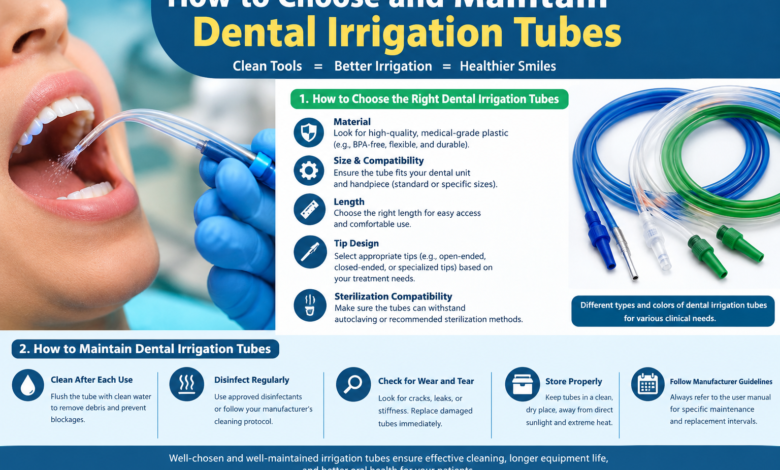
Dental irrigation tubes play an important role in modern dental care. They help deliver water or other appropriate irrigation solutions to dental instruments during procedures, including handpiece cooling, ultrasonic scaling, air-water syringe use, and certain irrigation applications. Because these tubes carry water directly toward the treatment area, choosing the correct tubing and maintaining it properly are important parts of an effective infection-control program.
Dental unit waterlines are commonly made from small-diameter plastic or silicone tubing. Their narrow internal pathways, inconsistent water flow, and periods of stagnation can encourage the development of biofilm. For this reason, dental professionals need a consistent approach to selecting, cleaning, monitoring, and replacing irrigation tubing.
Why Dental Irrigation Tubes Matter
Dental irrigation tubes are more than simple accessories. They form part of the water-delivery pathway used by dental equipment. If waterlines are not appropriately maintained, microorganisms can accumulate inside the tubing and form biofilm.
The CDC recommends that water used for routine, nonsurgical dental treatment meet the drinking-water standard of no more than 500 colony-forming units of heterotrophic bacteria per milliliter. Regular treatment and monitoring are therefore important components of dental infection prevention.
For patients and dental teams, this means irrigation tubing should be considered part of the overall dental equipment maintenance system rather than an isolated disposable component.
How to Choose the Right Dental Irrigation Tubes
Check Equipment Compatibility
The first step is making sure the tubing is compatible with the dental unit and instruments being used. Check the equipment manufacturer’s instructions for the appropriate tubing dimensions, connectors, pressure requirements, and approved maintenance products.
A tube that physically fits a connection is not necessarily suitable for the system. Incorrect tubing can affect water delivery, create leaks, or interfere with proper maintenance.
Choose Appropriate Materials
Dental irrigation tubing may be manufactured from materials such as polyurethane, PVC, or silicone. The selected material should be appropriate for the intended dental application and compatible with the cleaning and disinfection procedures specified by the manufacturer.
Before purchasing replacement tubing, dental practices should verify whether it is designed for single use or reusable applications and whether it can tolerate the required treatment process.
Consider Tube Size and Length
The diameter and length of tubing can influence water delivery and ease of use. Tubing should provide enough reach for the intended equipment without creating unnecessary loops, bends, or kinks.
A suitable tube should allow smooth water flow while remaining manageable around the dental chair and instruments. The manufacturer’s specifications should take priority over generic sizing recommendations.
Consider the Intended Procedure
The type of dental procedure is another important consideration. Routine nonsurgical treatment and oral surgical procedures have different irrigation requirements.
The CDC and ADA recommend sterile saline or sterile water for irrigation or cooling during oral surgical procedures. Conventional dental-unit waterlines cannot reliably provide sterile water, even when an independent water reservoir is used. Sterile delivery devices, sterile tubing that bypasses the dental-unit waterline, or appropriate sterile single-use systems should therefore be used when sterile irrigation is required.
How to Maintain Dental Irrigation Tubes
Flush Waterlines Between Patients
One basic maintenance practice is flushing appropriate dental devices after patient treatment. CDC recommendations call for water and air to be discharged for at least 20–30 seconds after each patient from dental devices connected to the water system that enter the patient’s mouth, such as handpieces, ultrasonic scalers, and air-water syringes.
Flushing helps physically remove material that may have entered the system during treatment.
Follow the Manufacturer’s Cleaning Instructions
There is no single cleaning chemical or maintenance procedure that is appropriate for every dental unit. Different systems and tubing materials may have different requirements.
The FDA advises dental professionals to follow the dental-unit manufacturer’s instructions for cleaning and disinfection and to avoid products that have not been approved for the specific device. An incompatible chemical can damage tubing or other components and potentially create additional problems.
Treat Waterlines Regularly
Dental waterlines require regular treatment because flushing alone does not eliminate established biofilm. CDC guidance recommends regular treatment of dental unit waterlines using appropriate products and procedures selected according to the equipment manufacturer’s instructions.
Treatment programs may include chemical treatment, filtration, self-contained water systems, or combinations of technologies. The appropriate method depends on the dental unit and its manufacturer’s instructions.
Monitor Water Quality
A maintenance program should include water-quality monitoring. Cleaning a waterline does not automatically demonstrate that the treatment has been successful.
The ADA and CDC recommend monitoring dental treatment water to verify that appropriate water-quality standards are being maintained. Dental practices should follow the testing schedule recommended by the equipment or water-treatment manufacturer and take corrective action when results indicate that treatment has not been effective.
Inspect Tubes for Damage
Regular visual inspection can help identify problems before they interfere with dental treatment. Staff should look for:
- Cracks or splits
- Leaks
- Kinks
- Discoloration
- Cloudiness
- Particles in the water
- Clogging
- Unusual odors
- Damaged connectors
The FDA recommends monitoring dental waterlines for damage or visible contamination and replacing components when necessary or according to manufacturer instructions.
Proper Storage and Downtime Procedures
Stagnant water can contribute to biofilm development. For systems using separate water reservoirs, the FDA recommends purging dental-unit waterlines nightly and whenever the equipment is out of service, as appropriate to the manufacturer’s instructions.
Dental staff should also follow the manufacturer’s instructions for preparing equipment after extended periods of non-use. A written procedure can help ensure that every member of the team follows the same steps.
Single-Use and Reusable Tubing
Not every irrigation tube should be treated in the same way. Single-use tubing and components should be disposed of after use according to applicable infection-control procedures.
Reusable components should only be reprocessed when they are specifically designed for reuse and when the manufacturer provides validated reprocessing instructions. Dental practices should never assume that a generic tube can safely withstand chemical disinfection, heat, or sterilization.
For surgical procedures requiring sterile irrigation, sterile single-use tubing or another appropriate sterile delivery system can provide a suitable pathway for sterile water or saline.
Common Mistakes to Avoid
Several mistakes can reduce the effectiveness of a dental irrigation-tube maintenance program:
- Selecting tubing without checking equipment compatibility.
- Using unsuitable cleaning chemicals.
- Assuming an independent water bottle automatically provides sterile water.
- Failing to flush appropriate waterlines between patients.
- Ignoring visible tubing damage or contamination.
- Treating single-use components as reusable.
- Failing to monitor water quality.
- Using conventional dental-unit waterlines when sterile surgical irrigation is required.
The CDC specifically emphasizes that independent reservoirs alone are not sufficient to ensure appropriate dental treatment water quality.
Creating a Simple Maintenance Routine
A dental practice can make irrigation-tube maintenance easier by establishing a written routine. The routine can include checking tubing and connectors, flushing appropriate lines between patients, performing scheduled waterline treatment, monitoring water quality, inspecting equipment for damage, and replacing components according to manufacturer recommendations.
Staff training is also important. Everyone who works with the dental unit should understand the practice’s waterline maintenance procedure and know where to find the manufacturer’s current instructions.
Final Thoughts
Knowing How to Choose and Maintain Dental Irration Tubes is an important part of responsible dental equipment management. The right tubing should be compatible with the dental unit, appropriate for the intended procedure, and suitable for the required cleaning or reprocessing method.
Maintenance is equally important. Regular flushing, manufacturer-approved waterline treatment, water-quality monitoring, inspection, and timely replacement can help support safe and reliable dental water delivery.
Most importantly, routine dental treatment and surgical irrigation should not be treated as identical situations. For oral surgical procedures requiring sterile irrigation, CDC and ADA guidance calls for sterile water or saline delivered through an appropriate sterile system rather than relying on conventional dental-unit waterlines.
Dental practices should always follow the latest manufacturer Instructions for Use, applicable infection-control requirements, and local regulations when selecting and maintaining dental irrigation equipment.




