Unlocking the Future: How Innovation Is Shaping Tomorrow
Exploring how technology, innovation, and sustainable ideas are creating new possibilities for tomorrow.

Introduction
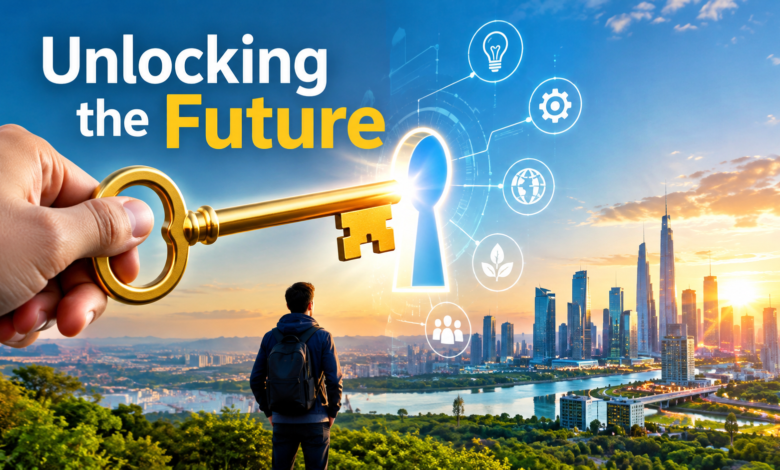
The phrase Unlocking the Future represents more than technological progress. It describes humanity’s continuing effort to discover new possibilities, solve difficult problems, and build a world that is more connected, sustainable, and adaptable. From artificial intelligence and advanced digital systems to clean energy and smarter infrastructure, innovation is changing how people work, communicate, learn, and live.
The future is not created by technology alone. Education, creativity, responsible decision-making, collaboration, and sustainable development will all influence how emerging technologies affect society.
Technology Is Opening New Possibilities
Digital technology has become one of the most important forces shaping the future. Artificial intelligence, automation, robotics, cloud computing, advanced data systems, and connected devices are transforming businesses and everyday experiences.
The World Economic Forum’s Future of Jobs Report 2025 identifies broadening digital access, artificial intelligence and information processing, robotics, and energy technologies among the major forces expected to transform businesses through 2030.
These developments can help organizations analyze information more efficiently, automate repetitive tasks, improve services, and create new products. At the same time, technological change can disrupt established occupations, making education and continuous learning increasingly important.
Artificial Intelligence and the Future of Work
Artificial intelligence is one of the most visible technologies in the future of work. AI systems can assist with research, analysis, communication, design, programming, and many other activities.
According to the World Economic Forum, AI and big data are expected to be among the fastest-growing skill areas between 2025 and 2030, alongside networks and cybersecurity and technological literacy. Human abilities such as creative thinking, resilience, flexibility, curiosity, and lifelong learning are also expected to become increasingly important.
This suggests that preparing for the future is not simply about learning how to use new machines or software. People also need the ability to understand problems, evaluate information, communicate effectively, and adapt when circumstances change.
Building a New Generation of Skills
As technology develops, education must evolve as well. Traditional knowledge remains important, but learners increasingly need opportunities to develop digital literacy, analytical thinking, creativity, collaboration, and problem-solving skills.
The World Economic Forum estimates that 39% of workers’ existing skill sets could be transformed or become outdated between 2025 and 2030. Its research also indicates that significant numbers of workers will require additional training during this period.
Lifelong learning can therefore become an important part of professional and personal development. Instead of viewing education as something that ends after school or university, people can treat learning as an ongoing process.
Sustainability and a Greener Future
Unlocking the future also means addressing environmental challenges. Innovation can support cleaner energy, more efficient transportation, sustainable manufacturing, resilient infrastructure, and better resource management.
The United Nations Sustainable Development Goals provide a global framework covering issues such as poverty, inequality, climate change, environmental protection, economic development, and social well-being. Goal 9 specifically focuses on resilient infrastructure, sustainable industrialization, and innovation.
Recent UN reporting emphasizes that progress toward the 2030 Sustainable Development Goals has been meaningful but uneven. Expanding access to technology, strengthening investment, accelerating the energy transition, and improving international cooperation are among the areas identified for greater action.
Smart Cities and Connected Communities
Future cities are likely to rely increasingly on connected infrastructure. Digital systems can help cities manage transportation, energy use, water systems, public services, and communication.
Smart infrastructure can potentially make urban environments more efficient and resilient. However, successful development also requires attention to affordability, accessibility, privacy, cybersecurity, and the digital divide.
The goal should not simply be to create cities filled with advanced technology. Technology should help create communities where people can access essential services and participate in economic and social opportunities.
Innovation Must Remain Human-Centered
Technological progress creates opportunities, but it also raises important questions. Who benefits from innovation? How should personal data be protected? How can communities prepare for changing employment patterns? How can new technologies be made accessible to people with different economic and educational circumstances?
The United Nations has emphasized that innovation for sustainable development needs to be equitable, scalable, and capable of benefiting people broadly rather than only those who already have access to advanced resources.
Responsible innovation therefore requires cooperation among governments, businesses, researchers, educators, communities, and individuals.
The Future of Jobs and Opportunity
The changing labor market illustrates why adaptability matters. The World Economic Forum’s 2025 research projects substantial job creation alongside significant job displacement through 2030, with technological change, economic conditions, demographic shifts, and the green transition all contributing to workforce transformation.
This does not mean that technology has one predetermined effect on employment. Outcomes depend on how organizations adopt technology, how workers are supported, and how education and training systems respond.
New opportunities can emerge in areas such as AI, data, cybersecurity, renewable energy, environmental engineering, healthcare technology, and advanced manufacturing. At the same time, many existing professions can change as digital tools become integrated into everyday work.
Preparing for Tomorrow
Unlocking the future begins with preparation today. Individuals can develop adaptable skills, remain curious, understand emerging technologies, and continue learning throughout their lives. Organizations can invest in training and responsible innovation. Communities can expand access to digital infrastructure and education.
Governments and institutions also have an important role in creating conditions where innovation can contribute to broad social and economic progress.
The future is therefore not simply something that arrives. It is shaped by choices made in education, business, technology, infrastructure, environmental policy, and everyday life.
Conclusion
Unlocking the Future is ultimately about turning possibilities into meaningful progress. Artificial intelligence, digital connectivity, renewable energy, advanced infrastructure, and new learning opportunities are opening doors that previous generations could only imagine.
Yet the most important question is not how advanced technology can become. It is how wisely society chooses to use that technology.
A successful future will require both innovation and responsibility. By combining technological knowledge with creativity, education, sustainability, cooperation, and human-centered thinking, society can work toward a future where progress creates opportunities while addressing the challenges that come with change.
The future remains open—and the choices made today will help determine what lies beyond the door.




