Why Telemedicine is Revolutionizing the Healthcare Industry
How Digital Care Is Improving Access, Convenience, and Modern Patient Services

Introduction
Healthcare is changing rapidly as digital technology becomes a larger part of everyday life. One of the most significant developments is telemedicine, which allows patients to communicate with healthcare professionals without always needing to visit a medical facility in person.
Telemedicine can include video consultations, telephone appointments, remote patient monitoring, digital follow-ups, and other technology-supported healthcare services. The World Health Organization describes telemedicine as a way of overcoming distance barriers while improving clinical management and extending healthcare coverage.
For patients who live far from specialists, have mobility challenges, need routine follow-ups, or simply require convenient access to healthcare, this approach can provide valuable alternatives to traditional appointments.
What Is Telemedicine?
Telemedicine is the delivery of healthcare services through telecommunications and digital technologies. Depending on the healthcare system and medical need, patients may speak with doctors through video or telephone, exchange information digitally, receive follow-up care remotely, or use connected devices to share health measurements.
It does not mean that every medical condition can be treated remotely. Physical examinations, diagnostic procedures, emergency treatment, and many other services still require face-to-face healthcare. Instead, telemedicine adds another method of connecting patients and healthcare professionals.
Easier Access to Healthcare
One of the biggest reasons telemedicine is transforming healthcare is improved access.
Patients in rural or underserved communities may have difficulty reaching specialists or major healthcare facilities. Traveling can require considerable time, money, and planning. Remote consultations can reduce some of these geographical barriers.
The WHO has identified expanded access, reduced unnecessary visits, and more timely care among the potential benefits of telemedicine.
This can be particularly valuable when a patient needs a specialist consultation but does not necessarily need to travel for every appointment.
Greater Convenience for Patients
Traditional healthcare appointments can involve transportation, waiting rooms, parking, and time away from school, work, or family responsibilities.
Telemedicine can simplify some appointments by allowing patients to communicate with healthcare professionals from an appropriate private location. This convenience may also make it easier for people to attend follow-up appointments.
Research reviews have found that patients can report higher satisfaction with telehealth, particularly when remote care saves time or expenses compared with alternatives.
Supporting Chronic Disease Management
Telemedicine has become especially useful for ongoing conditions that require regular monitoring and communication.
Patients managing conditions such as diabetes may benefit from regular digital interactions, monitoring, education, and follow-up. A 2024 systematic review reported improvements in access and patient outcomes in several telemedicine applications, with particularly encouraging findings in chronic disease management and diabetes care.
Remote monitoring can also allow healthcare teams to receive information between appointments. This can support earlier recognition of changes and more continuous management when appropriate technology and clinical processes are available.
Connecting Patients With Specialists
Specialist healthcare is not equally available everywhere. Telemedicine can help connect patients with professionals who may be located far from their communities.
Electronic consultations can also allow primary-care clinicians to seek specialist input without immediately requiring a traditional referral visit. Research on electronic consultations has examined their potential relationship with access to specialist expertise and hospital referrals.
This model can be particularly useful when specialist knowledge is needed for decision-making but a physical examination is not necessarily required at that stage.
Reducing Unnecessary Travel
Healthcare-related travel can create a significant burden for patients and families. Telemedicine can reduce some journeys for consultations, follow-ups, and selected monitoring services.
This can be important for people who live in remote locations or who find transportation difficult. WHO guidance identifies reducing unnecessary clinical visits and expanding access to underserved communities as potential advantages of telemedicine.
However, avoiding travel should not become the primary goal when an in-person examination is medically necessary.
Improving Continuity of Care
Healthcare often involves more than a single appointment. Patients may need follow-up discussions, medication reviews, treatment monitoring, or communication with different members of their care team.
Telemedicine can become part of this continuing-care process. Instead of treating digital appointments as a complete replacement for traditional healthcare, many systems are developing hybrid models that combine remote and in-person services.
This approach recognizes that different medical situations require different forms of care.
Telemedicine and Healthcare Efficiency
Digital healthcare can also change how healthcare organizations use their resources. Remote consultations may reduce some unnecessary facility visits and allow certain follow-up services to happen outside traditional clinical settings.
WHO research emphasizes that digital technologies can contribute to more efficient healthcare delivery, while also stressing the importance of appropriate infrastructure, standards, and equitable access.
Efficiency, however, depends on how telemedicine is designed and implemented. Poorly integrated systems can create additional administrative work or make communication more difficult.
Better Support for Patients With Limited Mobility
For some patients, reaching a healthcare facility can be challenging because of mobility limitations, transportation problems, or the need for assistance from another person.
Remote healthcare can remove some of these logistical barriers for appointments that are clinically suitable for telemedicine.
It can also help healthcare professionals maintain contact with patients who might otherwise find frequent travel difficult.
The Role of Technology in Modern Healthcare
Telemedicine is part of a broader digital-health transformation. Smartphones, secure communication platforms, electronic health records, connected monitoring devices, and other technologies are increasingly becoming part of healthcare delivery.
Remote monitoring is particularly relevant to chronic disease management because it can support ongoing observation rather than relying entirely on occasional clinic visits. WHO materials also describe remote monitoring as an emerging component of digital health and emphasize the importance of appropriate validation and equitable access.
Challenges Telemedicine Still Faces
Despite its benefits, telemedicine is not a perfect replacement for traditional healthcare.
A major challenge is the digital divide. Patients may lack reliable internet access, suitable devices, digital skills, or the ability to use online healthcare platforms. Research has also found that differences in telehealth utilization can persist across demographic and socioeconomic groups.
Healthcare organizations must also consider privacy, cybersecurity, clinical safety, technology reliability, reimbursement, regulations, and staff training.
The WHO has highlighted infrastructure limitations, regulatory gaps, accessibility challenges, reimbursement frameworks, and standardized clinical guidance as important issues for sustainable telemedicine adoption.
Telemedicine Does Not Replace Every Doctor Visit
It is important to understand that telemedicine works best when matched to the right clinical situation.
Some conditions require physical examination, laboratory testing, imaging, procedures, or emergency intervention. In these situations, an in-person appointment may be necessary.
Evidence comparing telehealth and in-person care also varies according to the clinical area and type of outcome. A systematic review of 77 studies found that differences in many healthcare utilization and clinical outcomes were generally small or varied by clinical context, while noting limitations in the underlying evidence.
The future is therefore more likely to involve appropriate combinations of remote and in-person care rather than a complete replacement of traditional healthcare.
The Future of Telemedicine
Telemedicine is likely to remain an important part of healthcare as digital infrastructure improves and healthcare organizations learn how to integrate remote services effectively.
Future systems may increasingly combine virtual consultations, remote monitoring, electronic health records, digital health applications, and traditional clinical services.
For telemedicine to deliver sustainable benefits, healthcare providers need to focus not only on technology but also on patient safety, accessibility, privacy, clinical quality, and inclusion.
Conclusion
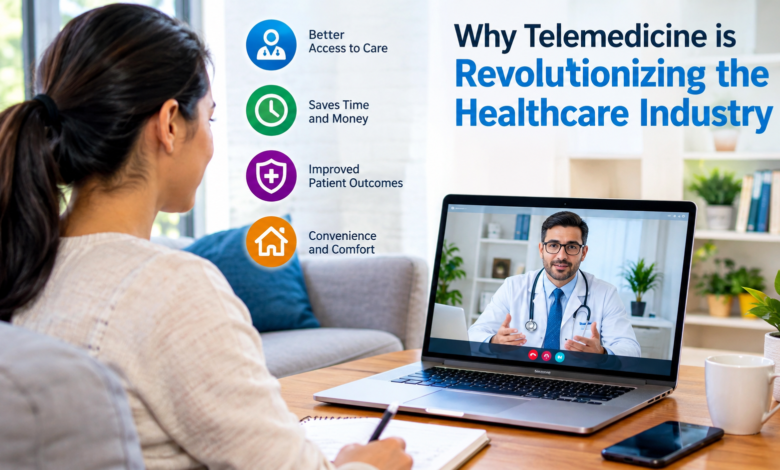
Why telemedicine is revolutionizing the healthcare industry comes down to its ability to connect patients and healthcare professionals in new ways. It can improve access, reduce some unnecessary travel, support chronic disease management, increase convenience, and connect patients with specialists across geographical boundaries.
At the same time, telemedicine has limitations. Digital inequality, infrastructure, privacy, regulation, and clinical suitability all need careful attention.
The strongest future for telemedicine is therefore not necessarily a healthcare system without physical appointments. Instead, it is a connected healthcare model where digital and in-person services work together to provide appropriate care for different patient needs.