How St. Louis Drivers Can Protect Themselves After Truck Accidents
Essential Steps for Staying Safe and Protecting Your Rights

Introduction
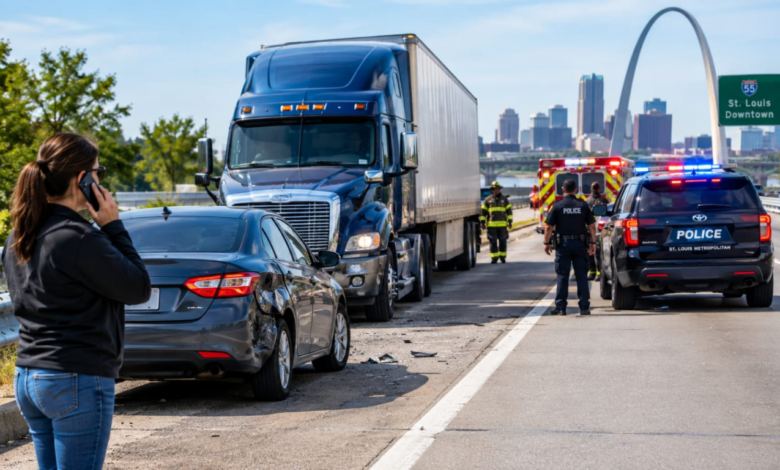
A collision involving a commercial truck can be a stressful experience for any St. Louis driver. Large trucks can cause significant vehicle damage and serious injuries because of their size and weight. After a crash, knowing what steps to take can help protect your safety, preserve important information, and make the insurance process easier.
For drivers in St. Louis, the first priority should always be safety. Missouri’s Department of Revenue requires motorists involved in crashes to stop, help injured people, contact law enforcement, and exchange important information with other parties.
Stay at the Crash Scene
Never simply drive away after a collision. Missouri law requires drivers involved in an accident to stop, and leaving the scene can be a crime. If your vehicle is creating an immediate traffic hazard, it may be appropriate to move it to a safer location when possible.
If the vehicles can safely be moved after a minor crash, the Missouri Department of Transportation recommends moving them out of the travel lane. This can reduce the risk of another collision and improve safety for drivers, passengers, police officers, and emergency responders.
Check for Injuries and Call for Help
After a truck collision, check yourself and other occupants for injuries when it is safe to do so. If anyone is seriously injured, call 911 and request emergency assistance.
Avoid creating additional danger by standing in an active traffic lane. MoDOT advises motorists involved in a crash to remain inside the vehicle when possible and use hazard lights or other warnings to alert approaching traffic.
Some injuries may not be immediately obvious after a stressful collision. If you experience pain, dizziness, or other concerning symptoms, seek appropriate medical attention.
Contact Law Enforcement
Calling law enforcement creates an official record of the incident and allows officers to address traffic hazards and investigate what happened.
Missouri’s Department of Revenue specifically instructs drivers involved in crashes to contact the police and remain at the scene until a law enforcement officer says they may leave.
When speaking with officers, provide accurate information about what happened. Avoid guessing about details you do not know.
Exchange Information With the Truck Driver
Drivers should exchange essential information after a collision. Missouri’s Department of Revenue identifies information such as names, addresses, driver’s license numbers, vehicle identification information, license plates, insurance companies, and policy numbers as information that should be exchanged.
For a truck accident, it can also be useful to carefully document identifying information about the truck and trailer when it can be obtained safely. Commercial vehicles may have multiple identifying numbers, so photographs can help preserve information accurately.
Photograph the Crash Scene
If conditions are safe, take photographs and videos of the vehicles and surrounding area.
Useful documentation may include:
- Damage to your vehicle
- Damage to the truck
- Vehicle positions
- License plates
- Road conditions
- Traffic signals and signs
- Visible skid marks or debris
- Weather and lighting conditions
- Nearby intersections or landmarks
St. Louis has busy roads, highways, intersections, and construction areas where the location and surrounding conditions may be important to understanding how a collision occurred.
Do not put yourself in danger simply to obtain a photograph. Safety should come first.
Collect Witness Information
People who saw the crash may have information that becomes useful later. If witnesses are willing to provide their names and contact information, record it accurately.
A witness may remember details that the drivers did not notice during the immediate confusion following a collision.
Notify Your Insurance Company
Contact your automobile insurance provider after the accident and provide accurate information about the crash.
Missouri requires motor vehicle owners and drivers to maintain qualifying liability insurance. The state’s minimum liability limits are $25,000 per person and $50,000 per accident for bodily injury, plus $25,000 per accident for property damage. Missouri also requires uninsured-motorist bodily-injury coverage at specified minimum limits.
Your individual policy may provide coverage beyond the state minimums, so review your policy or speak with your insurer about the coverage that applies to your situation.
Be Careful With Statements About Fault
Immediately after a truck accident, emotions can run high. Drivers should focus on accurately describing what they observed rather than making assumptions about legal responsibility.
For example, instead of saying that you know exactly who caused the crash, describe what you saw, heard, and experienced.
The police investigation, photographs, witness accounts, vehicle damage, road conditions, and other evidence may all contribute to determining what happened.
Preserve Important Evidence
Keep photographs, medical records, repair estimates, insurance correspondence, police documentation, and other relevant records related to the crash.
Do not intentionally alter or destroy information connected with the accident. If there are potentially important photographs, videos, or electronic records, preserving them promptly can help maintain an accurate record of the event.
Understand Missouri Accident Reporting Requirements
Missouri has specific requirements concerning accident reports involving uninsured motorists.
According to the Missouri Department of Revenue, an accident generally must be reported to the Driver License Bureau when it involved an uninsured motorist and resulted in property damage exceeding $500 to one person’s property or involved an injury or death. The state statute also addresses reporting requirements and provides a 30-day period for qualifying accidents.
Because reporting requirements can depend on the circumstances, drivers should review the current Missouri requirements or obtain professional legal advice when they are unsure whether a report is required.
Consider Getting Legal Information
Truck crashes can involve complicated questions concerning insurance coverage, injuries, vehicle damage, commercial transportation records, and responsibility for the collision.
If a St. Louis driver has suffered significant injuries or faces a disputed claim, obtaining information from a qualified Missouri attorney may help explain the legal process and available options.
A local attorney can review the specific circumstances instead of relying on general information about truck accidents.
Avoid Posting About the Accident Online
Social media posts can become part of the information surrounding an insurance or legal dispute. Drivers should be cautious about posting photographs, statements, or opinions about the collision before understanding how those statements could affect their situation.
Keep communications factual and preserve relevant evidence rather than speculating publicly about who was responsible.
Protect Yourself After a Truck Crash
Knowing what to do immediately after a truck accident can make a difficult situation more manageable. St. Louis drivers should prioritize safety, remain at the scene, seek emergency assistance when necessary, contact law enforcement, exchange information, document the circumstances when safe, notify their insurer, and preserve relevant records.
Missouri’s official guidance provides the foundation for handling an accident scene, while individual circumstances may require additional legal or insurance guidance.
The most important principle is simple: protect people first, document the facts carefully, and make informed decisions about the next steps.



