Daley Thompson: A Powerful Journey Through Olympic Decathlon
The remarkable story of Britain’s double Olympic champion and legendary Olympic athlete

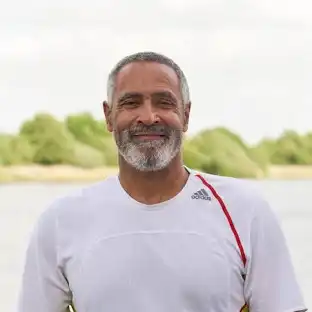
Introduction
Daley Thompson is one of the most recognized names in British athletics and a defining figure in the history of the decathlon. Born on 30 July 1958 in Notting Hill, London, he developed from a talented young sportsman into a double Olympic champion who dominated the event during the 1980s. His career included two Olympic gold medals, a World Championship title, two European titles, three Commonwealth titles, and four world records. His personal-best decathlon score of 8,847 points remains the British record.
Thompson’s journey was not without difficult moments. His childhood included the loss of his father and an early life that required considerable independence, while his later athletic career was affected by injuries. Nevertheless, his ability to compete across ten demanding events made him an outstanding Olympic athlete and one of Britain’s most successful combined-event competitors. His story combines sporting achievement, determination, family experiences, rivalry, and a lasting connection with athletics.
Quick Bio
| Detail | Information |
|---|---|
| Full Name | Francis Morgan “Daley” Thompson |
| Known As | Daley Thompson |
| Date of Birth | 30 July 1958 |
| Birthplace | Notting Hill, London, England |
| Nationality | British |
| Profession | Former decathlete |
| Sport | Athletics |
| Event | Decathlon |
| Olympic Gold Medals | 2 |
| World Championship Titles | 1 |
| European Championship Titles | 2 |
| Commonwealth Titles | 3 |
| World Records | 4 |
| Personal Best | 8,847 points |
| Height | 184 cm |
| Weight | 92 kg |
| Major Clubs | Haywards Heath Harriers, Newham and Essex Beagles |
| Major Coach | Bob Mortimer |
| Honours | MBE, OBE, CBE |
The biographical information above is supported by Olympedia, World Athletics, Team GB, The Athletics Museum, and Thompson’s official website.
Early Life and Family Background
Daley Thompson was born in Notting Hill, London, as the second son of Frank Thompson and Lydia Thompson. His father was British Nigerian and ran a minicab firm, while his mother was Scottish and came from Dundee. Thompson spent part of his childhood at Farley Close boarding school in Sussex, where his sporting ability began to become noticeable.
Football was initially Thompson’s preferred sporting ambition, and he wanted to become a professional footballer. During his school years, however, he trained as a sprinter and achieved success in school athletics. The combination of speed, jumping ability and strength eventually made the decathlon a natural direction for his career.
Discovering the Decathlon
Thompson was initially associated with Haywards Heath Harriers before returning to London in 1975 and joining the Newham and Essex Beagles. He was training primarily as a sprinter when coach Bob Mortimer suggested that he try the decathlon. Thompson accepted the challenge and competed in his first decathlon in Cwmbran, Wales, later in 1975. He won that competition and followed it with another victory.
His rapid development continued in 1976. At only 17, he won the AAA decathlon title and then represented Great Britain at the Montreal Olympic Games. He finished 18th, but the experience gave the young athlete valuable exposure to the highest level of international competition.
Career Breakthrough
In 1977, Thompson won the European Junior Decathlon title in Donetsk. This became his first major international championship victory and marked an important step in his development as an Olympic athlete. He also competed successfully in the long jump, demonstrating the versatility that became central to his sporting identity.
In 1978, he won his first Commonwealth Games decathlon gold medal. This was the beginning of a remarkable period in which Thompson would establish himself among the leading combined-event athletes in the world. The positive momentum continued even though 1979 brought a setback when he failed to finish his only decathlon of that year.
Daley Thompson and Olympic Glory
Moscow 1980
Thompson entered the 1980 Olympic season in outstanding form. In May, he established a decathlon world record of 8,648 points at Götzis in Austria. Later that year, he travelled to Moscow for the Olympic Games and won the decathlon gold medal.
The Moscow victory transformed Thompson from a promising young athlete into an Olympic champion. His combination of speed, power and endurance allowed him to perform consistently across all ten events, establishing the foundation for the extraordinary decade that followed.
Los Angeles 1984
The 1984 Olympic Games became another defining moment. Thompson spent much of the summer preparing in California for the defence of his Olympic title. His major rival was West German decathlete Jürgen Hingsen, who had taken the world record from him before the Games.
Thompson led from the opening event and maintained his advantage throughout the competition. His original winning total of 8,798 points was subsequently recalculated to 8,847 after the introduction of new scoring tables. That mark remained the world record until 1992 and continues to stand as the British record.
World Records and Major Championships
Thompson broke the decathlon world record four times between 1980 and 1984. His progression included 8,648 points at Götzis in 1980, 8,730 at Götzis in 1982, 8,774 at the European Championships in Athens later in 1982, and the recalculated 8,847-point performance from his 1984 Olympic victory.
His championship record was equally impressive. He won the inaugural World Championships decathlon in 1983 and held Olympic, World, European and Commonwealth titles simultaneously. He later won European and Commonwealth titles again in 1986, completing an exceptional collection of international honours.
Career Timeline
| Year | Career Achievement |
|---|---|
| 1975 | Won his first decathlon in Cwmbran |
| 1976 | Won AAA decathlon title and competed at Montreal Olympics |
| 1977 | Won European Junior Decathlon title |
| 1978 | Won first Commonwealth Games decathlon gold |
| 1980 | Set world record and won Olympic gold in Moscow |
| 1982 | Set two world records and won European and Commonwealth titles |
| 1983 | Won inaugural World Championships decathlon |
| 1984 | Won second Olympic gold in Los Angeles |
| 1986 | Won European and Commonwealth decathlon titles |
| 1987 | Finished ninth at World Championships |
| 1988 | Finished fourth at Seoul Olympics |
| 1990 | Withdrew from Commonwealth Games team because of injury |
| 1992 | Retired from competitive athletics |
This timeline is based on Thompson’s official biography, Team GB, Olympedia, World Athletics, and The Athletics Museum.
Rivalry With Jürgen Hingsen
One of the most memorable parts of Thompson’s career was his rivalry with West German decathlete Jürgen Hingsen. The two athletes repeatedly challenged each other for the world record, creating one of the most closely followed rivalries in international combined-events athletics.
Although Hingsen held the world record at points during the early 1980s, Thompson consistently produced major championship victories. At the 1984 Los Angeles Olympics, Thompson defeated Hingsen while equalling his world-record total before the later scoring adjustment gave Thompson the 8,847-point record.
Later Career and Retirement
Thompson’s dominance eventually came to an end at the 1987 World Championships, where he finished ninth. This was his first decathlon defeat in nine years. At the 1988 Seoul Olympics, he finished fourth, narrowly missing another Olympic medal.
In 1990, Thompson withdrew from the Commonwealth Games team because of injury. A persistent hamstring problem eventually brought his competitive athletics career to an end in 1992. This was a difficult conclusion to an otherwise highly successful period in international sport.
Life After Athletics
After competitive athletics, Thompson remained involved in sport and fitness. His post-athletics activities have included fitness coaching, speaking and other sports-related work. His reputation as an Olympic athlete has also allowed him to continue sharing his experiences with audiences interested in performance and personal development.
Thompson’s life after competition has also included television and documentary projects. In 2024, Sky announced the documentary Daley, which explored his sporting achievements alongside previously discussed personal experiences and relationships with family, coaches and fellow athletes.
Awards and Honours
Thompson’s sporting achievements were accompanied by national recognition. The Athletics Museum records his MBE in 1983 and CBE in 2000, while the National Portrait Gallery records his MBE, OBE and CBE honours. He was also named BBC Sports Personality of the Year in 1982.
His honours reflect the significance of his achievements during one of the most competitive periods in international athletics. His Olympic victories and world-record performances made him one of the most prominent British athletes of his generation.
Positive and Negative Sides of His Career
The positive side of Thompson’s career is clear in his championship record. Two Olympic gold medals, four world records, a World Championship victory, European titles and three Commonwealth victories demonstrate an extraordinary level of sustained achievement.
The negative side was the physical and personal cost that accompanied such a demanding career. He experienced injuries, including a persistent hamstring problem, while his childhood included difficult family circumstances. His career also ended without another Olympic appearance after 1988, despite his attempt to return for the 1992 Games.
Legacy of Daley Thompson
Daley Thompson’s legacy is closely connected with the growth and popularity of the decathlon in Britain. His ability to compete at a high level across ten different events made him an especially distinctive Olympic athlete. His achievements also helped introduce combined-events athletics to audiences who might otherwise have focused on individual track and field disciplines.
His 8,847-point performance from the 1984 Olympics remains the British record, while his two Olympic victories place him among the small group of athletes to win the Olympic decathlon twice. The Athletics Museum and Olympedia both document the extraordinary breadth of his international achievements.
Conclusion
Daley Thompson’s biography is the story of a British athlete who transformed exceptional versatility into sustained international success. From his early days as a young sprinter to his emergence as a world-class decathlete, he developed into an Olympic champion whose achievements defined an important period of British athletics.
His two Olympic gold medals, four world records, World Championship victory, European titles and Commonwealth successes remain central to his legacy. His career also demonstrates that elite sport includes setbacks as well as victories, with injuries and personal challenges forming part of the wider story. For anyone studying the history of the Olympic athlete or British athletics, Daley Thompson remains an important figure whose competitive record continues to attract attention.
Frequently Asked Questions
1. Who is Daley Thompson?
Daley Thompson is a British former decathlete and two-time Olympic champion.
2. When was Daley Thompson born?
He was born on 30 July 1958 in Notting Hill, London.
3. Who were Daley Thompson’s parents?
His father was Frank Thompson, a British Nigerian minicab businessman, and his mother was Lydia Thompson from Dundee, Scotland.
4. What was Daley Thompson’s original sporting ambition?
He originally wanted to become a professional footballer before concentrating on athletics.
5. Who coached Daley Thompson when he began the decathlon?
Bob Mortimer encouraged Thompson to try the decathlon and coached him during his early development.
6. How many Olympic gold medals did Daley Thompson win?
He won two Olympic decathlon gold medals, at Moscow in 1980 and Los Angeles in 1984.
7. What is Daley Thompson’s famous decathlon record?
His 8,847-point decathlon performance from the 1984 Los Angeles Olympics remains the British record.
8. When did Daley Thompson retire from athletics?
He retired from competitive athletics in 1992 after a persistent hamstring injury.
9. What major titles did Daley Thompson win?
He won two Olympic titles, one World Championship title, two European titles and three Commonwealth Games decathlon titles.
10. What is Daley Thompson famous for besides his Olympic victories?
He is also known for breaking the decathlon world record four times and becoming one of Britain’s most prominent combined-event athletes.




