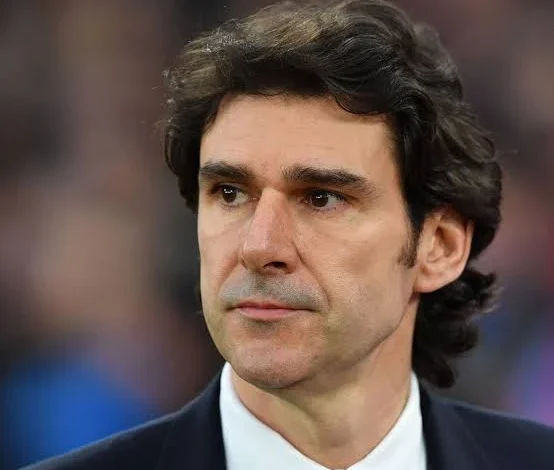
Aitor Karanka: Inspiring Journey From Real Madrid To Spain
From Elite Defender to Spanish Football Leader

Introduction
Aitor Karanka has built an impressive career across several important areas of football, moving from a successful playing career to coaching, technical analysis, and senior football administration. The Spanish former footballer is best known for his time at Real Madrid, where he became part of teams that won three European Cups, before developing a long coaching career in England, Spain, and Israel.
Born in Vitoria-Gasteiz on 18 September 1973, Karanka developed through Athletic Bilbao before joining Real Madrid in 1997. His playing career brought major honours, while his later work as a coach and technical observer gave him a broader understanding of the modern game. In July 2025, he returned to the Royal Spanish Football Federation as Technical Director of Development for the senior men’s national team.
Quick Bio of Aitor Karanka
| Detail | Information |
|---|---|
| Full Name | Aitor Karanka de la Hoz |
| Date of Birth | 18 September 1973 |
| Birthplace | Vitoria-Gasteiz, Spain |
| Nationality | Spanish |
| Profession | Football administrator, coach and former footballer |
| Playing Position | Defender / Centre-back |
| Former Club | Real Madrid |
| Real Madrid Period | 1997–2002 |
| Real Madrid Appearances | 149 competitive matches |
| Spain Senior Caps | 1 |
| Major Playing Honour | Three European Cups with Real Madrid |
| Current Role | Technical Director of Development for Spain’s senior men’s team |
| Notable Managerial Achievement | Middlesbrough promotion to the Premier League |
Early Life and Football Development
Aitor Karanka was born in Vitoria-Gasteiz and developed his football career in the Basque football system. Athletic Bilbao became an important part of his early development, and he progressed through the club’s structure before establishing himself at senior level. His performances as a centre-back eventually attracted the attention of Real Madrid.
His development was based on defensive reliability, aerial strength, and the ability to contribute to the team’s build-up. These qualities helped him become a respected defender and eventually opened the door to one of the biggest clubs in European football. His early career also gave him experience of the Spanish football system that would later become important in his coaching career.
Aitor Karanka at Real Madrid
Karanka joined Real Madrid in 1997 after impressing at Athletic Bilbao. During his five seasons with the club, he made 149 competitive appearances and played alongside famous defenders such as Fernando Hierro and Iván Helguera. Real Madrid describes him as a dependable centre-back who was strong in the air and comfortable with the ball.
The positive side of his Real Madrid career was the remarkable collection of trophies he helped the club achieve. Karanka was involved in three European Cup triumphs and started the final of the eighth European Cup, played in Paris in 2000. However, his career was not without setbacks. A heart condition during the 1998–99 season kept him out of football for several months before he returned to action.
His Spain International Career
Karanka also represented Spain at international level. Real Madrid records one senior international appearance for him, making his international career much shorter than his club career.
Although he did not accumulate a large number of senior caps, his later work within Spanish football allowed him to contribute to the national system in a different capacity. His experience as both a player and coach eventually became valuable when he returned to the Spanish Football Federation.
Career After Real Madrid
After leaving Real Madrid, Karanka returned to Athletic Bilbao. He later continued his playing career in the United States with the Colorado Rapids before bringing his professional playing career to an end in 2006.
Retirement did not mean leaving football behind. Instead, Karanka began preparing for the next stage of his career. He completed coaching courses and moved into youth development before eventually becoming a senior coach. This transition allowed him to use his experience as a professional defender in a new role.
Career Timeline
| Year | Career Milestone |
|---|---|
| 1973 | Born in Vitoria-Gasteiz |
| 1993 | Made his Athletic Bilbao first-team debut |
| 1997 | Joined Real Madrid |
| 1998–99 | Missed several months because of a heart condition |
| 2000 | Started Real Madrid’s European Cup final victory |
| 2002 | Left Real Madrid and returned to Athletic Bilbao |
| 2006 | Ended his professional playing career after Colorado Rapids |
| 2008–2010 | Worked with Spain’s youth national teams |
| 2010–2013 | Real Madrid assistant coach |
| 2013–2017 | Managed Middlesbrough |
| 2016 | Guided Middlesbrough to Premier League promotion |
| 2018 | Managed Nottingham Forest |
| 2020–2021 | Managed Birmingham City |
| 2022 | Managed Granada |
| 2023 | Managed Maccabi Tel Aviv |
| 2025 | Appointed RFEF Technical Director of Development |
Beginning His Coaching Career
Karanka returned to the Spanish national-team structure as a youth coach between 2008 and 2010. The RFEF records that he worked as Spain’s Under-16 national coach and became involved in developing young players who later progressed toward the senior national team.
This period was an important bridge between his playing career and senior management. Rather than immediately moving into a major club job, he gained experience working with developing players and learning the structure of Spanish national-team football.
Real Madrid Assistant Coach
Between 2010 and 2013, Karanka returned to Real Madrid as an assistant coach under José Mourinho. Real Madrid’s own records identify him as the club’s second coach during the 2011–12 and 2012–13 seasons.
Working at Real Madrid gave Karanka valuable experience at the highest level of club football. He worked with elite players and experienced the tactical and competitive demands of Champions League football from the coaching side. This period helped prepare him for his first major head-coaching opportunity.
Middlesbrough and Premier League Promotion
In November 2013, Karanka became head coach of Middlesbrough. He remained with the English club until March 2017 and achieved the biggest managerial success of his career by guiding Middlesbrough to promotion to the Premier League.
The promotion was a major milestone because it demonstrated that Karanka could translate his experience from elite Spanish football into successful management in England. The RFEF highlights Middlesbrough’s promotion as one of the central achievements of his managerial career.
Nottingham Forest and Birmingham City
Karanka later managed Nottingham Forest in 2018. His experience in English football continued when he took charge of Birmingham City in July 2020. His Birmingham tenure lasted until March 2021.
These positions were more challenging periods than his successful Middlesbrough campaign. Nevertheless, they expanded his experience of English football and gave him opportunities to work with different squads, club structures, and competitive environments.
Granada and Maccabi Tel Aviv
Karanka returned to Spain in 2022 to manage Granada. He remained at the club from April until November 2022. His next head-coaching position came in Israel with Maccabi Tel Aviv.
At Maccabi Tel Aviv, he guided the club into European competition and reached the semi-finals of the Israel State Cup. The experience added another international chapter to his managerial career and broadened his knowledge of football outside Spain and England.
UEFA Technical Observer
Alongside his coaching career, Karanka developed an important role as a UEFA Technical Observer from 2020. The RFEF states that he analysed major UEFA competitions, including the Champions League, European Championship, and Nations League. He also delivered masterclasses for new coaches at UEFA headquarters in Nyon.
This work strengthened the analytical side of his career. Instead of focusing only on one club, he could study different tactical approaches and observe how leading teams and coaches adapted to modern football. That experience became particularly relevant when he later moved into technical leadership.
Return to the Spanish Football Federation
In July 2025, the Royal Spanish Football Federation appointed Karanka as Technical Director of Development for the senior men’s national team. The appointment brought him back to an organisation where he had previously worked with Spain’s youth teams.
The position represents a significant change from his previous work as a club manager. Rather than being responsible for one club’s results every week, Karanka now works within the technical structure of Spanish football and maintains a direct relationship with national-team coach Luis de la Fuente and other federation staff.
Family Background and Personal Life
Reliable public sources provide limited information about Karanka’s private family life. His professional biography is well documented, but details about his parents, grandparents, wider family tree, spouse, children, and private relationships are not sufficiently established in the authoritative sources reviewed.
For that reason, those details are not included here. Keeping a biography focused on verified information is more useful than repeating unconfirmed claims, particularly when discussing someone’s private life.
Personality and Football Philosophy
Karanka’s career suggests a strong connection with learning, development, and tactical analysis. His transition from player to youth coach, Real Madrid assistant, club manager, UEFA Technical Observer, and federation technical director shows a willingness to continue developing beyond his playing days.
In a 2024 UEFA publication, Karanka explained that he used periods between coaching jobs to disconnect, update his knowledge, travel, and return to football fully prepared. His comments provide an insight into an approach based on continuous learning and preparation.
Major Achievements
Karanka’s most important achievements can be divided into his playing and coaching careers. As a Real Madrid player, he was involved in three European Cup victories and started the 2000 final. He also earned one Spain senior cap and became an established professional defender.
As a manager, his standout achievement was taking Middlesbrough into the Premier League in 2016. Later, his UEFA technical work and RFEF appointment demonstrated that his football career had expanded beyond traditional coaching into analysis, development, and technical leadership.
Why Aitor Karanka Remains Important in Spanish Football
Karanka’s career is unusual because it covers almost every major level of professional football. He experienced the game as a youth player, professional defender, international footballer, assistant coach, head coach, UEFA analyst, and national-team technical director.
His current role reflects that broad experience. The RFEF appointed him because of his extensive background across different football environments, making his journey an example of how a former professional player can build a second career through coaching, analysis, education, and technical development.
Conclusion
Aitor Karanka’s story is one of steady progression and reinvention. From Athletic Bilbao and Real Madrid to Middlesbrough, UEFA, and the Spanish Football Federation, he has remained connected with football while repeatedly taking on new responsibilities. His career includes major victories as well as difficult managerial periods, but each stage added to his understanding of the game.
Today, Karanka represents more than his achievements as a Spanish former footballer. His experience as a defender, coach, manager, technical observer, and federation official has created a broad football career. His return to the RFEF in 2025 marked another important chapter and placed his experience within the wider development of Spanish football.
Frequently Asked Questions
1. Who is Aitor Karanka?
Aitor Karanka is a Spanish former footballer, coach, technical observer, and football administrator who played for Real Madrid and later managed several clubs.
2. When was Aitor Karanka born?
Aitor Karanka was born on 18 September 1973 in Vitoria-Gasteiz, Spain.
3. What position did Aitor Karanka play?
He played primarily as a centre-back and was known for his aerial ability and defensive reliability.
4. Did Aitor Karanka play for Real Madrid?
Yes, Karanka played for Real Madrid from 1997 to 2002 and made 149 competitive appearances.
5. Did Aitor Karanka win the Champions League?
Yes, he was part of Real Madrid teams that won three European Cups during his five seasons at the club.
6. Is Aitor Karanka married or does he have children?
Reliable authoritative sources reviewed for this biography do not provide sufficiently confirmed information about his spouse or children.
7. What is known about Aitor Karanka’s parents and family background?
Reliable sources document his professional football development but do not provide enough verified information about his parents or wider family tree.
8. What is Aitor Karanka doing now?
He is the Royal Spanish Football Federation’s Technical Director of Development for the senior men’s national team, a role he began in 2025.
9. What was Aitor Karanka’s biggest managerial achievement?
His most notable managerial achievement was guiding Middlesbrough to promotion to the Premier League in 2016.