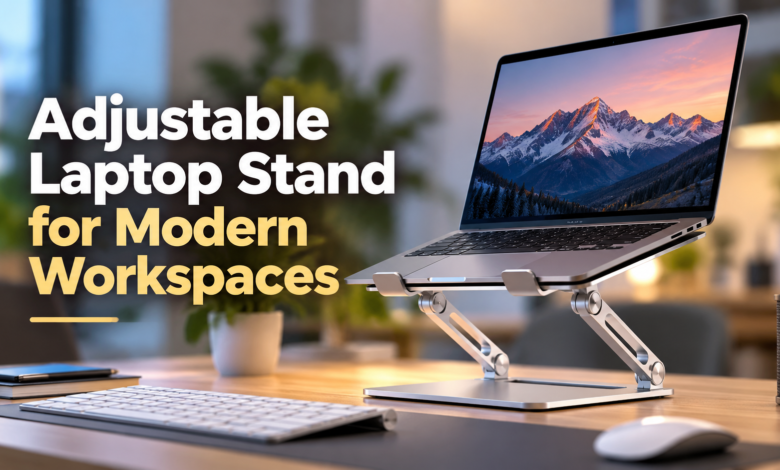
Adjustable Laptop Stand for Modern Workspaces: Features and Benefits
Learn how an adjustable laptop stand can improve screen positioning, support comfortable working habits, and help organise your home or office desk.

Introduction
A laptop makes working easier. You can carry it anywhere. But using it for hours can become uncomfortable.
The screen often sits too low. Your neck bends forward. Your shoulders may feel tense after a long working day.
An adjustable laptop stand offers a simple way to change that setup.
It raises your laptop screen. Some models also change its angle. This gives you more control over how your computer sits on the desk.
Still, choosing the right stand matters. A weak stand can wobble. A poorly positioned one may leave you feeling just as uncomfortable.
Here is what you should know.
Quick Facts About Adjustable Laptop Stands
| Feature | Details |
|---|---|
| Product Name | Adjustable Laptop Stand |
| Product Type | Laptop and Office Accessory |
| Main Purpose | Adjust laptop height and viewing angle |
| Common Materials | Aluminium, steel, plastic |
| Main Features | Height adjustment, tilt adjustment, anti-slip support |
| Design Options | Foldable, portable, desktop, rotating |
| Suitable For | Home offices, workplaces, study desks |
| Common Users | Students, professionals, remote workers |
| Compatibility | Depends on laptop size and stand capacity |
| Extra Accessories | External keyboard and mouse |
| Main Advantage | More flexible screen positioning |
| Maintenance | Regular cleaning and hinge checks |
What Is an Adjustable Laptop Stand?
An adjustable laptop stand is a support accessory that holds a laptop above the desk.
Unlike a basic flat platform, an adjustable model lets users change its position.
Some stands raise the screen. Others change the viewing angle. Certain designs offer both adjustments.
The idea is simple.
People have different working habits. Desk heights also vary. One fixed laptop position may not suit everyone.
An adjustable stand gives users another way to arrange their work area.
Many models use metal arms. Others have folding frames or supporting platforms.
The actual design depends on the manufacturer.
Why Modern Workspaces Need Better Laptop Positioning
Work habits have changed.
People now use laptops at home, in offices, and across shared working spaces. One computer may move between several desks during the week.
That flexibility is useful. But laptop screens and keyboards remain connected.
This creates a common problem.
Moving the screen higher also raises the keyboard. Keeping the keyboard low usually means leaving the display lower.
For long working sessions, that compromise can become uncomfortable.
The UK Health and Safety Executive recommends considering a laptop riser with a separate keyboard and mouse for prolonged laptop use.
This arrangement allows the screen and input devices to sit at different heights.
It makes workstation adjustments easier.
Main Benefits of an Adjustable Laptop Stand
1. Better Screen Height
Screen position makes a difference.
A laptop placed directly on a desk may sit below a comfortable viewing height.
Users sometimes lean forward to read. Others bend their necks to look downward.
An adjustable stand can raise the display.
You can then change the height to suit your chair and working position.
The goal isn’t maximum height. It is comfortable viewing.
Mayo Clinic recommends placing the top of a computer screen at or slightly below eye level.
2. More Comfortable Working Posture
Long working hours can feel tiring.
Poor workstation arrangements may contribute to discomfort in the neck, shoulders, arms, and back.
A laptop stand can help users arrange their screens in a more suitable position.
But there is one catch.
A stand alone cannot fix every posture problem.
Your chair still matters. So does the keyboard position.
For extended typing, an external keyboard and mouse are generally recommended.
This helps keep your arms lower while the laptop screen remains raised.
3. More Flexible Desk Space
Small desks fill up quickly.
A laptop, mouse, notebook, and charging cable can occupy much of the available surface.
Certain laptop stands create space underneath the computer.
Users may place a compact keyboard or other suitable items there when they are not working.
This depends on the design.
Some stands have open bases. Others occupy almost the same desk area as the laptop itself.
Check the dimensions before buying.
4. Easier Screen Adjustment
People rarely sit exactly alike.
Some prefer a higher screen. Others need a lower position because of their chair, eyesight, or desk arrangement.
Adjustable stands make these changes possible.
Height-adjustable models move the display upward or downward.
Tilt-adjustable versions change its angle.
A few designs include rotation.
The best position depends on the user.
5. Better Setup for Video Meetings
Online meetings are common.
But laptop cameras often sit below face level when the computer rests directly on a desk.
Raising the laptop can bring the camera closer to eye height.
This may create a more natural camera angle.
It can also reduce the need to tilt the screen sharply during calls.
Still, check the lighting.
A well-positioned camera cannot compensate for a dark room or bright window behind you.
6. Easier Movement Between Workspaces
Some workers change desks regularly.
A portable stand can make that easier.
Foldable models are especially useful here.
They can fit inside suitable laptop bags and be opened on another desk.
But portability varies.
A heavy metal desktop stand may work better in a permanent office than in a travelling setup.
Different Types of Adjustable Laptop Stands
Not every stand works the same way.
Height-Adjustable Laptop Stands
These models allow users to raise or lower the laptop.
Many include hinged arms or adjustable supporting frames.
They suit desks where screen height needs regular changes.
Check stability before choosing one.
Foldable Laptop Stands
Foldable stands are made for easier storage.
Some collapse into a slim shape. Others have several folding sections.
They can work well for students and hybrid workers.
But the folding mechanism must hold the laptop securely.
Angle-Adjustable Laptop Stands
These stands focus on changing tilt.
Users can choose a viewing angle that feels more comfortable.
Some models offer only limited height adjustment.
They may suit people who need small changes rather than a raised desktop setup.
Rotating Laptop Stands
Certain stands include a rotating base.
This makes it easier to turn the laptop toward another person.
They can be useful during discussions or shared desk work.
Rotation should feel controlled.
A loose rotating mechanism may affect stability.
Heavy-Duty Desktop Stands
Larger laptops need dependable support.
Heavy-duty stands often use substantial frames and stronger adjustment mechanisms.
However, a thick metal frame alone does not prove that a stand can carry a specific laptop.
Always check its rated capacity.
Which Materials Are Commonly Used?
Material affects the stand’s weight and construction.
Aluminium
Aluminium is common in laptop accessories.
It offers good rigidity without the weight of many heavier metals.
Some aluminium stands also have a clean appearance that suits office desks.
Steel
Steel can provide strong support.
It may appear in bases, arms, or adjustment mechanisms.
Steel stands can be heavier, depending on their construction.
Plastic
Plastic stands are often lightweight.
Some are easy to fold and carry.
But their quality varies.
A well-made reinforced plastic stand may be suitable for everyday use, while a weak design can bend or move under load.
Rubber and Silicone Pads
Many stands include protective contact pads.
These help reduce slipping and protect the laptop where it touches the stand.
Check that the pads remain firmly attached.
How to Set Up an Adjustable Laptop Stand Properly
Buying a stand is only the first step.
Correct positioning matters more.
Start With Your Chair
Sit comfortably at your desk.
Keep your feet supported and relax your shoulders.
Adjust your chair so you can reach your keyboard without lifting your shoulders.
Raise the Laptop Screen
Place the laptop securely on the stand.
Raise the display until its top sits around eye level or slightly below.
Avoid forcing your head upward.
Check Viewing Distance
Keep the screen directly in front of you.
Mayo Clinic suggests a viewing distance of approximately 50 to 100 centimetres for a computer monitor.
Your comfortable distance can vary with screen size and vision needs.
Use a Separate Keyboard and Mouse
This is especially helpful.
A raised laptop keyboard may sit too high for comfortable typing.
An external keyboard lets you keep your hands near elbow height.
Place the mouse nearby.
Try to keep your wrists straight.
Test the Setup
Work for a short period.
Check whether you are leaning forward or raising your shoulders.
If something feels awkward, change the arrangement.
Small adjustments can help.
Adjustable Laptop Stand vs Fixed Laptop Stand
Both products support laptops.
Their main difference is flexibility.
| Feature | Adjustable Stand | Fixed Stand |
|---|---|---|
| Height Changes | Usually available | Usually unavailable |
| Tilt Changes | Often available | Usually fixed |
| Moving Parts | More common | Fewer |
| Desk Position | Flexible | Predetermined |
| Maintenance | Hinges may need checking | Usually simpler |
| Portability | Depends on model | Depends on model |
| Suitable For | Changing work setups | Consistent desk setups |
An adjustable model suits users who need different screen positions.
A fixed stand may be sufficient when the desk, chair, and viewing requirements remain consistent.
What to Check Before Buying
Not all laptop stands are equally suitable.
Start with the basics.
Laptop Compatibility
Check the supported laptop dimensions.
Also look at the maximum weight capacity.
A stand must safely hold your computer.
Adjustment Range
Look at how far the stand can move.
Some offer small angle changes. Others provide a much wider height range.
Choose based on your actual desk setup.
Base Stability
A stable base matters.
Check the contact points, frame, and hinge construction.
The stand should remain secure at the height you plan to use.
Ventilation Design
Laptop cooling systems differ.
Some draw air from underneath. Others use openings near the sides or back.
Make sure the stand does not block important vents.
An open frame may allow better airflow around certain laptops, though lower temperatures are not guaranteed.
Portability
Check the folded size and weight.
This matters if you carry your stand regularly.
Surface Protection
Look for protective pads and smooth supporting edges.
These can help prevent unwanted movement and surface scratches.
Build Quality
Examine the adjustment mechanism.
A hinge should move when adjusted but hold its position under the laptop’s weight.
Also check the warranty and return policy.
Common Mistakes to Avoid
A laptop stand can be useful. Poor setup can cancel the benefit.
Raising the Screen Too High
Higher is not always better.
If the display forces you to tilt your head backward, lower it.
Typing on a Highly Raised Keyboard
This may place your arms in an awkward position.
Use a separate keyboard during extended desk work.
Ignoring Laptop Weight
A lightweight stand may not support every laptop.
Check the rated capacity before use.
Blocking Cooling Vents
Some stands have solid surfaces.
Check that your laptop can receive the airflow required by its manufacturer.
Forgetting Regular Breaks
Even a comfortable desk needs movement.
The HSE recommends short, frequent breaks or changes of activity during extended screen work.
Stand up occasionally. Move around when possible.
Who Can Benefit From an Adjustable Laptop Stand?
Remote Workers
People working from home can use adjustable stands to arrange laptops at a suitable screen height.
Office Employees
Stands can be useful where employees work on laptops at desks for long periods.
Students
A compact model may suit study spaces and shared desks.
Freelancers
Freelancers who move between locations may prefer a foldable design.
Programmers and Writers
People who spend long periods reading or typing may benefit from a separate keyboard and a suitably positioned laptop screen.
Online Teachers
Raising the laptop may help position its built-in camera for lessons and meetings.
These are possible uses, not guaranteed health or performance outcomes.
Can a Laptop Stand Improve Productivity?
Comfort and productivity often get discussed together.
But the connection needs care.
A laptop stand may make screen positioning easier.
It can also reduce the need to rearrange a workstation manually.
For some users, this creates a more comfortable working experience.
Still, there is no universal productivity increase that applies to every laptop stand or user.
Productivity also depends on workload, concentration, work habits, and the wider desk setup.
Think of the stand as one useful accessory.
Not a guaranteed performance fix.
How to Maintain an Adjustable Laptop Stand
Most stands need basic care.
Clean the supporting surfaces with a suitable soft cloth.
Remove dust from hinges and joints.
Check that rubber pads remain in place.
Watch for loose screws or damaged parts.
Avoid forcing stiff mechanisms.
If a hinge becomes unstable, stop using the stand until the problem is addressed.
Follow the manufacturer’s cleaning and adjustment instructions.
Good maintenance helps keep the stand safe for regular use.
Is an Adjustable Laptop Stand Worth Buying?
That depends on how you work.
If your laptop remains on a desk for hours, a suitable stand can give you more control over screen height.
It may also work well with an external keyboard and mouse.
For occasional laptop use, you might not need an elaborate stand.
A basic riser or another suitable arrangement could be enough.
Think about your workspace first.
Measure the available space. Check your laptop weight. Look at your sitting position.
Then choose a stand that fits.
Final Thought
An adjustable laptop stand can be a practical addition to a modern workspace.
It gives users more freedom to position their screens and arrange their desks.
Some models are compact. Others suit permanent office setups.
The right choice depends on laptop size, stability, adjustment range, and everyday working habits.
Remember the bigger picture.
A good workstation needs more than one accessory. Chair position, screen distance, keyboard placement, lighting, and regular breaks all matter.
Choose carefully. Set it up properly. Keep your working position comfortable.
Frequently Asked Questions
1. What is an adjustable laptop stand used for?
It raises a laptop and allows users to change its viewing position. Some models adjust height, tilt, or both.
2. Is an adjustable laptop stand good for posture?
It can help position the screen more comfortably. For prolonged typing, a separate keyboard and mouse are recommended.
3. Can I use a laptop stand every day?
Yes, if the stand safely supports your laptop and your workstation is arranged appropriately.
4. Do adjustable laptop stands improve cooling?
Some open-frame designs may improve airflow around the laptop. Actual cooling performance depends on the laptop and stand design.
5. Are aluminium laptop stands better?
Aluminium offers useful strength and relatively low weight. But design quality matters more than material alone.
6. Can I use a laptop stand without an external keyboard?
Yes, though typing directly on a highly raised laptop may be uncomfortable during long sessions.
7. Which laptop stand is suitable for home offices?
A stable stand with enough height adjustment and a suitable weight capacity is a practical choice. Check that it fits your desk and laptop.
8. Are foldable laptop stands useful for travel?
Yes. Compact folding designs can be easier to carry, but check their dimensions and weight.