Recovery Needs More Than A Prescription: Building Support Beyond Medication
Why medication works best within a broader recovery support system

Introduction
Recovery is rarely a simple process with one solution. For people dealing with substance use disorders, medication can play an important role, but lasting recovery often involves much more than receiving a prescription. Counseling, behavioral support, family involvement, community connections, and practical assistance can all contribute to a broader recovery plan.
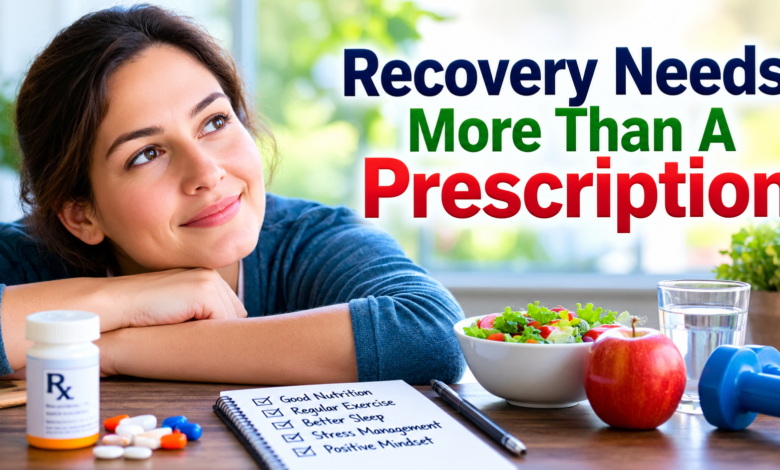
The idea behind Recovery Needs More Than A Prescription is not to dismiss medication. Instead, it recognizes that effective care should consider the whole person and the challenges surrounding their recovery.
Why Medication Can Be an Important Part of Recovery
Medication can be an evidence-based part of treatment for certain substance use disorders. For example, medications such as buprenorphine, methadone, and naltrexone are used in the treatment of opioid use disorder, while medications including acamprosate, disulfiram, and naltrexone may be used for alcohol use disorder. These treatments can help manage withdrawal symptoms, cravings, and other aspects of substance use disorders. However, medication does not necessarily address every challenge a person faces during recovery.
SAMHSA describes treatment as a whole-patient approach that can combine medication with counseling and behavioral therapies.
That broader approach is why recovery planning should look beyond the prescription itself.
Counseling Can Address the Underlying Challenges
Substance use can affect relationships, employment, education, finances, family life, and emotional well-being. A prescription may address particular medical needs, but counseling can provide another place to work through behavioral and personal challenges.
Behavioral treatments can help people recognize unhealthy patterns, develop coping strategies, manage cravings, improve relationships, and handle situations that could contribute to returning to substance use. NIDA identifies individual, family, and group counseling among commonly used behavioral approaches.
For someone beginning recovery, having access to appropriate counseling can therefore make the treatment plan more comprehensive.
Recovery Support Creates a Stronger Connection
Recovery can feel difficult when someone is isolated from supportive people. Community and peer support can provide encouragement, accountability, and a sense of belonging.
SAMHSA defines recovery as a process of change through which people improve their health and wellness, live self-directed lives, and work toward their full potential. Its current recovery guidance emphasizes human connection and broader recovery support rather than focusing exclusively on medication.
Depending on an individual’s needs and preferences, recovery support may include peer specialists, mutual-support meetings, family involvement, recovery housing, or community programs.
The important point is that recovery does not have to happen alone.
Family Support Can Make a Difference
Family members often experience the effects of substance use alongside the person receiving treatment. When appropriate, involving supportive relatives can help create a more stable environment.
Family members may help by encouraging treatment attendance, supporting healthy routines, recognizing changes in behavior, and providing practical assistance. They may also need education and support of their own.
NIDA guidance notes that supportive family members and friends can be involved in treatment discussions when appropriate.
A recovery plan can therefore benefit from considering not only the individual receiving treatment but also the people around them.
Mental Health and Recovery Are Often Connected
Some people dealing with substance use disorders also experience mental health conditions. These concerns can influence recovery and may require their own assessment and treatment.
NIDA notes that effective treatment should address multiple needs, including medical, psychological, social, vocational, and other problems affecting an individual.
This means a person may need more than one type of professional support. Medical care, counseling, mental health services, and community resources can work together rather than operating separately.
When local providers coordinate these services, people may have an easier time navigating their recovery plan.
Practical Stability Is Part of Recovery
Recovery does not happen in a vacuum. Housing, employment, transportation, family responsibilities, education, and financial pressures can all affect someone’s ability to remain engaged with care.
A treatment plan that ignores these practical issues may leave important barriers unaddressed.
For example, someone who has difficulty reaching appointments may need transportation assistance. Someone experiencing housing instability may need connections to appropriate community resources. Another person may need employment or educational support as they rebuild daily routines.
NIDA’s treatment principles emphasize addressing the individual’s broader needs rather than focusing only on substance use.
Local Recovery Services Can Help Fill the Gaps
Local recovery services can make treatment easier to access and continue. Community-based programs may connect people with healthcare professionals, counseling, peer support, recovery resources, and other services.
SAMHSA currently directs people toward healthcare professionals, community-based programs, recovery support, and evidence-based substance use treatment options.
For local communities, the goal is not simply to increase the number of prescriptions. It is to make appropriate care easier to reach and build systems that support people throughout the recovery process.
Recent SAMHSA initiatives have also emphasized expanding community access to addiction treatment, mental health services, and recovery support.
Recovery Plans Should Be Individualized
There is no single treatment plan that works identically for everyone. NIDA states that treatment should be matched to the individual’s particular problems and needs, with services assessed and adjusted as those needs change.
One person may benefit significantly from medication and regular medical monitoring. Another may need intensive counseling, family services, or additional mental health care. Someone else may require a combination of medical treatment, behavioral therapy, peer support, and practical community assistance.
Personalized planning allows care to change as circumstances change.
Progress Requires Ongoing Support
Recovery is not always a straight line. People can experience setbacks, changing circumstances, or new challenges. A change in circumstances does not automatically mean that treatment has failed.
NIDA describes recovery from addiction as a long-term process that can involve adjustments to treatment and, for some people, multiple treatment episodes.
This reinforces an important principle: recovery services should remain available beyond the first prescription or initial treatment appointment.
Building a More Complete Recovery Experience
The phrase Recovery Needs More Than A Prescription captures a broader understanding of effective care. Medication can be an important tool, but recovery may also require counseling, behavioral support, family involvement, peer connection, mental health care, and practical assistance.
Local healthcare providers and community organizations can help connect people with the combination of services appropriate to their circumstances. The strongest approach is one that treats the individual as a whole person rather than reducing recovery to a single medication or appointment.
For anyone considering treatment, speaking with a qualified healthcare professional can help identify appropriate options. Recovery plans should be based on individual needs, medical circumstances, and professional guidance.
A prescription may be one part of recovery. Long-term recovery can require a much broader network of care, connection, and support.