Introduction
Subtitle: The story of a former England goalkeeper, his early football dreams, Liverpool career, family, injuries, achievements and work after retirement.
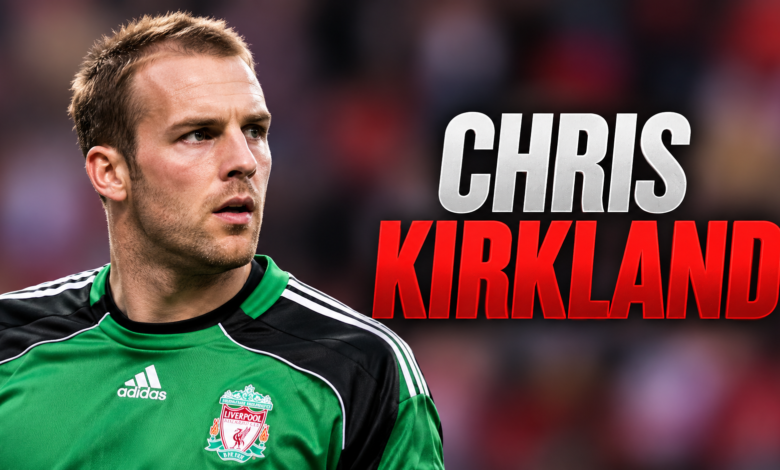
Chris Kirkland is a former English professional footballer. He played as a goalkeeper for Liverpool, Coventry City, Wigan Athletic and Sheffield Wednesday. He also represented England internationally.
His career started with huge promise.
Liverpool signed him in 2001. He was only 20 years old. Many expected him to become one of England’s leading goalkeepers.
But football wasn’t always kind.
Repeated injuries interrupted his career. Later, he faced anxiety, depression and prescription painkiller addiction.
Today, Kirkland speaks publicly about those experiences. He also supports community and mental health programmes.
His story stretches well beyond football.
Quick Facts
| Detail | Information |
|---|---|
| Full name | Christopher Edmund Kirkland |
| Popular name | Chris Kirkland |
| Date of birth | 2 May 1981 |
| Age | 45 years (October 2026) |
| Birthplace | Leicester, England |
| Nationality | English |
| Profession | Former football goalkeeper |
| Playing position | Goalkeeper |
| Height | 6 ft 6 in (BBC Sport) |
| Youth club | Coventry City |
| Senior career | 1998–2016 |
| Liverpool transfer | Approximately £6 million in 2001 |
| England appearances | 1 senior international |
| England debut | 16 August 2006 |
| Wife | Leeona Kirkland |
| Daughter | Lucy Kirkland |
| Retirement | August 2016 |
| Current public role | Liverpool FC Foundation community ambassador and mental health advocate |
Who Is Chris Kirkland?
Chris Kirkland is a retired English goalkeeper. He played professional football for nearly two decades.
He started at Coventry City.
His performances attracted Liverpool’s attention. The club signed him in August 2001.
It was a dream move.
Kirkland had supported Liverpool since childhood. Playing at Anfield meant something special.
Yet his career brought mixed experiences.
He enjoyed big matches and international recognition. Injuries also stopped him from playing regularly.
After leaving Liverpool, he spent six years with Wigan Athletic.
He later joined Sheffield Wednesday.
Kirkland retired in August 2016. His life since then has included coaching, family responsibilities and mental health awareness work.
Early Life and Childhood
Kirkland was born on 2 May 1981.
He grew up in Leicestershire, England. Football became part of his childhood.
Liverpool was his favourite club.
In December 2025, he recalled visiting Anfield with his father during childhood.
His first Liverpool match was in 1988.
He was seven years old.
He stood on the famous Kop terrace. Those visits helped build his love for the club.
His father also believed in his ability.
That confidence later became part of one of the most unusual stories in English football.
Kirkland eventually earned an England appearance. His father’s early prediction had come true.
Education and Early Football Training
Kirkland attended Henley College in Coventry.
A September 2006 report in The Guardian described his time studying there between 1997 and 1999.
He was also developing as a goalkeeper.
His education offered another possible career. Professional football was never guaranteed.
Meanwhile, Coventry City provided his football training.
He progressed through the club’s youth system.
Coaches recognised his physical ability.
He had the height needed for goalkeeping. His reactions and confidence also impressed people.
Soon, he moved towards senior football.
Starting His Career at Coventry City
Coventry City gave Kirkland his professional beginning.
He developed through the youth academy.
Then came his first-team opportunity.
He began his senior career in 1998 and gained Premier League experience before leaving the club.
Young goalkeepers often face difficult challenges.
They must handle pressure and make quick decisions. A single mistake can change a match.
Kirkland showed real promise.
His performances attracted interest from bigger clubs.
Liverpool eventually won the race.
In August 2001, the club signed him for approximately £6 million.
He was just 20.
It was a major transfer for a young English goalkeeper.
The Dream Move to Liverpool
Kirkland joined Liverpool on 31 August 2001.
Gérard Houllier was the manager.
Liverpool also signed goalkeeper Jerzy Dudek.
That created strong competition.
Dudek initially became the regular goalkeeper. Kirkland had to work for opportunities.
Still, he impressed when selected.
His biggest chance arrived during the 2002–03 season.
Dudek had experienced a difficult spell. Houllier gave Kirkland more playing time.
The young goalkeeper responded well.
But his progress soon stopped.
He suffered an ankle injury during an FA Cup match against Crystal Palace in January 2003.
He missed the remaining season.
More injuries followed.
His finger, wrist and back caused problems during different periods.
These setbacks limited his Liverpool career.
The club’s official records credit him with 45 competitive appearances.
A Famous Champions League Night
One match remains especially memorable.
Liverpool faced Olympiacos in December 2004.
They needed an important result.
Kirkland started the match at Anfield.
Liverpool eventually won 3–1.
Steven Gerrard scored the decisive goal.
The victory helped Liverpool progress in the Champions League.
Kirkland had played his part.
But injury problems returned.
Liverpool eventually reached the 2005 final against AC Milan.
They completed a famous comeback in Istanbul.
Kirkland wasn’t part of the final team.
Still, his earlier appearances belonged to that European campaign.
In a 2025 interview, he remembered how fellow goalkeeper Scott Carson had offered him his Champions League winner’s medal.
He declined the offer.
It was a moment he never forgot.
Leaving Liverpool and Joining West Brom
Regular football mattered to Kirkland.
In 2005, he joined West Bromwich Albion on loan.
He wanted more playing time.
West Brom were competing in the Premier League.
The loan offered another chance.
He made ten league appearances.
But injuries again affected his season.
A permanent move did not follow.
He then joined Wigan Athletic in 2006.
That decision opened another chapter.
Building His Career at Wigan Athletic
Wigan became Kirkland’s long-term football home.
He initially joined on loan.
The move later became permanent.
He played for Wigan until 2012.
His time there lasted six years.
He became an experienced Premier League goalkeeper.
Wigan also appointed him captain.
Kirkland enjoyed working under Paul Jewell and Steve Bruce.
In a 2018 PFA interview, he described Wigan as the club where he had enjoyed his football most.
He valued the atmosphere.
He liked his teammates.
He also appreciated the chance to play regularly.
But problems returned.
Back injuries continued to affect him.
He eventually lost his regular place.
Short loan spells followed at Leicester City and Doncaster Rovers.
Then came another transfer.
His Years at Sheffield Wednesday
Kirkland joined Sheffield Wednesday in May 2012.
The club played in the Championship.
He hoped for regular football.
His performances helped him become an established first-team goalkeeper.
But privately, things were difficult.
In later interviews, he explained that travelling away from home caused serious anxiety.
The journey to Sheffield became stressful.
He struggled with being away from family.
Still, he continued playing.
He credited goalkeeping coach Andy Rhodes with offering valuable support.
Kirkland spent three seasons at Sheffield Wednesday.
His league record included 85 appearances.
He left the club in 2015.
The Leeds United Incident
An upsetting incident occurred in October 2012.
Sheffield Wednesday were playing Leeds United.
During the match, a spectator entered the pitch.
The spectator assaulted Kirkland.
The incident attracted national attention.
The attacker was later jailed.
Football authorities and supporters condemned the behaviour.
Kirkland continued playing professionally after the incident.
The Final Years of His Playing Career
After Sheffield Wednesday, Kirkland joined Preston North End.
He played during the 2015–16 season.
He made five league appearances.
In 2016, he signed for Bury.
However, he did not play a competitive league match for the club.
He announced his retirement in August 2016.
He was 35.
At first, supporters did not know the full extent of his personal difficulties.
He later spoke about them publicly.
His playing career had ended.
But his involvement with football continued.
Football Career Statistics
These figures cover domestic league appearances.
| Club | Years | League appearances |
|---|---|---|
| Coventry City | 1998–2001 | 24 |
| Liverpool | 2001–2006 | 25 |
| West Bromwich Albion (loan) | 2005–2006 | 10 |
| Wigan Athletic (loan and permanent) | 2006–2012 | 131 |
| Leicester City (loan) | 2010 | 3 |
| Doncaster Rovers (loan) | 2011 | 1 |
| Sheffield Wednesday | 2012–2015 | 85 |
| Preston North End | 2015–2016 | 5 |
| Bury | 2016 | 0 |
| Total | 284 |
These figures do not include every domestic cup or European appearance.
Playing for England
Representing England was a childhood dream.
Kirkland first played at youth international level.
He made eight appearances for England Under-21s.
His senior debut came in 2006.
England faced Greece on 16 August.
Kirkland entered as a substitute.
England won the friendly 4–0.
It became his only senior England appearance.
For Kirkland, that single match meant a great deal.
He had represented his country.
His childhood ambition had come true.
The Famous Bet His Father Made
Kirkland’s England appearance involved an unusual family story.
His father, Eddie, believed he would play internationally.
He made a bet years earlier.
The prediction was straightforward.
His son would represent England before turning 30.
The odds were reportedly 100–1.
Family members and friends were involved.
When Kirkland appeared against Greece, the prediction came true.
The group reportedly won almost £10,000.
It became a memorable football story.
But the England cap mattered more.
For Kirkland, it represented years of hard work.
His Playing Style and Strengths
Kirkland was a physically imposing goalkeeper.
His height helped him command the penalty area.
He could reach difficult shots.
He also showed good reactions.
His strongest performances came when he played with confidence.
At Coventry, his ability attracted Liverpool.
At Wigan, he gained greater experience.
He faced some excellent Premier League attackers.
But injuries interrupted his development.
It was a constant frustration.
Even so, he remained a respected professional goalkeeper.
Wife and Family Life
Kirkland is married to Leeona Kirkland.
They have a daughter named Lucy.
He has discussed his family publicly.
In a 2017 BBC Sport interview, he spoke about the support Leeona provided during his mental health difficulties.
He also explained how his struggles had affected family relationships.
That was painful for him.
His wife and daughter remained important sources of support.
In July 2022, he again discussed their experiences.
He acknowledged the difficulties addiction had caused within the family.
In a December 2025 Liverpool interview, he credited both with supporting his recovery.
His family has remained an important part of his story.
His Struggles With Anxiety and Depression
Professional football brought Kirkland public recognition.
But personal difficulties continued behind the scenes.
In October 2017, he spoke to BBC Sport about experiencing anxiety and depression.
He explained that his problems became serious after leaving Wigan in 2012.
Travelling to Sheffield caused anxiety.
He struggled to spend time away from home.
Sometimes, ordinary activities felt difficult.
He became withdrawn.
He avoided social situations.
His family noticed the changes.
Kirkland eventually sought help.
Talking publicly about his experiences was another important step.
His interview encouraged conversations about mental health in football.
The Painkiller Addiction He Later Revealed
In July 2022, Kirkland discussed his addiction to prescription painkillers.
The problems had developed over several years.
His initial use was connected with back pain.
The medication later became something he depended upon.
His addiction affected daily life.
It also caused difficulties within his family.
Kirkland described the experience in interviews with BBC Sport and The Guardian.
He explained that seeking help was difficult.
He had tried to stop before.
Recovery involved professional support and difficult personal changes.
In April 2026, UEFA published another interview with him about addiction.
He discussed the importance of speaking openly and seeking help early.
That message now guides much of his public work.
Life After Retirement
Retirement gave Kirkland a different role.
He started working in football coaching.
In January 2017, he became involved with goalkeeper coaching at Port Vale.
He also established a goalkeeper academy.
The aim was to help young players.
His experience offered practical lessons.
He knew the demands of professional football.
He had also experienced its pressures.
In 2018, Kirkland returned to Liverpool.
This time, he joined Liverpool Women’s coaching staff.
He worked as a goalkeeping coach.
He also briefly served as caretaker manager before returning to a coaching role.
He left Liverpool Women in March 2019.
His Book and Personal Story
Kirkland has also written about his experiences.
In December 2025, Liverpool FC published an interview discussing his book project.
The book is titled Keeping It Quiet – The Chris Kirkland Story.
It discusses his football career and personal struggles.
He explained why he wanted to write.
His experiences might help other people.
The writing process also helped him reflect on his past.
His story includes famous football moments.
But the difficult periods matter too.
They explain why his public work changed after retirement.
What Is He Doing in 2026?
Kirkland continues to speak about mental health and addiction.
He has worked with Liverpool FC Foundation.
He serves as a community ambassador.
In April 2026, UEFA published an interview about his involvement in its Take Care programme.
Kirkland helped launch a substance-awareness education module.
He spoke at an event in Nyon, Switzerland.
His message focused on asking for help.
Early support can make a difference.
He wants players to understand the risks of addiction.
He also wants clubs to provide better support.
This work connects his football experience with the challenges he faced personally.
Net Worth and Earnings
Kirkland spent many years playing professional football.
He represented several English clubs.
His transfer to Liverpool reportedly cost around £6 million.
But that was a club transfer fee.
It was not his salary.
His exact current net worth is not established through reliable public records.
His private earnings and assets have not been independently confirmed.
Publishing a precise estimate would be misleading.
Major Achievements
Kirkland achieved several important career milestones.
- Played Premier League football for Coventry City, Liverpool, West Bromwich Albion and Wigan Athletic.
- Signed for Liverpool in August 2001.
- Made 45 competitive appearances for Liverpool.
- Played during Liverpool’s 2004–05 Champions League campaign.
- Earned one senior England cap in August 2006.
- Served as captain at Wigan Athletic.
- Continued his career at Sheffield Wednesday and Preston North End.
- Worked in football coaching after retirement.
- Became involved in mental health and addiction-awareness programmes.
His career had difficult periods.
But it also brought memorable achievements.
Frequently Asked Questions
1. Who is Chris Kirkland?
Chris Kirkland is a former English professional goalkeeper. He played for Liverpool, Wigan Athletic, Sheffield Wednesday and England.
2. How old is he?
He is 45 years old as of October 2026. His birthday is 2 May 1981.
3. Where was he born?
He was born in Leicester, England.
4. Who is his wife?
His wife is Leeona Kirkland. He has publicly credited her with supporting him during difficult periods.
5. Does he have children?
Yes. He has a daughter named Lucy.
6. Did he play for England?
Yes. He made one senior appearance against Greece on 16 August 2006.
7. Why did he retire?
He retired in August 2016. He later explained that personal difficulties, including mental health problems and addiction, had affected his life.
8. What is he doing now?
He works in community engagement and mental health advocacy. He has also supported UEFA’s substance-awareness education work.
Final Thought
Chris Kirkland had a remarkable football journey.
He joined Liverpool as a young goalkeeper.
He played in major European matches.
He represented England.
But his career also brought setbacks.
Injuries limited his playing time. Personal struggles affected his life after football.
He eventually began sharing those experiences.
Today, he uses his story to encourage people to seek support.
His playing career ended in 2016.
His work beyond football continues.