Introduction
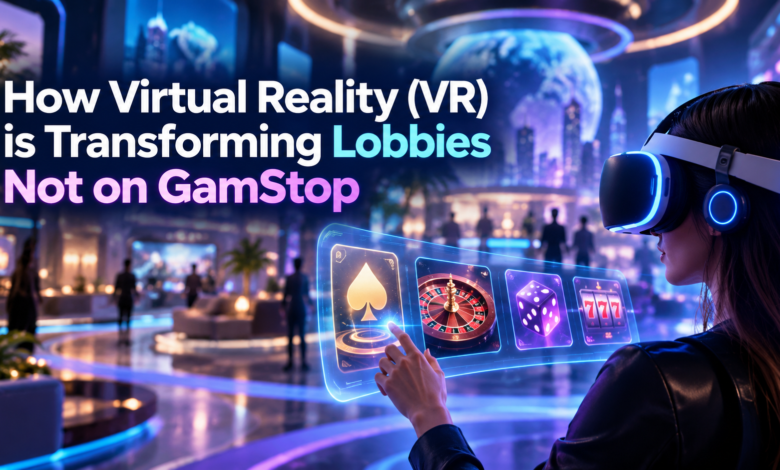
From immersive casino entrances to interactive gaming spaces, virtual reality is changing how digital casino lobbies could look, feel, and work.
Online casino lobbies have traditionally been simple. Players open a website, browse a collection of games, select a title, and begin playing. The entire experience happens through menus, thumbnails, and ordinary web pages.
Virtual reality (VR) offers something different.
Instead of looking at a flat screen, users can enter a computer-generated environment, move through digital spaces, and interact with objects using a VR headset. For casino platforms, this opens up new possibilities for lobby design, game discovery, and social interaction.
The idea has also attracted attention in discussions about casinos not on GamStop. These are generally offshore gambling websites that do not participate in the UK’s national online self-exclusion programme.
However, there is an important distinction. VR casino technology is developing, but there is no reliable evidence that immersive VR lobbies have become standard across non-GamStop casinos. Many of the features discussed here are emerging technologies, prototypes, or potential future applications.
Quick Facts About VR Casino Lobbies
| Feature | Details |
|---|---|
| Technology | Virtual Reality (VR) |
| Industry | Online gambling and digital entertainment |
| Main purpose | Immersive navigation and interactive gaming environments |
| Typical equipment | VR headset and compatible software |
| Possible features | 3D lobbies, avatars, virtual tables, and interactive menus |
| Non-GamStop meaning | Gambling sites outside the GAMSTOP ONLINE scheme |
| Current adoption | Developing rather than industry-wide |
| Main concerns | Gambling harm, accessibility, privacy, and regulation |
| Future potential | Shared virtual spaces and more interactive gaming interfaces |
What Are Virtual Reality Casino Lobbies?
A casino lobby is the first digital space visitors encounter after opening a gambling platform.
On a traditional website, it usually contains game categories, search tools, promotional banners, and account settings.
A VR lobby replaces or supplements those familiar menus with a computer-generated environment.
Imagine entering a digital casino building. There is a reception area, themed rooms, slot machines, and virtual tables. Instead of clicking through several pages, a visitor can look around and select different areas of the environment.
That is the basic concept.
VR systems can track head movement and, depending on the equipment, hand or controller movements. This allows users to interact with digital surroundings more naturally than they could through a standard browser.
The experience may also include spatial audio, animated environments, and avatars representing other visitors.
Still, a realistic-looking virtual casino is not necessarily a real-money gambling service. Some VR environments are purely recreational simulations, while regulated gambling products involve additional licensing and consumer protection requirements.
Understanding Casinos Not on GamStop
GamStop is a free self-exclusion programme designed to help people restrict their access to online gambling.
The UK Gambling Commission requires online gambling businesses licensed in Great Britain to participate in the programme.
Websites described as not on GamStop typically operate outside this system and may hold licences issued in other jurisdictions.
This distinction matters.
Being outside GamStop does not automatically establish whether a business is safe, reputable, or appropriately licensed to serve a particular country.
For consumers in Great Britain, gambling operators need the appropriate UK Gambling Commission licence to legally provide regulated gambling services.
The regulator has also raised concerns about unlicensed websites targeting people who have already self-excluded.
Consequently, discussions about VR technology on non-GamStop platforms should consider both technical innovation and the safeguards that protect consumers.
How VR Is Changing the Design of Online Casino Lobbies
1. Moving Beyond Ordinary Website Menus
Traditional casino websites are designed around efficiency.
They use navigation bars, game thumbnails, search boxes, and filters. These tools are familiar and usually work across desktop computers and mobile phones.
VR introduces an entirely different presentation.
A virtual lobby could resemble a modern hotel, an entertainment complex, or a themed gaming venue. Visitors might move between sections instead of scrolling through hundreds of game titles.
For example, separate virtual rooms could organise slots, table games, tutorials, and account information.
This approach may make digital environments more visually engaging.
The trade-off is convenience. Walking through a virtual room can take longer than typing a game’s name into a search bar.
For that reason, developers need to balance visual design with practical navigation.
2. Creating More Interactive Gaming Environments
One of the biggest attractions of VR is its ability to respond to physical movement.
Rather than selecting everything through a mouse or touchscreen, users may interact with digital objects through motion controllers or hand tracking.
A virtual environment could allow visitors to inspect a game table, examine instructions, or interact with a menu displayed within the room.
Developers can also use lighting, animation, and sound to make different sections recognisable.
This creates a stronger feeling of physical presence.
Research published in Computers in Human Behavior in 2020 found that participants in a VR gambling simulation reported greater immersion and arousal than participants using a conventional laboratory setup.
That finding demonstrates the technology’s ability to change the experience. It also raises questions about how more immersive environments may affect gambling decisions.
3. Introducing Social Spaces and Digital Avatars
Online gaming has long included social features such as chat rooms and multiplayer experiences.
VR can represent those interactions through avatars.
In a shared virtual lobby, users might see digital representations of other visitors, communicate using voice chat, or enter organised entertainment areas.
Such systems could make online casino environments feel more like physical venues.
However, these features are not guaranteed across VR gambling products, and they should not be assumed to exist on every offshore platform.
Social environments also introduce additional responsibilities.
Operators would need policies for harassment, abusive communication, personal information, and user reporting.
Moderation becomes particularly important when conversations happen in real time.
4. Making Game Discovery More Visual
Finding a suitable game is one of the most basic functions of a casino lobby.
Conventional websites accomplish this using search bars and category filters.
VR could introduce spatial discovery.
Instead of selecting a category from a dropdown menu, visitors might enter a virtual room dedicated to a particular type of game.
Interactive displays could explain game rules, supported controls, and available features.
There may also be opportunities to provide demonstrations before users enter a game.
But good design should not hide essential information.
Rules, costs, eligibility restrictions, and risk warnings must remain easy to find. A visually impressive interface is not useful if it makes important information harder to understand.
5. Bringing More Realistic Visuals and Sound
VR developers can use three-dimensional environments, directional audio, realistic textures, and animated objects.
These features create depth and a sense of location that ordinary web pages cannot fully reproduce.
For instance, sounds may appear to come from particular areas of a room. Objects may also respond when a visitor approaches or selects them.
The result can feel more like an interactive simulation than a conventional website.
There is a technical cost, though.
Detailed environments require capable hardware, careful software development, and reliable performance.
An overly complicated lobby can lead to slow loading, reduced frame rates, and physical discomfort.
Traditional Casino Lobbies vs VR Casino Lobbies
| Feature | Traditional online lobby | VR casino lobby |
|---|---|---|
| Interface | Flat website or mobile application | Three-dimensional virtual space |
| Navigation | Touch, mouse, or keyboard | Head movement, controllers, or hand tracking |
| Game selection | Lists, filters, and thumbnails | Interactive displays and virtual rooms |
| Social interaction | Chat and conventional multiplayer tools | Potential avatar-based interaction |
| Hardware | Smartphone, tablet, or computer | Compatible VR headset and software |
| Accessibility | Generally more widely available | Depends on headset and interface design |
| Development cost | Usually lower | Often higher |
| Gambling safeguards | Depend on operator and regulation | Still required; VR does not replace them |
The main difference is how users interact with the platform.
Traditional lobbies focus on direct access to content. VR environments place greater emphasis on spatial interaction and the feeling of presence.
Neither approach is automatically better for every user.
Why VR Could Interest Offshore Casino Operators
Offshore casino businesses operate in a competitive online marketplace.
Some may be interested in technology that makes their websites appear different from ordinary gambling platforms.
VR offers several possible design opportunities.
A company could develop branded virtual environments, use interactive demonstrations to explain games, or create social spaces that resemble entertainment venues.
However, there are considerable barriers.
Building a stable VR platform requires specialist developers, compatible software, technical testing, and ongoing maintenance.
A gambling operator must also consider payment security, identity checks, age restrictions, and the laws governing its services.
The technology alone does not solve these challenges.
Most importantly, there is no sound basis for assuming that non-GamStop casinos are adopting VR faster than licensed operators. Adoption depends on individual companies, investment, and regulatory conditions.
The Role of Artificial Intelligence in VR Lobbies
Artificial intelligence and VR can be combined, although they perform different tasks.
VR creates the interactive environment. AI can support certain functions within it.
For example, an AI-powered assistant might answer questions about navigation, accessibility settings, or technical problems.
AI could also help developers test interfaces, identify performance issues, or support language translation.
In theory, a virtual reception assistant could explain where to find account settings or responsible gambling controls.
But AI-based personalisation in gambling needs careful limits.
Systems that study behaviour to encourage longer gambling sessions or increased spending can create consumer protection concerns.
A responsible approach would prioritise user control, clear information, and straightforward access to support.
Technical Challenges Facing VR Gambling Platforms
VR casino lobbies may look impressive in demonstrations, but widespread adoption is not straightforward.
Hardware Costs
Many users do not own VR headsets.
Even when a platform supports virtual reality, visitors may prefer an ordinary desktop or mobile experience.
This limits the potential audience.
Internet and Performance Requirements
VR environments require consistent performance.
Slow rendering, delays, or unstable connections can make interactive spaces uncomfortable or difficult to use.
Developers therefore need to control graphics quality, software demands, and network performance.
Motion Sickness and Accessibility
Some people experience dizziness, nausea, or eye strain when using VR.
Others may find headset controls difficult because of mobility, visual, or other accessibility requirements.
Platforms should provide adjustable comfort settings and accessible alternatives.
Privacy and Personal Information
VR hardware may process movement information and other interaction data.
Depending on the equipment and software, some systems can also process voice or tracking information.
Operators need to explain what information they collect, why it is necessary, and how it is protected.
Compliance and Consumer Protection
A virtual environment does not remove legal obligations.
Real-money gambling services still need to meet the applicable licensing, age verification, anti-money-laundering, and consumer protection requirements.
The regulatory position depends on the jurisdiction and the actual service offered.
Can VR Increase Gambling-Related Risks?
Yes. This possibility deserves attention.
VR is designed to create a stronger sense of presence. The same quality that makes virtual environments interesting can also make gambling cues more compelling.
In a 2020 research study comparing immersive VR with a less immersive desktop version of a gambling decision-making task, participants made more disadvantageous decisions in the VR condition.
Other research has found that virtual casino environments can generate gambling urges.
These findings do not mean every VR casino will cause gambling harm. They do demonstrate why immersive gambling products require careful study and meaningful safeguards.
Useful protections include:
- Clearly displayed spending and time limits.
- Accessible self-exclusion and account closure options.
- Restrictions on misleading promotions.
- Clear gambling rules and financial information.
- Age verification and protection of personal data.
- Break reminders that remain visible in immersive environments.
Importantly, anyone who has chosen to self-exclude should not view offshore gambling platforms as a workaround. Self-exclusion is intended to provide a meaningful barrier against gambling-related harm.
What Could the Future Hold for VR Casino Lobbies?
VR technology continues to develop, but its future role in online gambling remains uncertain.
Several possibilities are worth watching.
Hybrid casino interfaces: Platforms could provide both standard website navigation and optional VR environments, allowing visitors to choose the format they prefer.
Improved accessibility tools: More flexible control systems, clearer menus, and comfort settings could help make virtual environments easier to use.
Shared entertainment spaces: Developers may experiment with virtual events, interactive tutorials, and moderated social areas.
More detailed consumer protection features: Spending information, session timers, account controls, and support options could be integrated directly into virtual interfaces.
Better hardware compatibility: Improvements in headset technology and software efficiency may make VR experiences more practical.
Yet none of these developments guarantees mass adoption.
Traditional websites remain cheaper, easier to access, and familiar to most users. VR must offer practical benefits beyond visual novelty before it can become a mainstream casino interface.
Final Thoughts
Virtual reality is opening new possibilities for the design of online casino lobbies.
Three-dimensional environments, interactive menus, digital avatars, and spatial audio can create experiences that feel very different from conventional gambling websites.
For platforms described as not on GamStop, these developments are an interesting technological possibility rather than evidence of an established industry trend.
There are also serious questions surrounding regulation, accessibility, privacy, and the effects of immersive environments on gambling behaviour.
The future of VR casino lobbies will depend on more than impressive graphics. Useful interfaces, reliable performance, and effective consumer protection will matter just as much.
Frequently Asked Questions
1. What is a VR casino lobby?
A VR casino lobby is a computer-generated entrance or navigation area where users can interact with a virtual environment, usually through a compatible headset.
2. How is VR changing online casino lobbies?
VR can introduce three-dimensional navigation, interactive game displays, realistic surroundings, and avatar-based social features. Many applications remain experimental or limited.
3. Do casinos not on GamStop use VR?
Some offshore operators may investigate immersive technologies, but there is insufficient evidence that full VR lobbies are widely available across non-GamStop casino websites.
4. What equipment is needed for a VR casino experience?
Full VR experiences generally require a compatible headset, suitable software, and hardware capable of running the application. Exact requirements depend on the platform.
5. Are non-GamStop casinos regulated?
Some hold licences from overseas jurisdictions. However, an overseas licence does not automatically authorise an operator to serve consumers in Great Britain. Appropriate UK licensing is required for regulated gambling services offered to those consumers.
6. Can virtual reality make gambling riskier?
It can introduce additional risks. Research suggests immersive gambling environments may increase arousal or influence decision-making, although the effects vary and more research is needed.
7. Will VR replace traditional online casino websites?
There is no clear evidence that a complete replacement is imminent. Ordinary websites remain more accessible, while VR requires additional hardware and development resources.
8. Does GamStop apply to virtual reality casinos?
GamStop applies to participating online gambling businesses licensed in Great Britain. Whether a service uses a website, mobile app, or VR interface does not by itself remove the operator’s legal obligations.