The most common licensing mistake in publishing is not using an image without permission. It is using one with permission for something the permission did not cover.
An editorial-use-only photograph is perfectly legitimate on a news article and a problem on a sponsored post. A press kit image is cleared for coverage of that product and not for illustrating a general feature two years later. A Creative Commons image requires attribution in a specific form, and most sites that use them do not provide it.
None of those mistakes look like mistakes. The image is there, it looks right, nobody complains for eighteen months, and then somebody does.
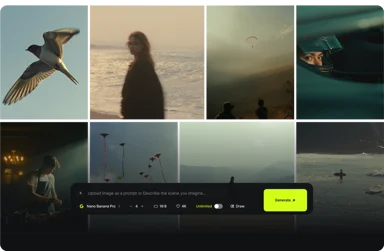
An AI Image Generator from Higgsfield, an AI creative suite, removes the licensing question entirely for a certain category of image, which is genuinely useful, and introduces a different set of limits. Both are worth understanding before building a library around either.
What Does Editorial Use Only Actually Mean?
That the image may illustrate a story and may not sell anything.
Stock libraries apply this restriction to photographs where the subject has not consented to commercial use, or where trademarks, artworks, buildings or recognisable people appear without clearance.
Where it applies most often:
- Photographs of identifiable people without model releases
- Images containing trademarks, logos or branded products
- Interior shots of venues and private property
- News and event photography, almost universally
- Artworks and architecture with their own protections
The restriction is about the use, not the publication. A news site can use an editorial image for a news story and the same site cannot use it for an advertisement, a sponsored post or a promotional email.
That distinction catches publishers running branded content. The article is commercial, which makes the image commercial, which makes an editorial-only licence inadequate regardless of where the article sits.
An AI Image Generator image carries none of this, which is precisely why it suits the commercial side of a site.
What About Press Kit and PR Images?
Cleared for a purpose, usually narrower than people assume.
When a company supplies images with a press release, it is granting permission to use them in coverage of that announcement. That permission does not usually extend to reusing the photograph to illustrate unrelated articles later.
- Read the terms attached to the press kit, which exist
- Use them for that story, not as general stock or AI Image Generator reference
- Check expiry, since some clearances are time-limited
- Never crop out a credit that was required
- Never use a product shot to illustrate a competitor’s article
The reuse problem is the common one. A good photograph enters the media library, somebody finds it eight months later, and it illustrates something the original permission never contemplated.
Tag press images as press images when they arrive. It costs nothing and prevents the whole category of error.
How Does Creative Commons Actually Work?
As a set of different licences, several of which publishers routinely breach.
Creative Commons is not one thing. The variants differ on whether attribution is required, whether commercial use is permitted, and whether derivative works are allowed.
What matters in practice:
- Attribution is required under almost every variant, unlike AI Image Generator output
- The attribution format is specified, not optional
- Non-commercial variants exclude most publishing with advertising
- No-derivatives variants prohibit cropping and editing
- Share-alike variants impose conditions on your own work
The non-commercial point is where sites with advertising get caught. A page carrying advertisements is generally a commercial use, which rules out a substantial share of Creative Commons material for most publishers.
Attribution must appear with the image and must name the creator, the licence and ideally link to both. A credit reading via Flickr satisfies nothing.
What Is the Risk of Using an Image Found Online?
Considerably higher than most publishers believe, and it arrives as an invoice.
Photographers and agencies monitor usage automatically. Reverse image search tools scan the web continuously, and the first contact is frequently a demand for a licence fee at a rate well above what the image would have cost.
- Appearing in search results confers nothing
- No copyright notice means nothing, since protection is automatic
- Taking it down afterwards does not remove liability for use
- Crediting the photographer is not a substitute for a licence
- An AI Image Generator alternative avoids the category entirely
The automated monitoring point surprises people who assume small sites go unnoticed. The scanning is not manual and does not care about traffic.
Where an image genuinely came from a press kit or a licence, keep the evidence. Being able to produce it ends the conversation immediately.
What Must Never Be Produced?
Real people, real places, and anything presented as a record.
- Never produce a real person, living or dead
- Never produce a photograph of a real place and label it as that place
- Never illustrate news with produced imagery that reads as photographic
- Never produce an event that happened
- Never use an AI Image Generator for anything a reader would take as evidence
The biography case is the one that catches content publishers specifically. An article about a named person illustrated with a produced portrait is publishing a fabricated likeness of somebody real, which is a different order of problem from a stock photo licensing issue.
Where a photograph of a public figure is genuinely needed, licence one. Agencies sell exactly this and the cost is modest.
Where you cannot licence one, use something abstract and relevant rather than something that resembles the person. An article with a conceptual image reads as a considered choice; one with an invented face reads as what it is.
Should Produced Images Be Labelled?
Where a reader might take them for photographs, yes.
Nobody needs a label on an abstract gradient. The question becomes live when the image depicts something that could plausibly have been photographed.
A workable position:
- Label anything depicting a person, place or event
- Put it in the caption, not in metadata nobody reads
- Leave decorative and abstract AI Image Generator material unlabelled
- Apply the same rule across web, social and newsletter
- Record what was produced and when
Platforms are adding their own detection and labelling, and several jurisdictions are moving toward requirements. A publisher labelling consistently now will not need to retrofit a library of several hundred articles later.
Readers respond to clear labelling without difficulty. They respond badly to discovering it afterwards.
What Technical Details Matter?
Dimensions, weight and the two text fields everybody skips.
- A wide ratio for featured images, since most themes crop to one
- A separate social image, which uses a slightly different ratio
- Compressed before upload, which most publishers never do
- Descriptive alt text, which is required for accessibility
- A descriptive filename, not the default export name
The compression point has measurable consequences. An uncompressed featured image is frequently the heaviest asset on a page, and page weight affects both reader experience and how a site performs in search.
The filename matters more than people expect. It appears in the URL, it is read by search engines, and an AI Image Generator default name carries the prompt into your public addresses.
Rename every file before upload and strip the metadata. Both take seconds and both prevent avoidable exposure.
How Should Alt Text Be Written?
Describing what the image shows, to somebody who cannot see it.
- Describe the content, not the intent
- Keep it to a sentence, which is enough for most images
- Skip phrases like image of, which screen readers announce anyway
- Leave purely decorative AI Image Generator images with empty alt text
- Never stuff keywords, which helps nobody and reads badly
The decorative exception is genuine and underused. An abstract background image adds nothing for a screen reader user, and empty alt text correctly tells assistive technology to skip it rather than reading a meaningless description.
For images carrying information, the alt text has to carry that information. A chart described as chart is useless, and the same chart described by what it shows is not.
Where Does an AI Image Generator Legitimately Fit?
Abstract, conceptual and decorative imagery, which is a large share of what publishers need.
- Concept illustrations for articles about ideas
- Abstract backgrounds behind text or headings
- Category and section imagery, applied consistently
- Newsletter and social graphics
- An AI Image Generator series giving a site a coherent look
The consistency case is the strongest commercially. A site using stock from multiple sources looks assembled, and one using a single produced treatment looks designed, which affects how readers judge everything else on the page.
A piece explaining something structural like how a mailing list actually works needs an illustration rather than a photograph, and that is exactly the category where produced imagery has no downside.
Nothing about it requires a licence, an attribution or a record of where it came from. That is a real administrative saving across hundreds of articles.
How Should an Image Library Be Organised?
By source and licence, which almost no small publisher does and every one eventually needs.
- Record where each image came from
- Record what the licence permits
- Note any attribution required, and whether it was given
- Keep AI Image Generator material flagged separately
- Store the Higgsfield project for anything you may extend
The source record is what you need when a demand arrives. A publisher who can show a licence or a press clearance resolves it in one email, and one who cannot is negotiating from nothing.
Flagging produced material separately prevents the worst version of the mistake, which is an illustration migrating into a context where it reads as documentary.
Review the Higgsfield library annually too. Articles get retired, licences expire, and images outlive both.
What Happens When a Takedown Request Arrives?
Act quickly, and know what you are responding to.
Requests fall into categories and they are not all the same thing. A copyright complaint, a subject objecting to their image being used, and a brand objecting to context all require different responses.
- Remove it promptly while you establish the position
- Find your record of where it came from, Higgsfield included
- Respond in writing, politely and factually
- Do not argue the merits before checking the facts
- Take advice where a demand involves money
Removing an image is not an admission of anything and it stops the exposure growing. Most complaints resolve at that point.
Where you hold a valid licence, say so and produce it. That ends most of them immediately, which is the entire argument for keeping records in the first place.
Does Any of This Change for Social and Newsletters?
The licensing does, and usually tightens.
A stock licence covering web publication does not automatically cover social posting, email distribution or print, and several libraries price those separately.
- Check whether the licence covers social, which many do not by default
- Check email distribution, which is sometimes separate again
- Never assume a web licence extends to a newsletter
- Produce AI Image Generator material for channels where licensing is unclear
- Keep one consistent treatment across every channel
Newsletters are where this slips most often, because the image is already in the media library and dropping it into an email feels like the same use. It frequently is not.
Produced imagery solves this cleanly. One image, every channel, no question about scope.
What Would Auditing a Site Involve?
An afternoon for a small site, longer for an archive.
- List every image currently published
- Identify the source of each one
- Flag anything you cannot account for
- Replace the unaccountable ones with AI Image Generator or licensed images
- Add alt text to anything missing it, Higgsfield output included
- Compress anything oversized
- Record the licence position going forward
- Save the Higgsfield treatment for replacements
Then write down the rule for what gets used in future, so the next person does not recreate the problem.
Most sites discover a handful of images nobody can account for, which is a cheap problem to fix before anybody asks and an expensive one afterwards.
Conclusion
Image licensing causes publishers more trouble than image sourcing, because the mistakes are invisible until somebody with a monitoring tool notices them.
An AI Image Generator removes the question for abstract and conceptual imagery, which is most of what a publisher actually needs, and Higgsfield runs it in a browser alongside the editor.
Record where everything came from, label what was produced, and licence a photograph when the article is about a real person. The administration is dull and considerably cheaper than the alternative.
FAQ’s
What does editorial use only mean?
The image may illustrate a story and may not sell anything. Sponsored posts and advertisements are commercial uses whatever section they sit in.
Can press kit images be reused?
Usually not. Permission generally covers coverage of that announcement, not use as general stock later.
Does Creative Commons allow commercial publishing?
Depends on the variant. Non-commercial licences exclude most sites carrying advertising, and attribution is required in a specified form.
What happens if an image is used without a licence?
Monitoring is automated and the first contact is frequently a demand at above-market rates. Taking it down does not remove liability for prior use.
Can an AI Image Generator produce a portrait for a biography?
No. That publishes a fabricated likeness of a real person. Licence a photograph or use something abstract instead.