How to Choose the Right Surgeon for Your Cosmetic Goals
A practical guide to evaluating qualifications, experience, safety, consultations, and aftercare before making a cosmetic decision.

Introduction
Choosing a surgeon for a cosmetic procedure is an important medical decision that should never be based only on attractive photographs, online reviews, advertisements, or low prices. The right surgeon should have appropriate training, relevant experience, strong safety standards, and the ability to explain both benefits and risks clearly.
A good consultation should also give you enough time to decide whether a procedure is appropriate. Reputable medical guidance recommends checking qualifications, asking about experience and complications, confirming the safety of the facility, and avoiding pressure to make an immediate decision.
Start by Defining Your Goals
Before researching surgeons, think carefully about what you hope to achieve. A consultation is more useful when you can explain your concerns and expectations clearly.
Cosmetic procedures do not guarantee a particular appearance or solve broader personal problems. The NHS advises people to consider why they want a procedure, how long they have considered it, whether they expect it to change other parts of their life, and whether alternatives might achieve what they want.
Your goal should therefore be about making an informed healthcare decision rather than trying to match an online image or meet someone else’s expectations.
Check the Surgeon’s Qualifications
One of the most important steps is verifying that the surgeon is properly qualified for the procedure being considered.
Titles such as “cosmetic surgeon” can sometimes be confusing because they do not necessarily communicate the full extent of a doctor’s surgical training. In the United States, the American Society of Plastic Surgeons recommends looking for appropriate board certification and rigorous plastic-surgery training.
Qualifications and registration requirements vary between countries. Check the relevant medical regulator or professional organization in your location rather than relying only on information presented by a clinic.
A qualified professional should be comfortable explaining their education, specialist training, certification, and experience.
Look for Relevant Procedure Experience
General surgical experience is not necessarily the same as extensive experience with a particular cosmetic procedure.
During a consultation, ask how frequently the surgeon performs the procedure, how long they have been performing it, and whether they regularly treat patients with similar needs.
The American Society of Plastic Surgeons recommends asking about the number of procedures performed, whether the patient is a suitable candidate, expected recovery, potential complications, and options if the outcome is not as expected.
Experience should be considered alongside qualifications and safety rather than treated as the only measure of quality.
Confirm Where the Procedure Will Take Place
The facility matters just as much as the surgeon.
Ask where the procedure will be performed and whether the surgical facility is properly accredited, licensed, or otherwise subject to appropriate safety standards. ASPS guidance highlights accredited or appropriately licensed facilities as an important part of patient safety.
You should also understand who will provide anesthesia, who will monitor you during the procedure, and what medical support is available if a complication occurs.
If a clinic is unwilling or unable to explain its safety arrangements, consider that an important warning sign.
Have a Detailed Consultation
A consultation should be more than a quick sales conversation.
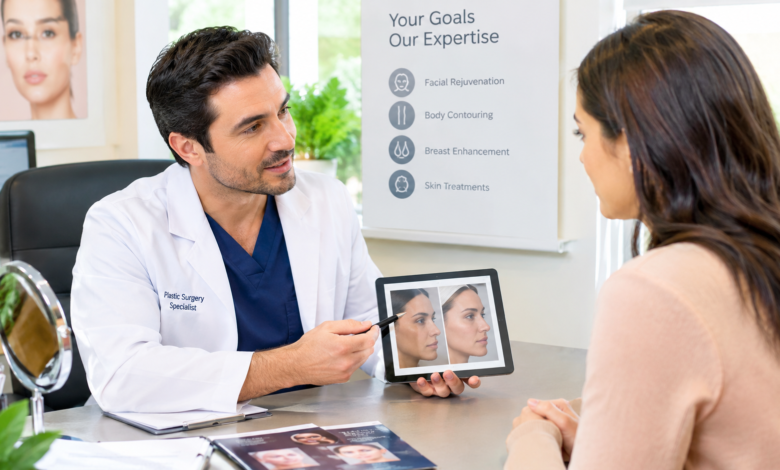
The surgeon should listen to your concerns, assess your situation, explain available options, and discuss whether the requested procedure is appropriate. They should also explain realistic results rather than promising perfection.
Important questions include:
- Am I a suitable candidate?
- What are the potential risks and complications?
- What alternatives are available?
- What type of anesthesia would be used?
- Where would the procedure take place?
- What should I expect during recovery?
- Who provides follow-up care?
- What happens if a complication occurs?
- What happens if the result does not meet expectations?
- What costs could arise from additional treatment?
These questions can help turn a consultation into an informed medical discussion rather than a sales appointment.
Pay Attention to Communication
Technical qualifications are essential, but communication also matters.
A trustworthy surgeon should be willing to answer questions without becoming dismissive or impatient. They should explain complicated medical information in understandable language and give you opportunities to ask follow-up questions.
You should feel able to say that you need more time to think. The NHS specifically advises people not to feel pressured or rushed into cosmetic treatment and recommends taking time after a consultation before making a decision.
Be Careful With Before-and-After Photos
Before-and-after photographs can provide useful information, but they should not be treated as guarantees.
Lighting, camera angles, facial expressions, image editing, healing time, and individual anatomy can all affect photographs. One person’s result cannot predict another person’s outcome.
If photographs are shown during a consultation, ask whether the patients had similar characteristics and whether the images represent typical results. More importantly, ask the surgeon to explain what result is realistically achievable for your individual situation.
Do Not Choose Mainly on Price
Cost is naturally an important consideration, but the cheapest option is not automatically the safest or most suitable.
The total cost may involve consultation fees, surgeon fees, facility charges, anesthesia, medications, follow-up appointments, recovery expenses, and treatment of complications if they occur.
ASPS guidance specifically notes that cost should not be the sole factor when selecting a plastic surgeon; safety, qualifications, and quality of care deserve greater consideration.
Be particularly cautious about deals that create artificial urgency or encourage you to book immediately.
Watch for Warning Signs
Certain behaviors should make you pause before proceeding.
Warning signs can include:
- Pressure to book immediately
- Promises of guaranteed results
- Little discussion of risks
- Unclear qualifications
- Reluctance to answer questions
- No clear information about the facility
- Pressure to purchase additional procedures
- Heavy reliance on influencer-style advertising
- Unclear aftercare arrangements
- Refusal to give you time to consider your decision
The NHS advises people to be cautious about social-media advertising and avoid practitioners who rely only on social media promotion. It also recommends avoiding time-limited pressure tactics and mobile treatment settings that may not provide appropriate clinical standards.
Consider More Than One Consultation
You do not have to choose the first surgeon you meet.
Speaking with more than one appropriately qualified professional can help you compare explanations, treatment options, expected outcomes, risks, recovery requirements, and costs.
Different surgeons may recommend different approaches. That does not necessarily mean one is wrong, but differences should be explained clearly enough for you to make an informed decision.
Taking additional time can also help separate a carefully considered decision from one influenced by temporary emotions, social pressure, or advertising.
Think About Recovery and Aftercare
Choosing a surgeon is not only about the procedure itself. Recovery and follow-up care are important parts of the overall experience.
Ask how long recovery may take, what restrictions could apply, what follow-up appointments are required, and who you should contact if you have concerns afterward.
A responsible surgeon should have a clear plan for monitoring recovery and responding to complications. The NHS recommends asking who will provide aftercare and what happens if something goes wrong or further treatment is required.
Make Safety the Final Decision Factor
The right surgeon is not necessarily the person with the most impressive website, the largest social-media following, or the lowest advertised price.
A stronger choice is a properly qualified professional who has relevant experience, works in an appropriate facility, communicates honestly, explains risks and alternatives, provides suitable follow-up care, and gives you enough time to make a decision.
Most importantly, cosmetic treatment should never be something you feel forced to pursue. If you are uncertain, uncomfortable, or being pressured, it is reasonable to pause and seek another professional opinion.
Final Thoughts
Learning how to choose the right surgeon for your cosmetic goals begins with careful research and realistic expectations. Check qualifications, investigate relevant experience, confirm facility standards, ask detailed questions, understand risks and recovery, and consider the complete cost of care.
A consultation should help you understand whether treatment is appropriate—not pressure you into buying it. Taking your time and seeking trustworthy medical advice can help you make a safer and more informed decision.
For anyone considering cosmetic treatment, remember that there is no obligation to proceed simply because you attended a consultation. Your health, wellbeing, and informed choice should remain more important than achieving a particular appearance.